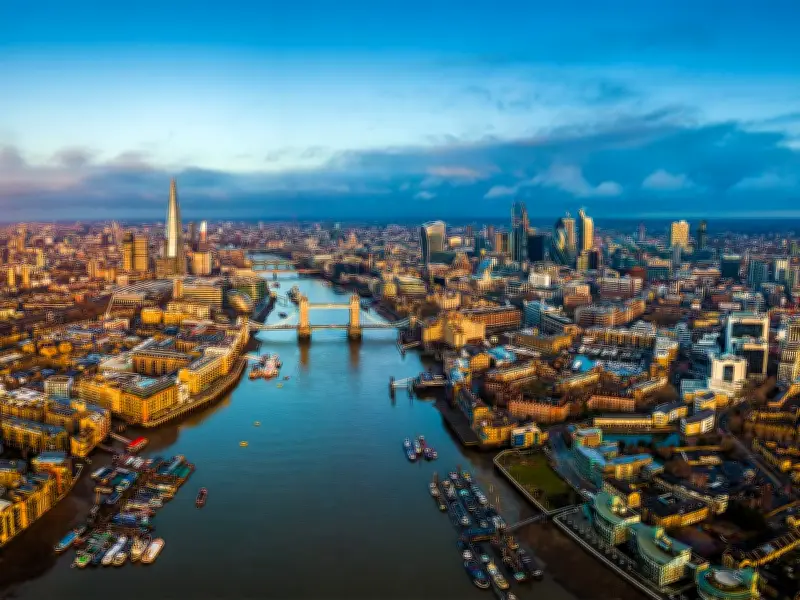
More than 4,000 delegates from dozens of countries gathered in London at the end of June for the Alliance for Responsible Citizenship (ARC) conference, a fast-growing international forum focused on family, faith, freedom, energy, democratic renewal and what its organizers describe as the moral decline of western civilization.
ARC's Founding and Critics
ARC is not yet well known in Canada. It was founded in 2023 and is closely associated with Canadian psychologist Jordan Peterson, Baroness Philippa Stroud of the United Kingdom and former Australian deputy prime minister John Anderson. Its own material describes the movement as a call to “builders” and to those who choose “gratitude over cynicism.” Its critics describe it as a right-of-centre gathering that packages culture-war politics in the language of renewal.
Both descriptions were visible in London. Inside the conference hall were politicians, business leaders, clergy, journalists, academics, entrepreneurs and ordinary citizens. Outside were a small number of protesters accusing ARC of providing intellectual cover for fossil fuel interests and conservative politics. Inside, speakers argued that western societies have lost faith in their own achievements and that the response should not be despair, but responsibility.

Personal Experience and Scale
Rick Ekstein, author of the article, attended ARC last year as an observer. This year, he was invited to speak. The scale of the event was striking. Delegates had come from across Europe, North America, the Middle East, Africa and Asia. Some were senior political figures. Others were parents, pastors, students, writers or civic activists trying to understand why so many institutions they once trusted now seem unable to command confidence.
One delegate from South Sudan, the world’s newest country, said he had come to learn more about democracy and the institutions needed to sustain it. A mother of five spoke about homeschooling her children because she no longer trusted her local school system to provide the education she believed they needed. Delegates from the United Arab Emirates spoke with pride about the Abraham Accords and with concern about radicalization in parts of Europe and the U.K.
Key Themes: Energy and Radicalization
One Emirati speaker made the point bluntly: after 9/11, he said, his country learned the danger of radicalization and worked to drive it out of public life. Why, he asked, were western countries allowing it to flourish? He stated that the Emirates will no longer support student scholarships to schools in the U.K.
Energy was one of the major themes. Several speakers argued that the modern world was built on the ability to turn energy into work, first through the steam engine and later through coal, oil, gas, nuclear power and new technologies. They argued that cheap, reliable energy helped lift much of humanity out of extreme poverty and that today’s energy policies often hurt the poor most by raising the cost of everything.
Others warned that high energy costs in the West have pushed manufacturing toward China and other jurisdictions with fewer environmental constraints. Critics outside the hall saw this as a defence of fossil fuels. Inside, the argument was framed as a defence of affordability, industrial capacity and realism.
Hopeful Conclusion
Ekstein writes that he left the forum more hopeful than when he arrived. The blend of personal concern and broader civilizational argument shaped the conference, leaving attendees with a sense of responsibility rather than despair.