Conrad Black Examines Conservative Leadership Through Harper and Poilievre
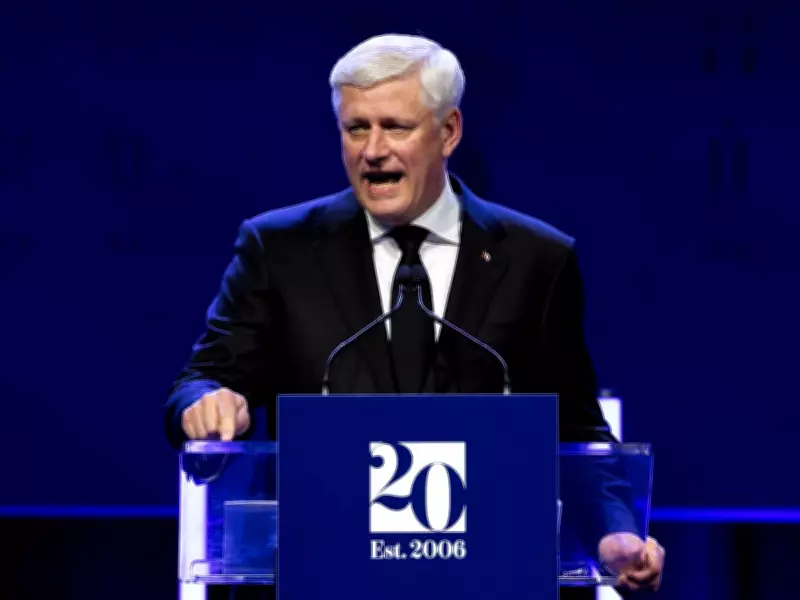
The past week has marked a significant milestone for the Conservative Party of Canada, as supporters commemorated the 20th anniversary of Stephen Harper's historic rise to power. Harper's achievement was particularly remarkable because he had to construct his own political party from the ground up, merging the Progressive Conservatives with the Canadian Alliance and Reform Party factions. This accomplishment placed him in a unique position in Canadian history as the only prime minister who needed to assemble his party before contesting an election.
The Harper Legacy: Building a Conservative Foundation
Stephen Harper's nine-year tenure as prime minister represented a period of stability and pragmatic governance for Canada. He maintained the balanced budget policies established by Jean Chrétien and Paul Martin until the global financial crisis of 2008 necessitated temporary deficit spending. One of his most notable achievements was reducing the Goods and Services Tax, a move that distinguished Canada from most other advanced nations and reflected his commitment to limiting public sector expansion.
Harper's approach to environmental policy demonstrated measured restraint compared to what he viewed as excessive enthusiasm from Liberal counterparts. While Stéphane Dion promoted "the Green Shift" and Justin Trudeau with Mark Carney emphasized climate change as an existential threat, Harper and his environment minister John Baird advocated for what they termed "a Canadian solution"—characterized by practical sobriety rather than alarmist rhetoric.

Conservative Philosophy in Historical Context
Harper represented the first genuinely ideologically conservative leader of a major federal party since George Drew led the Progressive Conservatives from 1948 to 1956. Subsequent Conservative leaders like John Diefenbaker, Robert Stanfield, and Joe Clark either embraced populist radicalism or maintained positions nearly indistinguishable from Liberal policies. Brian Mulroney, while clearly positioned to the right of Pierre Trudeau's Liberals, stopped short of embracing the aggressive tax-cutting capitalism that flourished simultaneously in Ronald Reagan's America and Margaret Thatcher's United Kingdom.
The Conservative reconstruction under Harper created a political vehicle that could authentically represent conservative values rather than offering what Black describes as "pretend conservatives masquerading" as something they're not. This foundation has allowed current Conservative leader Pierre Poilievre to build upon a clearly defined conservative platform that contrasts sharply with Liberal approaches to governance.
Contemporary Conservative Vision
Pierre Poilievre's leadership continues to demonstrate what conservatism represents in the Canadian political landscape. The conservative philosophy, as exemplified by both Harper and Poilievre, emphasizes fiscal responsibility, measured approaches to environmental regulation, respect for provincial jurisdiction, and skepticism toward what they view as excessive government intervention in economic matters.
The contrast between conservative and liberal approaches has become increasingly pronounced in recent years, particularly regarding economic management and environmental policy. While Harper's government eventually lost momentum—with its 2015 campaign focusing on immigration controls and public identification requirements—the conservative principles he established continue to shape Canadian political discourse two decades later.
As Conrad Black observes, the conservative movement in Canada has evolved through distinct phases, with Harper's reconstructed party representing a turning point that established a clear ideological alternative to Liberal governance. This legacy continues to influence contemporary conservative politics under Pierre Poilievre's leadership, providing voters with what Black characterizes as authentic conservative choices rather than diluted alternatives.