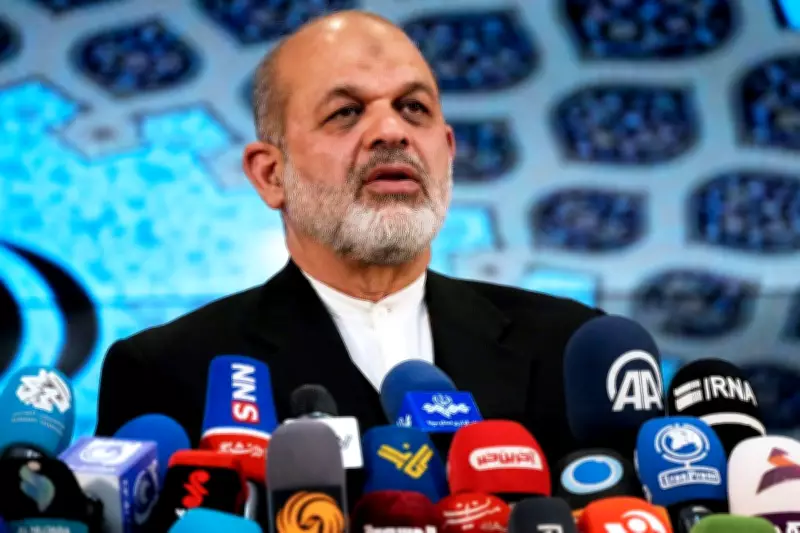
Iran's Interior Minister Ahmad Vahidi, a hard-line general with a significant military background, has become a central figure in discussions with the United States regarding the ongoing conflict in the Middle East. The talks, which have drawn international attention, aim to address escalating tensions and explore potential pathways to de-escalation.
Vahidi's Role in Negotiations
Vahidi, who previously served as Iran's defense minister and was sanctioned by the U.S. for his involvement in alleged terrorist activities, now holds a key position in the Iranian government. His appointment as interior minister has placed him at the forefront of security and diplomatic matters, including the sensitive negotiations with Washington.
Analysts suggest that Vahidi's hard-line stance and close ties to Iran's Supreme Leader Ayatollah Ali Khamenei make him a crucial interlocutor. His participation signals Tehran's seriousness in the talks, but also underscores the challenges ahead, given his history of confrontational rhetoric.

Background of the Conflict
The U.S.-Iran negotiations come against a backdrop of heightened hostilities, including proxy conflicts in Yemen, Syria, and Iraq, as well as ongoing disputes over Iran's nuclear program. The talks have been described as a last-ditch effort to prevent a broader regional war.
Both sides have expressed cautious optimism, but significant obstacles remain. The U.S. has demanded Iran halt its support for militant groups and curb its ballistic missile program, while Iran seeks relief from economic sanctions and guarantees against military action.
International Reactions
World leaders have closely monitored the developments, with many urging restraint. European Union mediators have played a supporting role, while Russia and China have called for a diplomatic solution. Meanwhile, Israel and Gulf Arab states have voiced concerns about any deal that might legitimize Iran's regional influence.
Vahidi's involvement has drawn criticism from human rights groups, who accuse him of overseeing crackdowns on dissent. However, his supporters argue that his experience in security matters is essential for reaching a comprehensive agreement.
What's at Stake
The outcome of the talks could reshape the Middle East's geopolitical landscape. A successful negotiation might reduce tensions and open the door for broader cooperation, while failure could lead to further escalation, including potential military confrontation.
As the discussions continue, all eyes remain on Vahidi and his American counterparts. The general's hard-line reputation may prove to be both a stumbling block and a source of leverage in the high-stakes diplomacy.