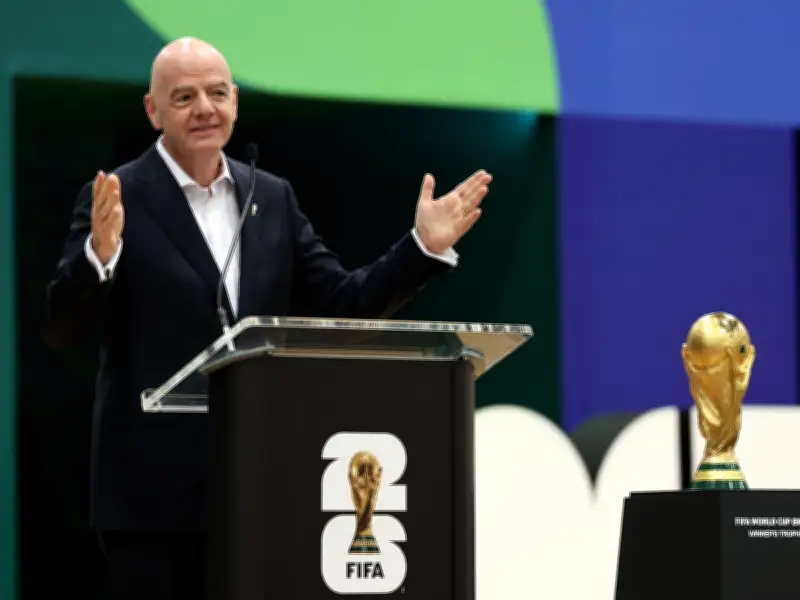
It can be easy to forget that FIFA, the international governing body for soccer, is a non-profit organization. This fact is especially easy to forget given that the 2026 World Cup, about to be held in Canada, the United States and Mexico, has become synonymous with avarice and greed, and the shameless gouging of soccer fans from around the globe.
Examples of FIFA's rapaciousness abound
Hundreds of millions of dollars in upfront costs to the federal and local governments that, in many cases, are only hosting a handful of matches. Tickets to some high-profile games, even in the early stages of the tournament, listed for several thousand dollars each on FIFA's primary market. Parking spots on match days for more than $150. Tickets to FIFA-approved 'FanFest' events, essentially outdoor viewing parties, that were again being sold for more than $100. Train and bus fares on match days that were exponentially higher than the usual commuter rates. Then, last week, the kicker: plans to allow fans to bring refillable water bottles to games, many of which will be played in blistering heat, were reversed. Water must instead be purchased on site.
All of it has combined to raise a prospect that six months ago would have been unthinkable: empty seats. What if you hosted the biggest party in world soccer and made it so expensive that many people just decided to stay home?

The World Cup was never going to be inexpensive
FIFA is like its cousin the International Olympic Committee in that both organizations have hosted ever-more-lavish spectacles in modern times as long as someone else is footing the bill. The soccer body has taken its signature men's tournament in recent years to places like South Africa and Qatar that had to spend billions to create soccer-suitable stadia in cities that would have no use for them once the party left town. Qatar's final price tag for hosting the 2022 tournament is estimated to be more than $225 billion, the most expensive in history by a distance.
With the 2026 edition in North America, where there were dozens of interested cities with existing venues, the expectation was that hosting costs would be much lower, even if FIFA did make its usual demands for upgrades and infrastructure. It has long since blown past those expectations. In Toronto, the cost of hosting six games, including just one with the Canadian team, is now estimated to be close to $400 million, or a ten-fold increase from the original plans of eight years ago. The federal Parliamentary Budget Officer said in a report late last month that the total cost to the public purse of the games in Canada, including another seven in Vancouver, would be just over $1 billion.
Even that number could be understating it. Days after the PBO report, the B.C. government said the Vancouver matches alone could end up costing taxpayers $725 million. It cited, in a marvellous bit of understatement, 'evolving FIFA requirements' as one of the factors in the ever-ballooning costs. That is for seven games, including some that would not be of high demand, with apologies to the participants in New Zealand versus Egypt.
And yet, all of those huge price tags would only be a surprise to the wide-eyed and innocent. Massive cost overruns are now part of the deal when you dare to bring FIFA or the IOC over to your home.
What is more surprising are the costs being imposed on match-going fans
It is a surprise if only because the ticket prices are such a sharp increase from previous editions of the tournament. When the prices were first revealed late last year, fans were stunned to discover that Canada's opener at BMO Field — renamed Toronto Stadium for the tournament to keep FIFA sponsors happy — would cost more than $1,000 for even a nosebleed seat. Across all categories and matches, it is estimated that ticket prices are about three times more expensive for the 2026 tournament than they were four years ago in Qatar.
FIFA and its president Gianni Infantino have made clear in 2026 that the World Cup was never about the average fan. The combination of massive public subsidies and exorbitant fan costs represents a betrayal of the spirit of the tournament. As the matches approach, the question remains: will fans fill the seats, or will FIFA's greed leave them empty?