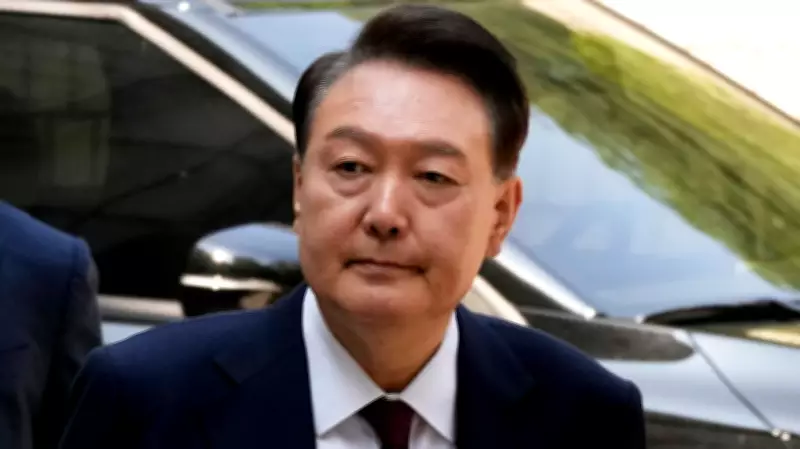
Former South Korean President Yoon Suk Yeol Sentenced to Life for Rebellion
In a landmark ruling that concludes South Korea's most significant political turmoil in decades, former President Yoon Suk Yeol has been sentenced to life imprisonment for orchestrating a rebellion through his brief imposition of martial law. The dramatic verdict was delivered by Judge Jee Kui-youn at the Seoul Central District Court, finding Yoon guilty of mobilizing military and police forces in an illegal attempt to seize control of the National Assembly.
The Failed Power Grab and Its Aftermath
Yoon's downfall stemmed from his ill-advised declaration of martial law on December 3, 2024, a move aimed at overcoming an opposition-controlled legislature. He deployed troops to surround the assembly building in a bid to arrest politicians and establish unchecked executive power for what the court described as a considerable duration. However, the decree lasted merely six hours before lawmakers breached the military blockade and unanimously voted to lift it, thwarting Yoon's plans.
The court emphasized that Yoon's actions posed a severe threat to the nation's democratic foundations, with the special prosecutor initially demanding the death penalty. Analysts, however, widely anticipated a life sentence since the poorly executed power grab did not result in any casualties. South Korea has maintained a de facto moratorium on capital punishment since 1997, with no executions carried out amid ongoing calls for abolition.

Legal Proceedings and Additional Convictions
Yoon, who was suspended from office on December 14, 2024, following impeachment by lawmakers and formally removed by the Constitutional Court in April 2025, has been under arrest since July of last year. He faces multiple criminal trials, with the rebellion charge carrying the harshest penalty. Last month, he received a five-year prison sentence for related offenses, including resisting arrest, fabricating the martial law proclamation, and bypassing a legally required full Cabinet meeting before declaring the measure.
The court also convicted and sentenced several former officials involved in enforcing the martial law decree:
- Ex-Defense Minister Kim Yong Hyun received a 30-year jail term for his central role in planning and mobilizing the military.
- Prime Minister Han Duck-soo was sentenced to 23 years in prison for attempting to legitimize the decree by forcing it through a Cabinet Council meeting, falsifying records, and lying under oath. Han has appealed the verdict.
Public Reaction and Political Context
As Yoon arrived at the courtroom, the scene outside the judicial complex was charged with emotion. Hundreds of police officers monitored the area while supporters of the former president rallied, their cries escalating as the prison bus transported him past. Nearby, critics gathered, demanding the death penalty for what they viewed as an assault on democracy.
A staunch conservative, Yoon defended his martial law decree as necessary to halt what he labeled anti-state forces—liberals obstructing his agenda with their legislative majority. Despite his likely appeal of the life sentence verdict, this case underscores the intense political divisions and legal accountability shaping South Korea's contemporary landscape.