European Ministers Honor Bucha Victims on War Anniversary as Ukrainian Drones Pound Russian Energy Infrastructure
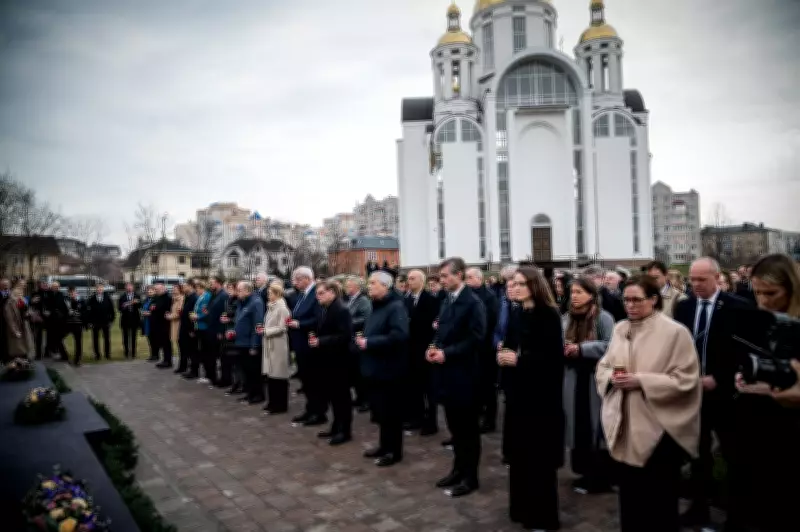
In a solemn display of solidarity, European Union foreign ministers convened in Bucha, Ukraine, on Tuesday, March 31, 2026, to commemorate the anniversary of the atrocities that shocked the world during the ongoing Russia-Ukraine conflict. The ceremony, attended by High Representative of the European Union for Foreign Affairs and Security Policy Kaja Kallas and Ukraine's Foreign Minister Andrii Sybiha, marked a poignant moment of remembrance for the victims of the brutal events that unfolded in the town.
Commemoration Amid Escalating Conflict
The gathering in Bucha served as a powerful reminder of the human cost of the war, with ministers paying tribute to those who lost their lives in what has been widely condemned as war crimes. The visit underscored the EU's continued support for Ukraine, both diplomatically and militarily, as the conflict enters another year with no clear end in sight. Officials emphasized the importance of accountability and justice for the atrocities, calling for sustained international pressure on Russia.
Simultaneously, Ukrainian forces launched a series of drone strikes targeting Russian oil ports, hammering critical energy infrastructure in a strategic move to disrupt Moscow's war economy. These attacks represent a significant escalation in Ukraine's efforts to weaken Russian capabilities, focusing on export facilities that are vital for funding the Kremlin's military operations. The drone assaults have caused substantial damage, leading to operational halts and raising concerns about global oil supply disruptions.

Broader Implications and Regional Tensions
The dual events of the Bucha commemoration and the drone strikes highlight the complex dynamics of the war, where symbolic acts of remembrance coincide with fierce military engagements. Analysts note that Ukraine's targeting of oil ports is part of a broader strategy to cripple Russian revenue streams, which have been bolstered by energy exports despite international sanctions. This approach has drawn mixed reactions, with some allies praising its effectiveness while others warn of potential retaliatory measures from Russia.
In response, Russian authorities have condemned the drone attacks as acts of terrorism, vowing to strengthen defenses around key infrastructure sites. The situation has heightened fears of further escalation, with both sides ramping up military activities along the front lines. The EU's presence in Bucha, meanwhile, reinforces the bloc's commitment to supporting Ukraine's sovereignty and pursuing justice for war crimes, even as diplomatic efforts to broker peace remain stalled.
As the conflict continues, the anniversary of the Bucha atrocities serves as a grim milestone, reminding the international community of the urgent need for resolution and humanitarian aid. With drone warfare becoming increasingly prevalent, the targeting of economic assets like oil ports signals a new phase in the war, where economic pressure complements battlefield tactics. The coming months will likely see continued volatility, with both sides adapting their strategies in a protracted struggle for dominance.