City council is grappling with how to maintain current levels of services as it faces a widening infrastructure gap, with both roads and swimming pools increasingly in need of repairs.
On Wednesday the Infrastructure Committee released previously in-camera projections of how aquatic facilities will need to be dealt with, depending on what extent of service levels the city aims to maintain in the coming decades. To maintain current service levels the city is looking at a $1-billion bill.
Aquatic facilities in poor condition
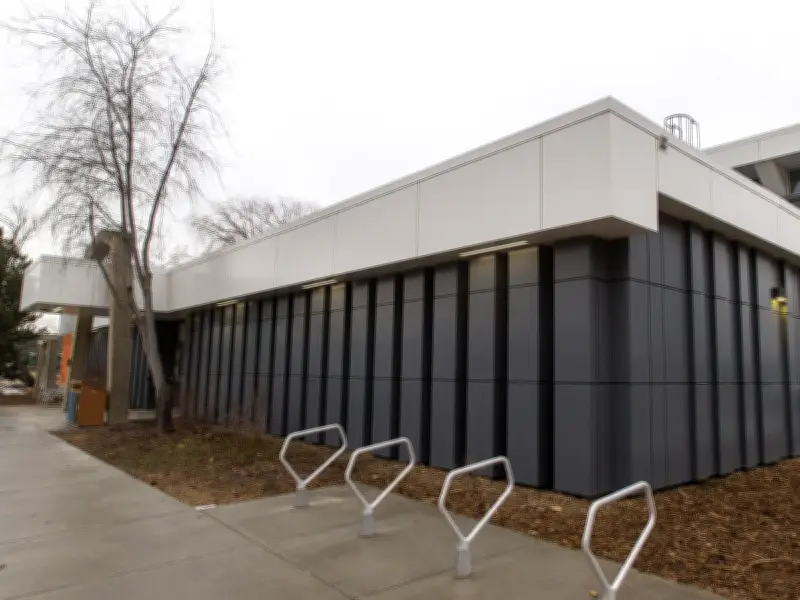
Eight aquatic facilities are more than 50 years old and the average age is 44 years old. One facility is considered to be in poor condition and three more are expected to join it by 2037 — the pools at Eastglen, Grand Trunk, Londonderry and O’Leary. The remaining 94 per cent of the city’s pools are considered as either good or fair in condition. The city’s current target for service level is one facility for each 44,000 Edmontonians, and 100 per cent of residents within 10 minutes of a facility.

No pools are currently slated for closure — they were used as an example of how the city’s Capital Infrastructure Plan Program (CIPP) aims to map out renewal needs over multiple budget cycles.
Mayor stresses need for dedicated renewal fund
“This should not be a surprise or a shock,” said Mayor Andrew Knack. “This to me is a reinforcement of why the dedicated renewal fund is critical. We still need to have a broader conversation about all of our inventory. People expect that infrastructure to be functioning they way they need it to.”
Committee heard 10.2 per cent of the city’s total assets are in poor or very poor condition, 33.4 per cent of them are in fair condition and 54.2 per cent are in good or very good condition. When looking at buildings alone, roughly 60 per cent are listed in fair condition and 20 per cent are projected to fall into poor or very poor condition in the next 10 years. Approximately 60 per cent of the city’s alleys are in need of renewal.
Cost-saving measures and road priorities
Administration explained the city can repave seven kilometres of road for the cost of reconstructing one. The city is also looking at deferring projects Downtown to a later budget cycle to give businesses a break from the ongoing roadwork. Another cost-saving measure being considered is using boardwalks instead of laying new concrete on sidewalks.
“I remember when I came into council 13 years ago,” said Knack. “That was at a time where roads were not getting nearly enough investment. The result was constantly having to repair potholes and all that. So we know what happens if we don’t do enough renewal.”
Massive renewal gap ahead
Overall, Edmonton is looking at a $2.8 billion renewal gap between 2027 and 2030 — that balloons to $10 billion between 2027 and 2036. City only has enough resources to cover 30.7 per cent of renewal needs, excluding bridges, which are budgeted separately. With the city rapidly growing, the city needs to enhance its renewal and growth planning before aging assets reach their end of life.
“I don’t think this is a problem you solve in four years,” said deputy city manager Stacey Padbury.