Former BC Premier Challenges Canada's Stance on Sikh Extremism
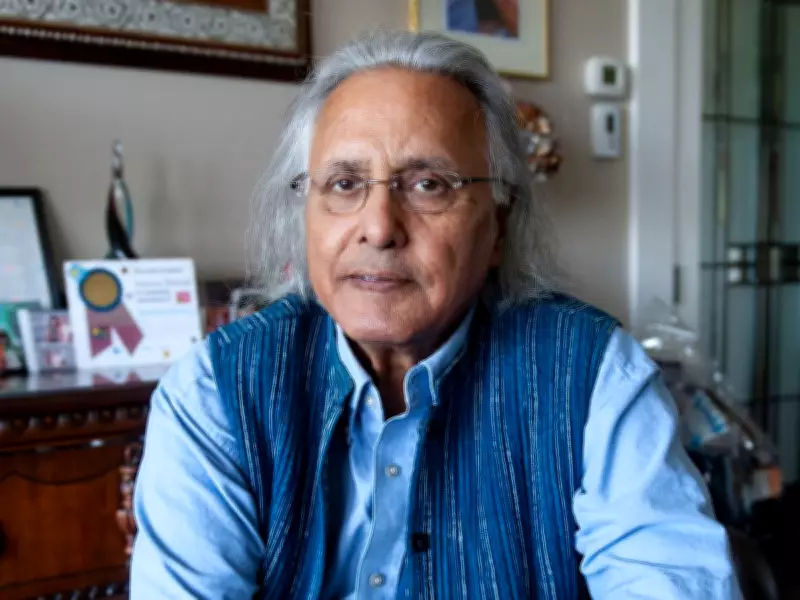
Former British Columbia premier Ujjal Dosanjh has issued a pointed critique of Canada's approach to Sikh extremism, questioning whether the country's commitment to tolerance and diversity has led to dangerous oversights. The 79-year-old Sikh politician, who emigrated from India in 1968 and later served as both BC premier and federal cabinet minister, argues that Canadian authorities have "turned absolutely a blind eye" to Khalistani extremism operating within the country.
"Are we so woke ... that we actually ignore someone preaching violence, right in our midst?" Dosanjh asked in a recent interview, highlighting what he sees as a troubling contradiction in Canadian policy.
Diplomatic Shift Amid Security Concerns
Dosanjh's comments come as Canada executes a significant diplomatic pivot toward India. At the beginning of the week, Mark Carney signed the "One Earth, One Family, One Future" partnership agreement with Indian Prime Minister Narendra Modi, marking a notable departure from previous tensions between the two nations.

The comprehensive agreement includes ambitious economic targets, most notably the aspiration to more than double two-way trade to $70 billion by 2030. A landmark $2.6-billion deal with Saskatoon-based Cameco to supply uranium to India forms part of a broader energy partnership that contemplates exports of liquefied natural gas, liquefied petroleum gas, oil, and hydrogen.
"Yeah, it's two different worlds," Dosanjh observed, contrasting Canada's domestic approach to Sikh extremism with its growing economic engagement with India. "But the fact is India is a civilizational country, right? It's an ancient civilization, just like Iran."
Economic Logic Versus Political Reality
Dosanjh expressed enthusiasm about the economic partnership, noting India's projected rise to become the world's third-largest economy within the next few years. "India has demand for energy, for gas, for oil," he explained. "It has need for uranium because they want to have civilian nuclear energy, because they need lots of electricity."
The former premier highlighted additional opportunities for cooperation, including rare earth mineral processing, manufacturing partnerships, and even potential defense manufacturing collaborations. "If it's a democracy, perhaps flawed," he asked, "why not have joint ventures with them where they can manufacture our defensive equipment?"
Dosanjh contrasted his support for Carney's approach with his previous criticism of Justin Trudeau, whom he bluntly described in 2024 as "sociologically and politically, an idiot." In his recent conversation, however, Dosanjh appeared upbeat about the former banker's diplomatic efforts.
The Core Contradiction
The central tension Dosanjh identifies lies in Canada's simultaneous pursuit of closer ties with India while allegedly ignoring security threats emanating from within its own borders. He suggests that Canada's celebrated values of tolerance and diversity may have created blind spots when it comes to addressing radical elements within the Sikh community.
This criticism emerges against the backdrop of what Dosanjh describes as a philosophical difference between Canadian and Indian approaches. "Indians, when they talk to each other, even the most technically educated people," he noted with a grin, "they speak in a philosophical way." He observed that Modi consistently infuses his speeches with Indian philosophy, while Carney brings a more transactional, economic-focused approach to the relationship.
The only reservation Dosanjh expressed about the burgeoning partnership concerns Canada's domestic energy infrastructure. He questioned Ottawa's "foot-dragging on pipeline construction needed to deliver oil and gas to India," particularly given India's potential energy needs amid global disruptions including the blocked Strait of Hormuz and restricted access to Russian oil.
As Canada navigates this complex diplomatic terrain, Dosanjh's warnings highlight the challenging balance between maintaining domestic security, upholding cherished values of tolerance, and pursuing strategic international partnerships in an increasingly interconnected world.