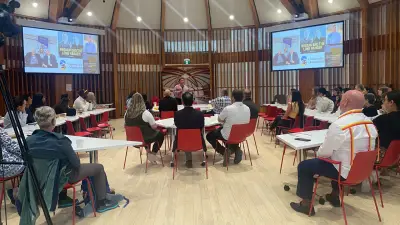
Last week, at the Daphne art centre in Montreal, the Permanent Peoples' Tribunal (PPT) declared Canada guilty not only of genocide but “continuing genocide,” citing residential schools, alleged mass graves and current government policies. Despite the media coverage, this was the opinion of seven activists, not an international court.
Media Uncritically Reported the Verdict
Many Canadian media outlets reported the story uncritically, treating the non-binding ruling as major news and describing the panel as being composed of “international human rights experts.” However, the panel consisted of only seven members, including a psychologist, a documentary filmmaker and an Indigenous rights activist.
The coverage omitted that five years after the announcement of alleged graves, no excavations have begun at any residential schools, despite millions earmarked for the work. This shows that some outlets readily accept activist claims without balanced information.

What is the Permanent Peoples' Tribunal?
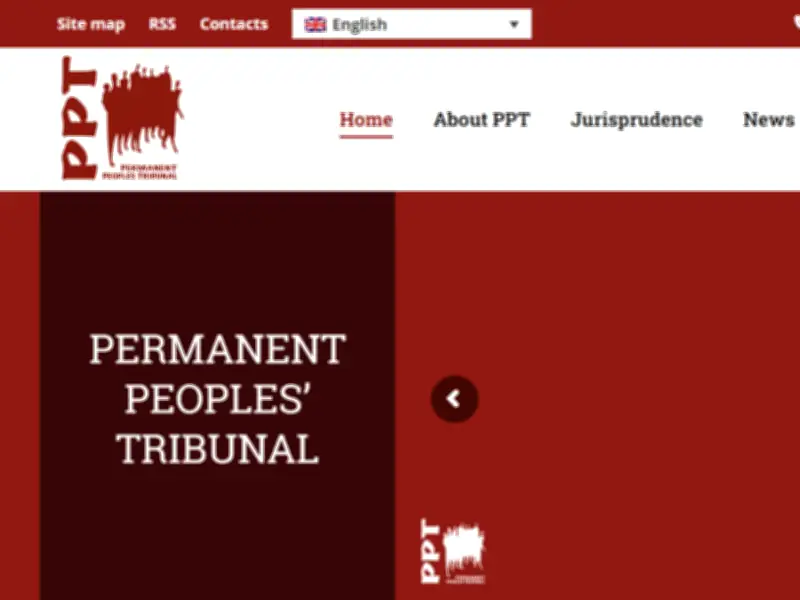
The PPT was founded in Italy in 1979 and is an NGO that describes itself as an “international opinion tribunal.” It has no governmental, United Nations or judicial mandate, so its rulings are purely symbolic and non-binding.
Nevertheless, the Canadian Press story, picked up by CTV, CP24, the Toronto Star and CityNews, described the tribunal as an “international panel of human rights experts” and a “panel of seven judges” mandated to investigate missing children and unmarked graves at residential schools.
The Panel Members Are Activists, Not Impartial Jurists
The seven members of the PPT’s panel, who laid this serious claim after just a week of hearings, are best described as activists rather than impartial high-level human rights jurists. Their bios reveal backgrounds such as Indigenous rights advocacy and genocide research.
For example, Valmaine Toki, a Maori woman from New Zealand, is an Indigenous rights scholar and advocate. Andrew Woolford, a professor at the University of Manitoba, focuses on genocide and his upcoming book explores “settler colonial genocide in Canada.”
While some members, like Carlos Castresana, have law degrees and UN involvement, they are clearly not neutral arbiters. The ruling should not be taken seriously as a legal or judicial determination.