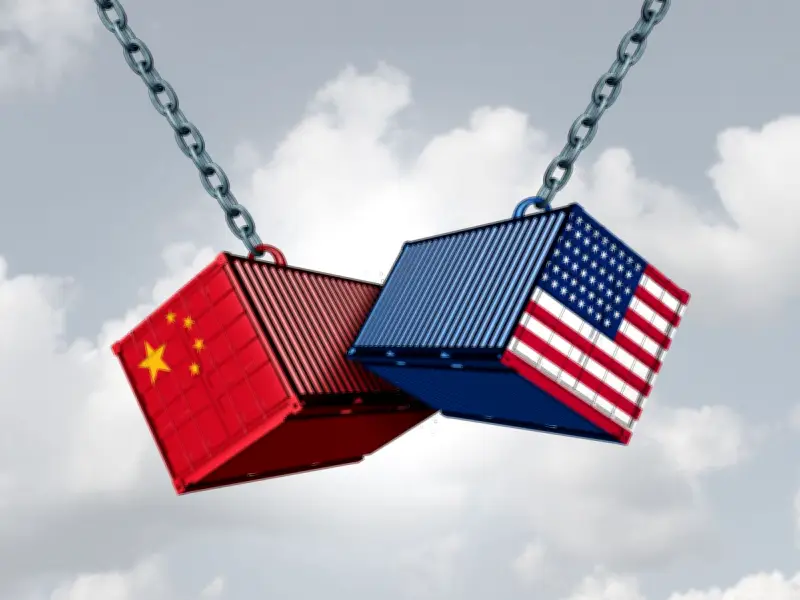
In a recent speech at the Economic Club of New York, Prime Minister Mark Carney proposed a new partnership with the United States that acknowledges the deep economic integration between the two countries, particularly in manufacturing supply chains and energy. However, he also stressed the need for Canada to enhance its strategic autonomy by reducing reliance on U.S. trade. The challenge lies in balancing deeper integration with the U.S. while diversifying trade partners, a dilemma that remains unresolved as the review of the Canada-U.S.-Mexico Agreement (CUSMA) approaches on July 1.
The Case for China as a Diversification Target
China emerges as the most likely candidate for trade diversification due to its substantial and growing economy. In 2024, China accounted for nearly 17 per cent of global GDP, compared to 22 per cent for the United States. Its GDP is only slightly less than the combined economies of Germany, Japan, India, the United Kingdom, and France, and it is projected to surpass them by the end of the decade. Over the past two decades, China has outpaced all large Western countries in economic growth, making it an attractive destination for Canadian exports.
Challenges in Expanding Trade with China
According to Steven Globerman and Jock Finlayson, the primary challenge in selling more to China is the cost associated with differences in laws, regulations, business practices, cultural norms, and language. Canadian exporters can reduce these costs by forging closer ties with Chinese commercial partners, but this often requires integrating into China's dominant supply chains. Collaborating with large Chinese enterprises, many of which are state-owned or state-directed, would likely provoke conflict with the Trump administration and possibly future U.S. administrations, given the ongoing rivalry between the U.S. and China.

Potential Export Opportunities
Canada's top export categories—including oil, natural gas, minerals, and agricultural goods—are either already substantial imports for China or represent promising markets. Exporting more of these commodities to China would not require the same level of supply chain integration as manufactured goods. However, the Chinese government is wary of countries that defer to U.S. political and strategic priorities. Chinese policymakers fear that other nations may support U.S. efforts to isolate China or reduce its influence in global supply chains for critical goods. If Canada pursues a "Fortress North America" trade and industrial strategy, as hinted by the prime minister in Washington, China would be unlikely to view Canada as a preferred supplier of energy, minerals, and other commodities.
Conclusion
Prime Minister Carney has yet to explain how Canada can deepen integration with the U.S. in select industries while simultaneously reducing economic dependence on a country that buys around 70 per cent of its exports. The upcoming CUSMA review, which President Trump continues to criticize publicly, underscores the urgency of finding a coherent strategy. Balancing these competing objectives will require careful navigation of geopolitical tensions and trade relationships.