Cuba's President Miguel Diaz-Canel has issued a stark warning, stating that any U.S. military action against the island nation would result in a 'bloodbath.' The comments come amid heightened tensions between the two countries, with the U.S. maintaining a long-standing embargo and recent sanctions targeting Cuba's nickel mining industry.
President's Statement
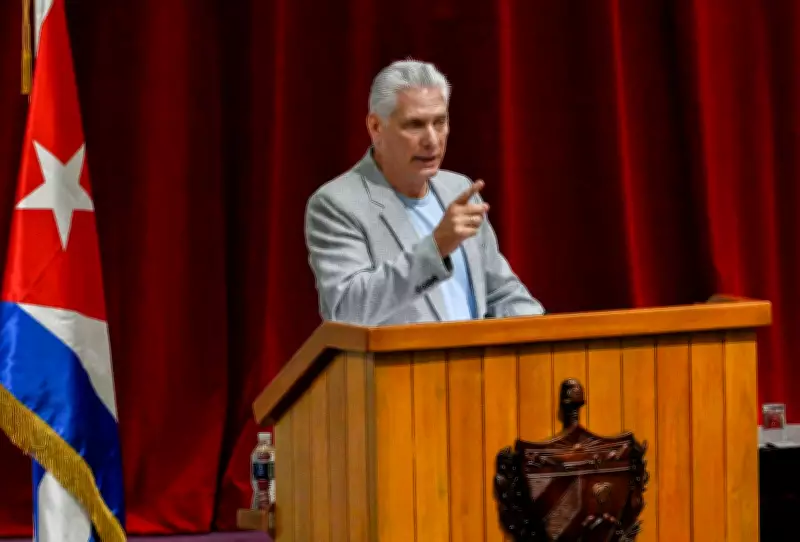
In a televised address, Diaz-Canel declared that the Cuban people are prepared to defend their sovereignty. 'A U.S. military assault would unleash a bloodbath,' he said, emphasizing that Cuba's armed forces and civilian population would resist any invasion. The president's remarks follow the U.S. decision to pause a long-standing military board with Canada, signaling a shift in regional defense priorities.
Context of Rising Tensions
The warning comes as Sherritt International, a Canadian mining company, halts plans to dissolve its Cuba nickel joint venture due to U.S. sanctions. The U.S. has also faced criticism from Canada over its policies, with some analysts suggesting that the Trump administration's influence on the Republican Party is testing its power. Meanwhile, Cuba's economy continues to struggle under the weight of sanctions and the pandemic.

International Reactions
The international community has expressed concern over the escalating rhetoric. Canada, a key ally of both the U.S. and Cuba, has urged restraint. The Cuban president's warning has also drawn attention to the potential humanitarian consequences of any military action, with human rights organizations calling for diplomatic solutions.
Historical Background
Cuba and the U.S. have a fraught history, including the failed Bay of Pigs invasion in 1961 and the Cuban Missile Crisis in 1962. Relations thawed under the Obama administration but soured again under President Trump, who tightened sanctions. President Biden has largely continued these policies, despite campaign promises to reverse them.
Economic Impact
The U.S. embargo has crippled Cuba's economy, leading to shortages of food, medicine, and fuel. Recent sanctions have targeted the island's nickel industry, a key source of revenue. Diaz-Canel's government has sought support from allies like Russia and China, but the economic pressure continues to mount.
Conclusion
As tensions simmer, the world watches closely. Diaz-Canel's warning serves as a reminder of the high stakes involved. Diplomatic engagement remains the preferred path for many, but the risk of escalation persists. The coming weeks will be critical in determining whether rhetoric gives way to action or dialogue.