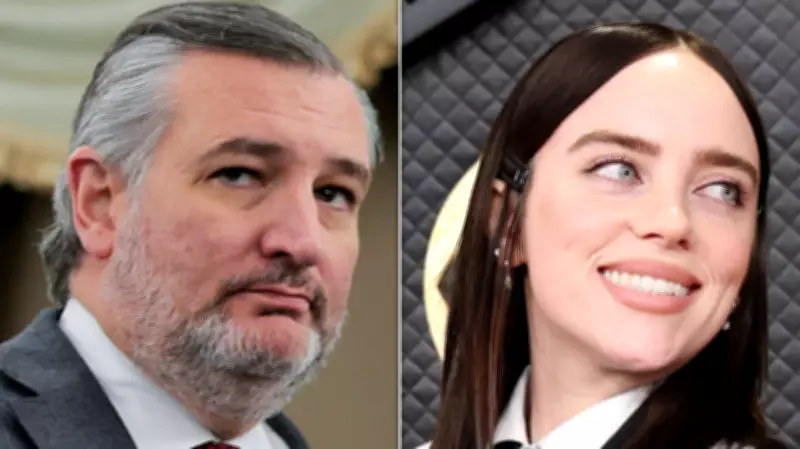
Senator Ted Cruz Faces Backlash Over Billie Eilish Question During Netflix Antitrust Hearing
Republican Senator Ted Cruz of Texas has encountered significant criticism on social media platforms this week following the circulation of a video clip showing him unexpectedly targeting pop star Billie Eilish during a Senate Judiciary subcommittee hearing. The hearing, which took place on Tuesday, was formally convened to examine Netflix's proposed acquisition of certain assets from Warner Bros. Discovery, focusing on antitrust and consumer rights concerns.
From Antitrust to Culture Wars: Cruz's Unexpected Pivot
While lawmakers from both major political parties questioned Netflix CEO Ted Sarandos and Warner Bros. Discovery executive Bruce Campbell about the potential merger, Senator Cruz diverted from the core antitrust discussion. After labeling Netflix as a "left-wing company" and echoing Republican concerns about diversity, equity, and inclusion initiatives, Cruz shifted his line of questioning to the recent Grammy Awards ceremony.
"One simple question: are we right now on stolen land?" Cruz asked the executives, referencing a line from Billie Eilish's acceptance speech at the February 1st Grammy Awards. Both Sarandos and Campbell indicated they were unfamiliar with the specific history of the land where the hearing was taking place, prompting Cruz to launch into a critique of Hollywood's perceived ideological stance.

"It starts to convey the entertainment world is deeply corrupt," Cruz stated, arguing that applause for Eilish's remarks suggested entertainment figures believe "America's fundamentally illegitimate." He further criticized what he characterized as hypocrisy, noting that Eilish "promptly went back to her $14 million mansion" after making her comments about stolen land.
Eilish's Grammy Speech and Conservative Backlash
During the 2026 Grammy Awards, Billie Eilish used her acceptance speech for Song of the Year to address immigration policy, stating "No one is illegal on stolen land" and expressing opposition to Immigration and Customs Enforcement actions. Her remarks were part of a broader pattern of artists using award show platforms to comment on social and political issues.
While many conservatives have expressed outrage over Eilish's comments since the awards ceremony, Cruz's decision to raise the issue during a Senate hearing about corporate mergers drew particular scrutiny. Social media users questioned the relevance of the Grammys discussion to antitrust regulation, with some characterizing Cruz's approach as political theater rather than substantive oversight.
Political Experts Analyze the Strategy
Political science experts interviewed about the incident suggest Cruz's questioning represents a deliberate engagement with culture war politics rather than a substantive examination of antitrust issues.
Todd Belt, a professor and political management program director at George Washington University, told media outlets that "This is definitely culture war stuff" and explained that Republicans frequently target "Hollywood liberals" to appeal to voters who perceive coastal elites as looking down on middle America. Belt suggested Eilish's remarks challenge foundational narratives about American legitimacy and border enforcement, making them particularly provocative for conservative audiences.
Conor M. Dowling, a political science professor at University at Buffalo, noted that Republicans have historically criticized "Hollywood elites" when politically advantageous. He observed that Cruz's timing—questioning Netflix executives shortly after the Grammys—created an opportunity to generate media coverage and communicate with the Republican base. Dowling further suggested that focusing on the "stolen land" terminology allows conservatives to shift discussion away from the substantive immigration policy criticisms embedded in Eilish's speech.
Broader Implications and Reactions
The incident highlights several ongoing dynamics in American politics:

- The persistent tension between Hollywood entertainment figures and conservative politicians
- The use of congressional hearings as platforms for cultural messaging beyond their stated purposes
- The strategic value of culture war issues in political communication and base mobilization
- The challenge of maintaining focus on substantive policy matters during politically charged hearings
While the hearing was formally convened to examine potential antitrust violations in the streaming industry, Cruz's line of questioning and the subsequent media coverage have shifted attention to broader cultural conflicts. The episode demonstrates how political figures can use official proceedings to advance narratives that resonate with their core supporters, even when those narratives diverge from the stated purpose of the proceedings.
As the 2026 political landscape continues to evolve, incidents like this hearing suggest culture war issues will remain prominent in political discourse, with elected officials seeking opportunities to highlight ideological divisions that energize their bases while potentially diverting attention from more technical policy discussions.