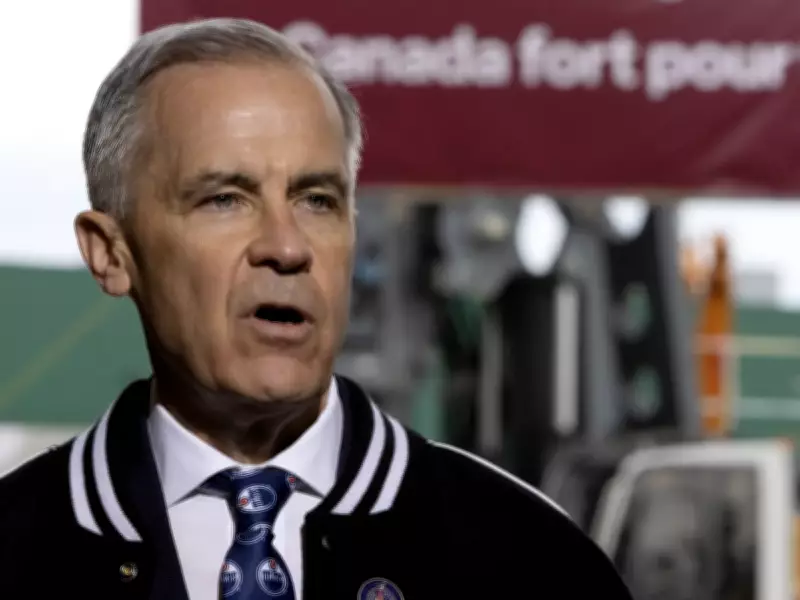
Last year, I supported the Conservatives in the federal election because the Liberal government of the previous 10 years had produced large net capital outflows, presided over Canada’s decline in the rankings of the most prosperous countries per capita, conducted a suicidal war on the petroleum industry, self-defamed the country for attempted genocide of First Nations, was a useless member of the western alliance and did not deserve a fourth consecutive term in office.
I had seen Mark Carney as a central banker in Canada, where he was a scene-stealer when the prime minister, Stephen Harper, and the finance minister, Jim Flaherty, guided us through the 2008 financial crisis. I also saw him in the United Kingdom, where, as governor of the Bank of England, he had plunged the bank into absurd controversies about global warming and parroted the Cameron government’s nonsense about Europe. His successor has renounced his dire predictions of the consequences of Britain withdrawing from the European Union.
Carney's Record and Policies
He paid no attention whatsoever to British reservations about lack of democracy in the European Union, where the commissioners shower the entire population of the combined membership with authoritarian communiques and are not remotely answerable to the so-called European Parliament, much less the electorate. The British are right to be hesitant to subordinate the institutions that they have carefully built up over nearly 1,000 years to the well-intentioned but unfledged institutions of Brussels and Strasbourg. Carney ignored all of this.

Although he won the election on a spurious misrepresentation of U.S. President Donald Trump as a ravening dragon assaulting the pure Canadian snow maiden of the north, almost everything is fair in politics, he is our prime minister and I wish him success.
Trump and Canada's Position
His principal strength in the polls continues to be his supposed ability to stand up to Trump. This is just posturing. After then-prime minister Justin Trudeau told Trump that the Canadian economy would collapse if he imposed the tariffs he was considering, and because Canada had not made a respectable contribution to its own defence since the retirement of Brian Mulroney in 1993, and because, like most foreigners, Trump does not see much difference between an English-speaking Canadian and an American from a northern state, it seemed to him logical for the two countries to federate. At no point was he threatening to occupy or annex Canada.
I strenuously criticized some of Trump’s reflections on Canada, including directly to him personally, and supported some of Ontario Premier Doug Ford’s rather draconian proposed countermeasures, including threatening to add a surcharge to electricity exports to the United States. It was an outrage for Trump to liken Canada’s conduct to that of Mexico, which was complicit in the illegal entry of millions of people into the United States, including many thousands of dangerous criminals, and which systematically sought to create unemployment in the United States by attracting American manufacturing to Mexican cheap labour for export under free trade to the U.S.
A Call for National Strength
The attempt, announced in Carney’s speech at Davos, to mobilize the “middle powers” in resistance to the abuse of the hegemons, and then going to Beijing to pander to the worst hegemon, is nonsense. If Canada was governed well, it would be seen by everyone to be one of the most important countries in the world. Instead of trying to mobilize a gaggle of grumbling little powers, we should concentrate on becoming a power ourselves. The world envies not only our proximity to the globe’s greatest market, but the fact that the Americans have not seriously bothered us for over 200 years, a comment that very few other countries in the world can make about their neighbours.