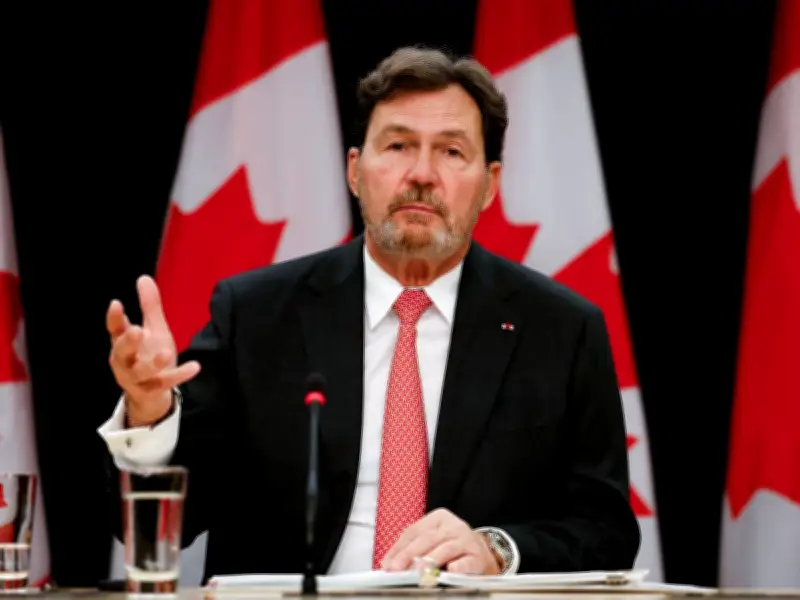
Yesterday, the chief justice of Canada held his annual June press conference on Parliament Hill. CBC News's coverage focused on Richard Wagner's concerns for the delicate mental health of the under-resourced Canadian judiciary. For those seeking contrast, the Post's tireless Chris Nardi offers a fuller overview, helpfully mentioning the questions Wagner declined to answer.
The judge, perhaps most notably, refused to contribute anything further when asked about his refusal to step aside from the appeal — filed by the Attorney General in March but not yet granted leave by the Supreme Court — of the Federal Court's condemnation of the February 2022 invocation of the Emergencies Act.
We shall spare the reader our familiar regurgitation of the civil-liberties outrage that the federal government perpetrated in the face of the Freedom Convoy protests in Ottawa. We will instead content ourselves with pointing out the comic irony here: Wagner faced demands to recuse himself from the prospective appeal partly because of remarks he made in this same annual press conference in 2022. At that time, four months after the Emergencies Act briefly crashed down on a country almost entirely at peace, our egomaniac chief justice had not yet learned the virtues of strategic silence, freely denouncing the protests as a “deplorable” product of “disinformation” that should “never happen again.”

Well, you know, I am willing to say, as I always have, that I'm about 75 per cent in agreement with the chief on this. He spoke out against the convoy protests on this and on other occasions in 2022 because he apparently considered obstructive and annoying street protest to be a threat to the rule of law — a “budding of anarchy.” From your lips to God's ears, one might retort: would that this Wagner Doctrine were applied consistently by the law and its servants!
But the issue in the Emergencies Act litigation is the much more grievous sin committed by the federal cabinet in response to the protests, which did no permanent harm anyone can specify. Two courts have now said that the act was invoked illegally, contrary to its own very clear criteria, and that the consequent suspension of parliamentary government and civil liberties by panicky nincompoops is a something, a something of obvious and incalculable importance, that should never happen again.
When potential parties to the Emergencies Act appeal petitioned Wagner to recuse himself from any future Supreme Court deliberations, he responded — through the registrar of the court — by falling back on this distinction. “Chief Justice Wagner,” the registrar's letter read, “has advised that he did not, at any time, either directly or indirectly, comment on the Emergencies Act … or matters at issue in the proceedings.”
Well, golly: not even indirectly? The severity of the protests and their immediate potential threat to the state have in fact been central “matters at issue” in the Emergencies Act litigation; one might even say they are the crux of the whole thing.