Each June, Chief Justice Richard Wagner holds a news conference, and each one reveals more about how he perceives his role at the helm of the Supreme Court. This year's event featured familiar themes, including a warning that criticizing court decisions risks portraying judges as “partisan actors” or “obstacles to the will of the people.” He emphasized that a non-partisan judiciary, “sheltered from all politicization,” is essential to the rule of law.
While Wagner is correct about the importance of an impartial judiciary, his tenure has paradoxically undermined the very principle he claims to cherish. If the judiciary seeks shelter from politicization, its chief justice should not spend his Junes wading into political debates. One cannot appoint oneself a public commentator and then claim immunity from public scrutiny.
A Pattern of Public Engagement
This is not an isolated incident. Early in his tenure, Wagner told reporters that the chief justice has “an obligation to speak to the people,” to be fulfilled “by our presence, by our speeches.” In 2024, he advised critics, including elected leaders, to read rulings before complaining. The result is the most publicly visible chief justice in living memory, positioning himself as a sentinel of liberal democracy.

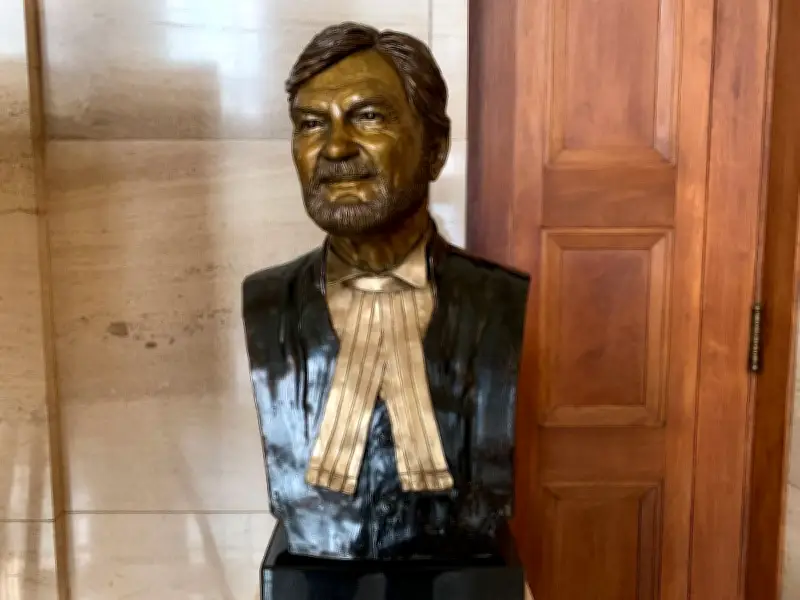
Then there is the bust. A bronze likeness of the sitting chief justice now stands in the Supreme Court's entrance, paid for by an undisclosed donor at an undisclosed cost. Wagner, who posed for the sculptor, claims he cannot identify the donor. A man who champions transparency sees no issue with a secretly funded monument to himself.
Recusal Question
This would be merely unbecoming if it stopped at vanity, but it does not. In spring 2022, Wagner told Le Devoir that the Freedom Convoy was “the beginning of anarchy” and that some protesters aimed to “take other citizens hostage.” Four years later, this poses a problem because the appeal over Ottawa's use of the Emergencies Act is now before his court, and Wagner refuses to recuse himself. His comments, he insists, had “nothing to do with the issues on appeal.”
The test for recusal, however, does not hinge on what a judge privately believes he can set aside. It depends on how a failure to recuse appears to a reasonable, informed observer. As Lord Hewart stated a century ago, “Justice should not only be done, but should manifestly and undoubtedly be seen to be done.” It is difficult to see how a chief justice who labeled the convoy an act of anarchy can be perceived as approaching the appeal with an open mind.
This appearance problem is not new. Lawyers raised it in 2022 through a complaint to the Canadian Judicial Council, which Wagner himself chairs. The Council dismissed it, reasoning that with no Emergencies Act case before the court, the concern was hypothetical. Now that the case is before the court, the warning the Council dismissed has arrived on schedule.