Mark Carney Embraces Trudeau's Postnational Vision, Sparking Historical Debate
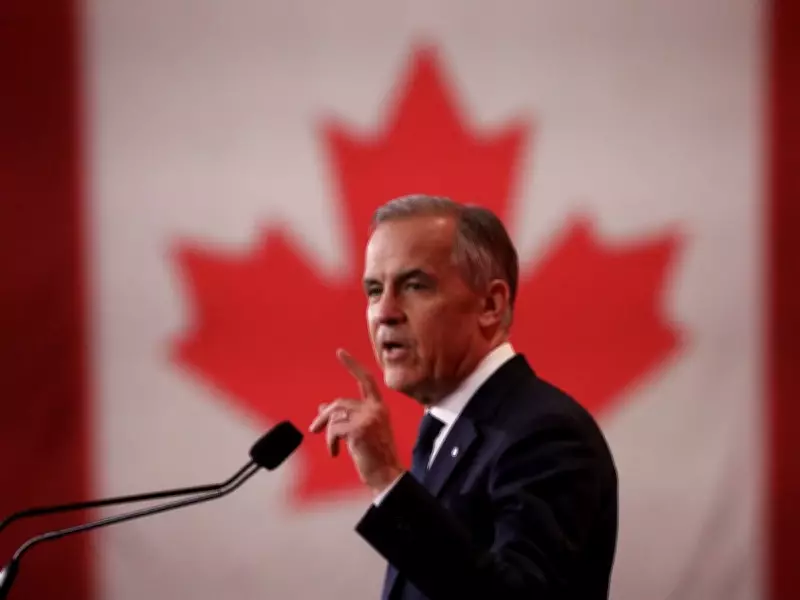
Prime Minister Mark Carney has firmly aligned himself with the postnational ideology championed by his predecessor Justin Trudeau, delivering a speech at the Liberal National Convention in Montreal that emphasized multiculturalism and inclusivity as core Canadian values. During his address on April 11, 2026, Carney declared that Canada was "forged through accommodation, not assimilation," positioning the nation as a model of progressive integration.
Historical Misrepresentation of Sir Wilfrid Laurier
In his remarks, Carney invoked the legacy of Sir Wilfrid Laurier, Canada's seventh prime minister, praising him as a leader who "governed a country that had once conquered his people." This characterization has drawn sharp criticism from historians and political analysts who argue that Carney fundamentally misrepresents Laurier's actual stance and historical context.
The historical record shows that Laurier was not conquered by Canada but was instead an integral part of its founding. As a French-Canadian statesman, Laurier helped build the nation from within, not as a conquered subject. More significantly, Laurier's vision for immigration and national identity directly contradicts Carney's accommodation narrative.

Laurier's Actual Assimilationist Position
During a 1905 speech in Edmonton, Laurier articulated clear expectations for newcomers to Canada. He welcomed immigrants but insisted they must become "unambiguous British subjects" who would actively participate in public life and "become Canadians." This was not an invitation to maintain separate cultural identities within a mosaic but rather a call for assimilation into the existing national framework.
Laurier's position reflected the foundational bargain of Confederation, which confirmed the guarantees made to French-Canadians after the Seven Years War:
- Preservation of the French civil code
- Protection of the French language
- Recognition of Roman Catholic faith
This arrangement was not about creating a multicultural hotel state but about establishing clear parameters for national unity.
The Contradiction in Carney's Narrative
Carney's speech creates a significant historical contradiction. Citing Laurier to argue against assimilation is comparable to citing René Lévesque to argue against Quebec independence—it fundamentally misrepresents the historical figure's actual positions and legacy.
This raises questions about Carney's previous praise for Canada's "proud British heritage" and bilingualism as part of the "bedrock" of Canadian identity. If these foundational elements are not given primacy, critics argue, they risk becoming mere decorative elements rather than sustaining pillars of national identity.
The Progressive Subtraction of Heritage Symbols
The speech highlights a broader trend in progressive inclusion that often grows through subtraction. Symbols of British and French heritage—street names, monuments, buildings—are frequently replaced with more generic or unfamiliar alternatives. This raises fundamental questions about cultural valuation:
- What value do we place on the cultures that built Canadian democracy?
- How do we honor the traditions that established Canadian industry and literature?
- What happens to the norms we take for granted when their cultural foundations are diminished?
Those who dismiss "culture war" issues as unimportant are often the same voices advocating for the renaming and replacement of historical markers. The choice between abstract ideals and concrete historical representation matters profoundly for national identity.
Choosing abstract multicultural ideals over specific historical and cultural foundations represents a deliberate reorientation of Canadian identity, one that Carney has now fully embraced despite its contradictions with the historical record he cites for support.