Prime Minister's Historical Remarks Draw Sharp Criticism from Quebec Officials
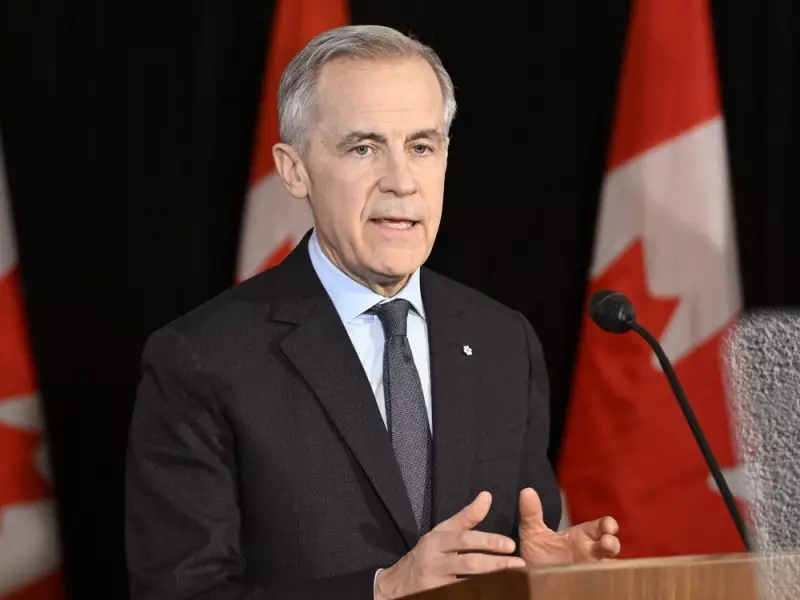
Prime Minister Mark Carney's recent speech in Quebec City has ignited a significant political controversy, with Quebec politicians accusing him of demonstrating a profound misunderstanding of the province's historical narrative. The remarks, delivered Thursday at the Citadelle on the historic Plains of Abraham, have drawn sharp contrast to Carney's well-received address at the World Economic Forum in Davos just days earlier.
'What a Historic Error': Roberge's Strong Response
Immigration Minister Jean-François Roberge, a senior member of the Coalition Avenir Québec government, offered a particularly pointed critique during an interview with Radio-Canada. "What a gaffe, what a historic error," Roberge stated emphatically. "The Battle of the Plains of Abraham represents the conquest, the culmination point where the English came and defeated the French and burned villages. There's nothing glorious in this."
Roberge was responding specifically to Carney's characterization of the 1759 battlefield where French forces under Louis-Joseph de Montcalm fell to British troops led by James Wolfe. The Prime Minister had described the site as marking "the place where Canada began to make its founding choice of accommodation over assimilation, of partnership over domination, of building together over pulling apart."

Political Fallout and Historical Interpretation
The controversy emerged as analysts and politicians across Quebec questioned Carney's historical interpretation on Friday. According to Roberge, "It's false what he said. He no doubt wanted to deliver a Canadian unity speech, but what clumsiness. He did not know what he was saying in historical terms. He wanted to encourage Quebecers to feel Canadian but he above all showed this Canadian doesn't know his Quebec history."
The timing of the remarks proved particularly sensitive, arriving on the eve of a major Parti Québécois policy convention in St-Hyacinthe expected to draw approximately 1,400 participants. Pro-independence politicians quickly seized upon Carney's comments as evidence of what they perceive as ongoing federal misunderstanding of Quebec's historical experience.
Parti Québécois Leader Responds
PQ leader Paul St-Pierre Plamondon immediately issued a statement on social media addressing the controversy. "It's not the first time in our history that, faced with a sovereignty movement that's growing in strength, that the federal government distorts our history and suddenly promises the end of the contempt it displays towards our democratic choices," St-Pierre Plamondon asserted.
The contrasting reception between Carney's Quebec City speech and his Davos address highlights the complex historical sensitivities that continue to shape federal-provincial relations in Canada. While his international remarks received widespread praise, his interpretation of Canadian history on Quebec soil has opened a fresh debate about historical narratives and their contemporary political implications.
This developing story represents more than a simple political disagreement—it touches upon fundamental questions of historical interpretation, national identity, and the ongoing negotiation of Canada's complex founding narratives. The Plains of Abraham, as both physical site and symbolic battlefield, continues to serve as a powerful touchstone in discussions about Quebec's place within Confederation.