Carney's Davos Principles Face Test in Iran Conflict
Prime Minister Mark Carney's recent endorsement of military action against Iran has ignited a significant debate about the consistency of his foreign policy approach. This development comes just months after Carney outlined his government's foreign affairs philosophy during a high-profile speech at the World Economic Forum in Davos.
The Davos Framework: Principled and Pragmatic
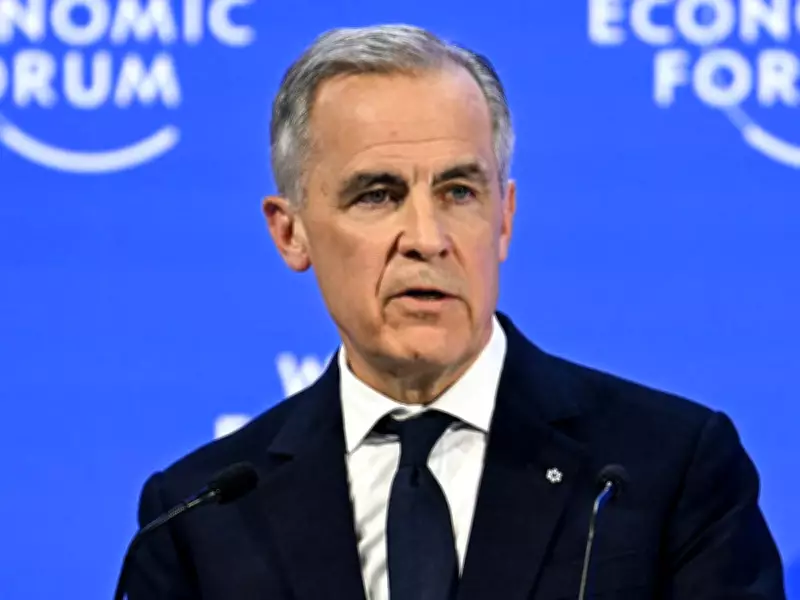
In January 2026, Carney articulated what he described as a "principled and pragmatic" foreign policy framework. He defined "principled" as maintaining a firm commitment to prohibiting the use of force except when aligned with the United Nations Charter. Simultaneously, he characterized "pragmatism" as engaging with the world as it exists rather than through an idealized Canadian perspective.
This carefully crafted position now faces scrutiny following Carney's support for Operation Epic Fury, the U.S.-led bombing campaign against Iran initiated by President Donald Trump. The military action presents a direct challenge to Carney's stated principles, as it lacks explicit authorization from the United Nations Security Council.

Legal and Political Controversy Emerges
The conflict has exposed deep divisions within Canadian political circles regarding international law and military intervention. Former Liberal foreign affairs minister Lloyd Axworthy has publicly criticized Carney's position, drawing parallels to Canada's 2003 refusal to join the American invasion of Iraq. Axworthy argues that Canada is now embracing precisely what it previously rejected—military action without Security Council approval based on hypothetical threats.
However, Irwin Cotler, who served as justice minister alongside Axworthy in the Chrétien government, offers a contrasting legal perspective. Cotler contends that Israel possesses legitimate grounds for offensive action against Iran under international law.
The Genocide Convention Argument
Cotler points to what he describes as Iran's "standing incitement to genocide" against Israel as justification for military response. He references the late Iranian Supreme Leader Ali Khamenei's statements about the necessity of Israel's annihilation and Iran's support for militant groups including Hamas, Hezbollah, and the Houthis.
"For twenty-five years, there has been a standalone breach of the Genocide Convention," Cotler stated in an interview. "The ongoing missile attacks over the years means Israel is entitled to exercise its right of self-defence because of the standing and imminent threat of genocide."
Cotler, who remains under police protection due to Iranian assassination threats, emphasizes that Iran has created what he terms a "genocidal ring of fire" around Israel through its proxy networks and weapons support.
Existential Threat Perception
Israeli opposition leader Yair Lapid has framed the conflict in existential terms, writing that all Israelis view the confrontation with Iran as fundamentally about national survival rather than politics. This perspective aligns with the Canadian government's official statement highlighting Iran's continued nuclear program development and enrichment activities.
The debate surrounding Carney's position reveals the complex intersection of international law, security concerns, and diplomatic principles. As military operations continue, questions persist about whether Carney's support represents a pragmatic adaptation to geopolitical realities or a departure from his previously articulated foreign policy framework.