Carney's Global Vision Sparks Domestic Policy Debate in Canada
Political rhetoric wrapped in patriotic symbolism often raises concerns about substance versus style. When Prime Minister Mark Carney delivered a speech in Quebec City declaring Canada the greatest country on earth, his words echoed themes of global leadership and justice that he previously championed at the World Economic Forum in Davos. However, this international focus has prompted questions about whether his administration is adequately addressing pressing domestic challenges facing Canadian citizens.
The Quebec City Address: Bastion and Beacon Framework
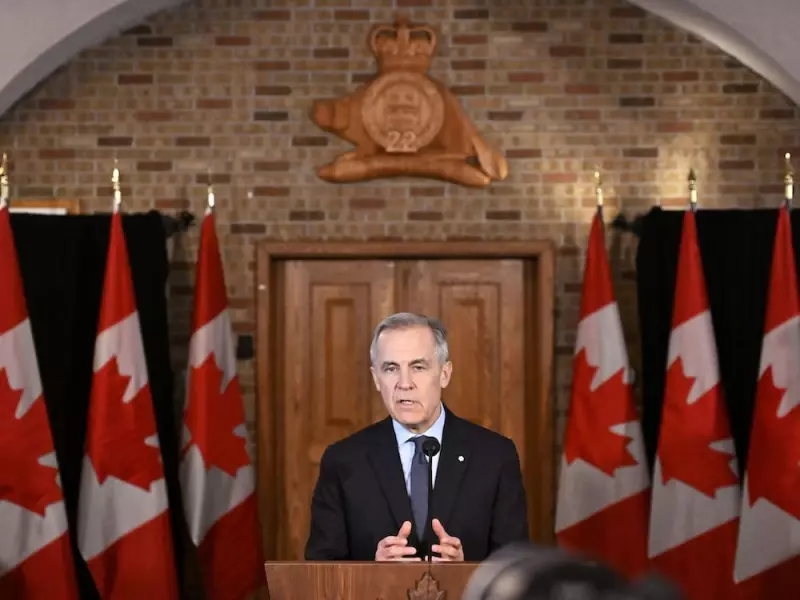
Speaking at the Citadelle in Quebec City on January 22, 2026, Prime Minister Carney outlined a dual vision for Canada's role in an increasingly turbulent world. He emphasized that while Canada cannot solve all global problems, the nation must demonstrate that alternatives to authoritarianism and exclusion exist. "The arc of history isn't destined to be warped toward authoritarianism and exclusion," Carney declared. "It can still bend toward progress and justice."
The prime minister's framework presented Canada as both a "bastion" and a "beacon" - concepts he previously introduced at Davos. As a bastion, Carney stressed the need to defend sovereignty, secure borders, protect communities, and build an inclusive economy. As a beacon, he positioned Canada as an example of how diversity strengthens rather than weakens a nation, particularly during times of rising populism and democratic decline.

Unspoken Presence and Defense Commitments
Throughout his address, Carney never explicitly mentioned former U.S. President Donald Trump, yet the specter of American political shifts loomed over his remarks. The prime minister acknowledged that "the world is increasingly dangerous and divided" with traditional alliances being redefined or broken. In response, he announced significant military investments, stating, "We are moving forward with the greatest strengthening of our military and security capabilities since the Second World War."
This defense spending increase comes as Canada finally approaches its long-delayed NATO commitment to allocate two percent of GDP to military expenditures - a target established twelve years earlier. Critics note that this acceleration follows years of warnings from defense officials about deteriorating global security conditions, including concerns about Chinese and Russian activities in the Arctic region.
Domestic Priorities Versus Global Ambitions
While Carney's speech focused on Canada's international role, questions persist about whether his administration is sufficiently addressing domestic concerns. The prime minister's eloquent words about global justice contrast with ongoing challenges within Canada, including child welfare issues and public safety concerns related to violent crime. Some observers argue that political rhetoric, no matter how inspiring, cannot directly feed children or enhance community security.
The timing of Carney's renewed focus on defense spending raises additional questions about motivation versus necessity. While increased military investment is broadly welcomed, some analysts suggest that external pressures rather than proactive planning drove this policy shift. The contrast between Canada's delayed response to defense needs and its aspirational global leadership rhetoric highlights tensions between international ambitions and domestic realities.
Broader Political Context and Future Implications
Carney's Quebec City address continues a pattern of positioning Canada as a counterweight to global authoritarian trends. His emphasis on democratic values, diversity, and international cooperation reflects ongoing efforts to define Canada's role in a changing world order. However, the effectiveness of this approach depends on balancing global aspirations with tangible domestic achievements.
As the prime minister promotes Canada as both secure bastion and moral beacon, the practical implementation of these concepts will face scrutiny. The coming months will reveal whether Carney's administration can translate rhetorical commitments into concrete policies that address both international challenges and pressing domestic needs, creating a coherent approach to governance that serves Canadian interests at home and abroad.