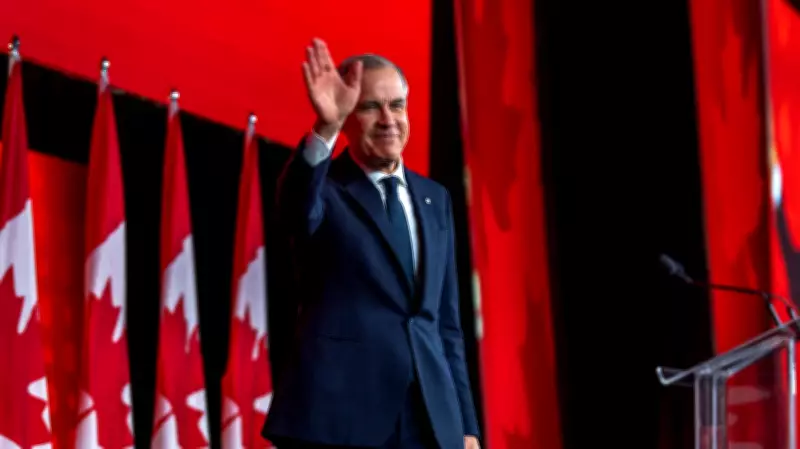
Carney's Liberals Achieve Parliamentary Majority in Special Elections
Canadian Prime Minister Mark Carney has secured a parliamentary majority for his Liberal government, a significant development that bolsters his leadership amid ongoing economic and trade challenges. The victory, confirmed on Monday, positions Carney to govern more effectively without relying on opposition support, particularly in addressing the trade war initiated by former U.S. President Donald Trump.
Strategic Wins in Ontario Ridings
The Liberal Party announced via social media that it had won two special elections in Ontario districts, known as ridings. These victories in University-Rosedale and Scarborough Southwest, both historically Liberal strongholds, have increased the party's seat count to 173 in the 343-seat House of Commons. A third election in Terrebonne, Quebec, remains too close to call, with the Liberals and Bloc Quebecois in a tight race.
Andrew McDougall, an assistant professor of Canadian politics at the University of Toronto, emphasized the implications of this majority. "He will be able to pass legislation without having to go to the opposition to secure enough votes," McDougall noted, highlighting how this shifts the political dynamics in Ottawa.

Consolidating Power Through Defections
Carney's majority has been further solidified by a series of defections from opposition parties over the past five months. Five legislators have switched allegiance to the Liberals, a move unprecedented since the eras of Prime Ministers John A. Macdonald and Jean Chretien. This influx has expanded what insiders call the 'large Liberal tent,' broadening the party's base and influence.
Most recently, longtime Conservative politician Marilyn Gladu joined the Liberals, citing the need for "a serious leader who can address the uncertainty that has arrived due to the unjustified American tariffs." Gladu, a former chemical engineer, has been a controversial figure due to her past statements on scientific treatments and Indigenous protests, but her defection underscores Carney's growing appeal across political lines.
Historical Context and Future Outlook
This majority marks the first time a federal government has held such control since Justin Trudeau's tenure from 2015 to 2019. Carney, who took office with no prior political experience but has gained international acclaim for uniting middle-power nations, now faces a stable political landscape until at least 2029, when the next national elections are scheduled.
Laura Stephenson, chair of the political science department at the University of Western Ontario, pointed out the shift in priorities under Carney's leadership. "He is focused on helping Canada survive the economic turmoil, not remaking society," she said, contrasting his centrist approach with Trudeau's more progressive agenda on issues like Indigenous reconciliation and minority rights.
Public Support and Economic Management
Recent polling from Nanos indicates strong public backing for Carney, with over half of Canadians preferring him as prime minister compared to just 23% for Conservative leader Pierre Poilievre. This represents a dramatic turnaround from last year, when Poilievre was projected to win the next election by a significant margin.
McDougall attributed this shift to Carney's perceived competence. "Carney has done a fairly good job showing Canadians he can handle Trump," he said. "He's shown Canadians he's a competent manager of the economy and the country. And so far Canadians have not been overly impressed by the alternatives."
The special elections also filled vacancies left by key figures. The University-Rosedale seat was previously held by former Deputy Prime Minister Chrystia Freeland, who resigned to become an economic development advisor in Ukraine. Another win replaced former Liberal lawmaker Bill Blair, who stepped down after being appointed ambassador to the United Kingdom.
As Carney navigates this new majority, his government is poised to tackle pressing issues such as trade tensions and economic stability, with a renewed mandate from voters and a strengthened parliamentary position.