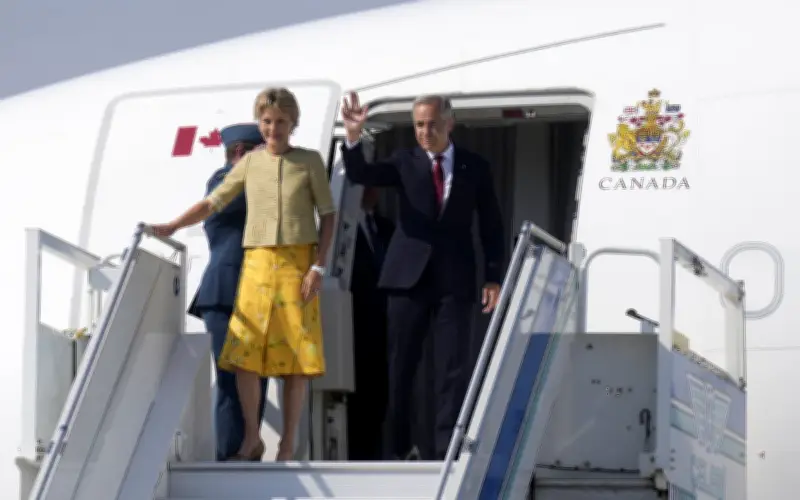
Prime Minister Mark Carney and Diana Fox Carney arrived in Ankara, Turkey, on Tuesday, July 7, 2026, for bilateral meetings with allied nations on the margins of the NATO summit. The discussions centered on collective security, defense commitments, and shared strategic priorities in the face of evolving global threats.
Key meetings and agenda
Carney held talks with leaders from several NATO member states, reinforcing Canada's commitment to the alliance's defense spending targets and operational readiness. The prime minister emphasized the importance of unity among allies, particularly regarding support for Ukraine and deterrence against Russian aggression. According to a readout from the Prime Minister's Office, the meetings also covered Arctic security, cybersecurity cooperation, and energy diversification.
Canada has pledged to increase defense spending to 2% of GDP by 2032, a target reaffirmed during the summit. Carney highlighted Canada's contributions to NATO's enhanced Forward Presence in Latvia and its leadership in the alliance's maritime task forces.

Defense procurement and industrial cooperation
On the sidelines, Carney welcomed the announcement that German company TKMS will supply Canada with new submarines by 2034, a contract valued at up to $60 billion. The deal is expected to bolster Canada's naval capabilities in the Arctic and Atlantic. TKMS CEO expressed that the real work begins now, focusing on technology transfer and Canadian industrial participation. The submarines will replace the aging Victoria-class fleet and are designed for extended under-ice operations.
Carney also discussed joint defense projects with European allies, including the development of Arctic surveillance systems and the integration of Canadian-made sensors into NATO's early warning network.
Broader diplomatic context
The summit comes amid heightened tensions with Russia and China, with NATO leaders agreeing to strengthen deterrence and adopt a new strategy for the Indo-Pacific. Carney advocated for a rules-based international order and called for greater collaboration on critical mineral supply chains, which are essential for defense technologies and green energy transitions.
Canada also secured commitments from allies to support the expansion of the NATO Climate Change and Security Centre of Excellence, based in Montreal, which will focus on climate adaptation for military infrastructure.
Domestic implications
Back in Canada, the government faces scrutiny over defense spending and procurement timelines. The submarine deal with TKMS has been praised by industry groups but criticized by opposition parties over cost and delivery schedules. Carney defended the agreement as necessary for national security and economic benefits, promising that Canadian shipyards will be involved in maintenance and lifecycle support.
The prime minister's attendance at the summit also provided an opportunity to address the ongoing return-to-office mandate for federal public servants, which came into effect earlier this week. Carney reiterated that the policy is about efficiency and collaboration, though some unions have voiced strong opposition and are adding millions to strike funds ahead of contract talks.