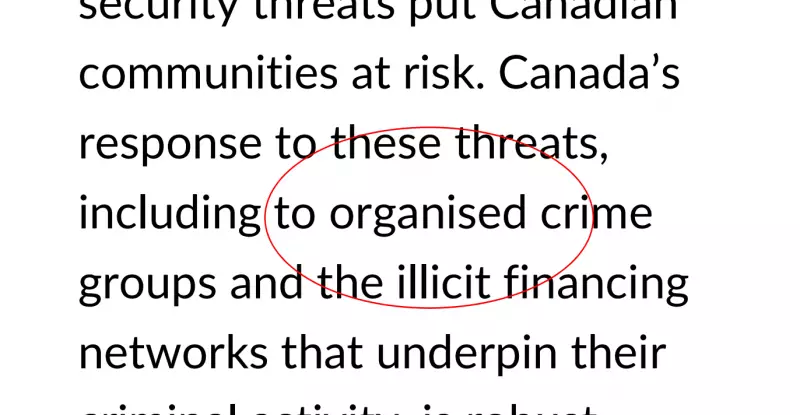
In an unexpected development within federal governance, Prime Minister Mark Carney's administration has introduced a distinctive linguistic approach in the official 2025 budget documents, systematically replacing conventional Canadian English spellings with British variants.
The Spelling Transformation in Federal Documents
The 492-page budget document released in November 2025 shows a comprehensive revision of spelling conventions that traditionally characterized Canadian government communications. Where previous federal documents maintained the unique Canadian practice of mixing British and American spelling patterns, the current budget consistently employs British forms throughout its extensive text.
Words like "organize" have become "organise," "catalyze" appears as "catalyse," and "recognize" transforms to "recognise." Similarly, "harmonize" and "specialize" now appear as "harmonise" and "specialise" respectively, marking a deliberate departure from established Canadian governmental practice.

Contrast With Established Canadian Conventions
This spelling shift creates a notable inconsistency across Canadian government platforms. Official House of Commons transcripts continue to use the previous Canadian spelling standards, maintaining "harmonize" and "organize" in parliamentary records. The Charter of Rights and Freedoms, one of Canada's foundational documents, retains the spelling "recognize" rather than adopting the budget's "recognise."
Historical markers maintained by the Historic Sites and Monuments Board of Canada also preserve traditional Canadian spelling conventions. For instance, the federal plaque commemorating the opening of Ontario's Trent Canal uses "authorized" rather than the budget's "authorised," highlighting the discrepancy between the new budgetary standards and established governmental practices.
Carney's Personal Influence on Government Style
This linguistic transformation reflects Prime Minister Carney's personal preferences, which became apparent shortly after his election in April 2025. According to reports from Liberal insiders cited in a National Post profile, Carney explicitly demanded British spelling in all official correspondence upon assuming office. The prime minister simultaneously instituted a formal business attire dress code for staff, signaling his approach to governmental professionalism.
The federal government's own language resources now contradict the budget's spelling choices. A 2017 post on the Our Languages Portal, maintained by the Government of Canada, explicitly states that Canadians properly use "ize" instead of "ise" in verbs like "organize," "civilize" and "specialize." This guidance aligns with the traditional Canadian approach that selectively incorporates both British and American spelling conventions based on established usage.
Observers note that Carney's spelling preferences form part of a broader "Europeanization" trend in his governance approach, though the practical implications of this linguistic shift for other government documents remain unclear. The budget stands as the most comprehensive implementation of this policy to date, raising questions about whether other federal communications will follow suit or maintain traditional Canadian spelling standards.