Iran's Revolutionary Guards Issue Warning to Ships in Strait of Hormuz
An official from the European Union's naval mission, Aspides, disclosed on Saturday that vessels in the region have been receiving VHF radio transmissions from Iran's Revolutionary Guards. The messages explicitly state that no ship is permitted to pass through the Strait of Hormuz, according to the anonymous source who spoke to Reuters.
Strategic Importance of the Strait
The Strait of Hormuz is recognized as the world's most vital oil export route, serving as a crucial maritime corridor. It connects major Gulf oil producers, including Saudi Arabia, Iran, Iraq, and the United Arab Emirates, with the Gulf of Oman and the Arabian Sea. This narrow waterway facilitates the transit of millions of barrels of oil daily, making it a linchpin for global energy markets and economic stability.
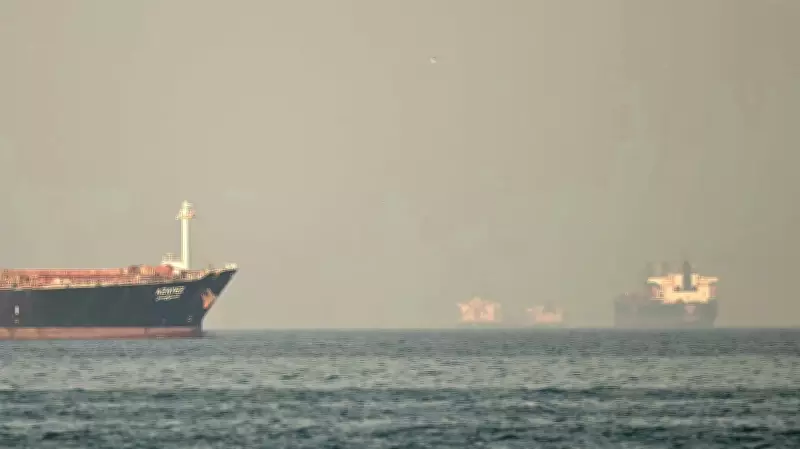
Cargo ships and tankers are frequently observed navigating these waters, as seen in recent imagery from the coast of Fujairah, United Arab Emirates. The strategic significance of the strait underscores why any disruption could have far-reaching implications for international trade and energy security.

Lack of Formal Confirmation from Iran
The EU official emphasized that Iran has not formally confirmed any such order to block the strait. This ambiguity leaves the situation fluid, with maritime authorities and global observers closely monitoring developments. Tehran has a history of threatening to close the Strait of Hormuz in retaliation for perceived attacks on the Islamic Republic, a tactic used over the years to assert regional influence and respond to geopolitical tensions.
This latest warning, if enforced, could escalate tensions in an already volatile region, potentially impacting oil prices and shipping logistics worldwide. The EU's Aspides mission continues to gather intelligence and assess the credibility of these transmissions, highlighting the ongoing challenges in maintaining maritime security in key global chokepoints.