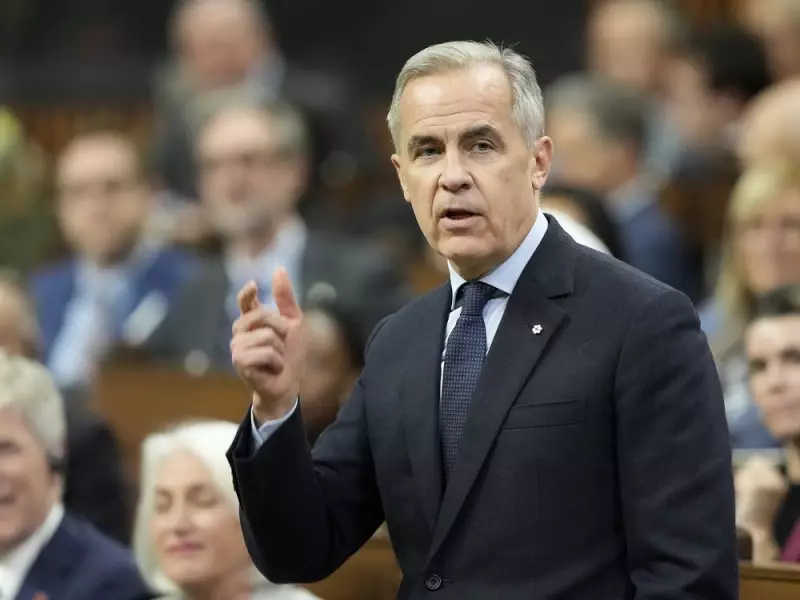
A troubling trend of sharp-tongued and dismissive rhetoric is taking hold in Canadian politics, with recent comments from Prime Minister Mark Carney and Ontario Premier Doug Ford raising concerns about the erosion of civil discourse. This shift towards the "snide side" of politics marks a departure from traditional parliamentary decorum, even in a country familiar with heated political exchanges.
From Parliament Hill to Queen's Park: A Series of Contentious Comments
The issue came to a head recently when Liberal Prime Minister Mark Carney was asked by a reporter when he last spoke with U.S. President Donald Trump. His immediate, dismissive retort was, "Who cares?" He elaborated, calling it a mere detail and stating he would speak to the president again "when it matters." Critics were swift to point out that the health of the relationship with Canada's greatest ally and trading partner is never just a trivial detail, especially during periods of diplomatic strain. Carney has since apologized for his "poor choice of words" on December 2, 2025.
In Ontario, Progressive Conservative Premier Doug Ford faced backlash for comments directed at protesters in the legislature. As demonstrators chanted against Bill 60, the Fighting Delays, Building Faster Act, and one was being ejected, Ford quipped, "go find a job, buddy." He later doubled down, suggesting the protesters were being paid by groups opposing his government. While Ford's supporters may agree with the sentiment, many argue that such remarks from a political leader towards citizens are beneath the office.

Expulsions and Accusations: The Opposition Fires Back
The decline in civility is not confined to government benches. Ontario NDP Leader Marit Stiles was recently expelled from the provincial legislature after refusing to apologize for calling the Ford government "corrupt." The accusation was made during a heated exchange on November 21, 2025, regarding the Skills Development Fund controversy. After House Speaker Donna Skelly demanded an apology, Stiles refused and was removed.
Stiles has stood firmly by her assessment. On the social media platform X, she posted, "Goddamn right they're corrupt," and later told media she would continue to "call it what it is." This incident underscores how charged rhetoric is becoming normalized, even when it breaches the established rules of parliamentary debate.
The Broader Implications for Canadian Democracy
Political observers note that while robust debate is essential, the recent spike in vexatious and noxious behaviour by public officials is damaging the institution of Parliament itself. The tradition of parliamentary privilege, which protects politicians from lawsuits for comments made in the House, was designed to facilitate open debate, not to shield personal attacks or snide remarks aimed at the public or opponents.
The pattern exhibited by Carney, Ford, and Stiles suggests a move towards political communication that appeals to the lowest common denominator. This approach, often seen in other political arenas, risks coarsening public discourse, deepening political divisions, and undermining public trust in democratic institutions. The call from commentators is clear: political leaders should champion civility and respect, opting for substantive argument over sarcastic dismissal, to preserve the health of Canadian democracy.