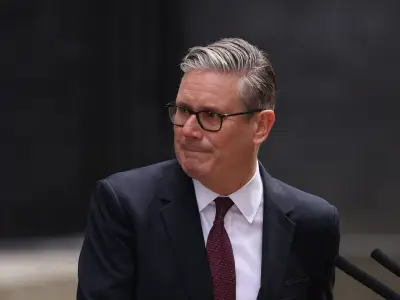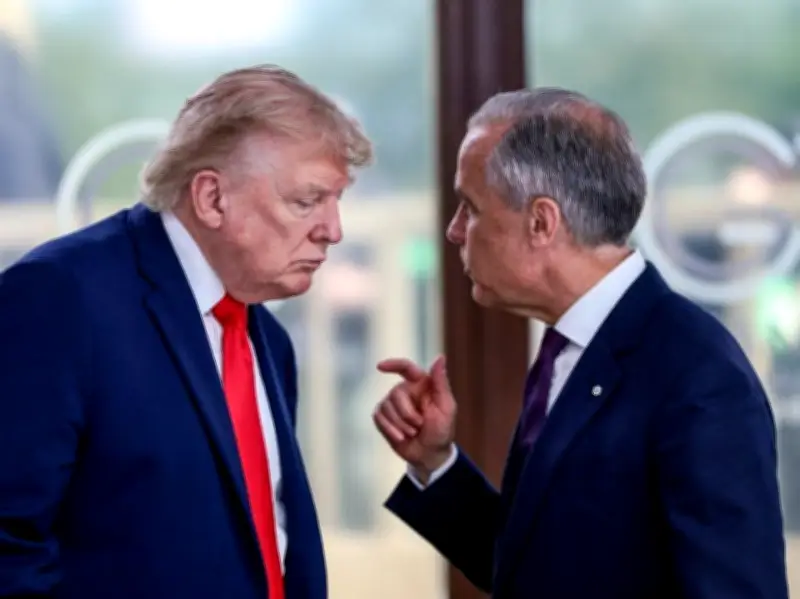
Canadian Prime Minister Mark Carney admitted on Thursday that he did not discuss the Canada-United States-Mexico Agreement (CUSMA) during his phone call with U.S. President Donald Trump the previous day. The revelation comes just days before the July 1 review deadline, raising questions about Canada's approach to the critical trade pact.
Carney's Account of the Call
“We didn’t discuss CUSMA,” Carney told reporters, recounting the conversation with Trump. Instead, the two leaders focused on defence issues related to the upcoming NATO conference, Arctic security, and the war with Iran. Carney’s failure to raise trade matters has drawn criticism, especially given the looming deadline.
Carney defended his approach, stating that Canada employs a team strategy involving cabinet minister Dominic LeBlanc, chief negotiator Janice Charrette, ambassador Mark Wiseman in Washington, and members of his advisory council. However, his comments offered little insight into how Canada plans to secure a deal.

U.S. Ambassador's Warning
U.S. Ambassador Pete Hoekstra earlier this week told CTV that Canada and the United States are “not anywhere close to announcing any type of a framework or an interim agreement.” Hoekstra revealed that talks were near a deal last October but fell apart, and no substantial negotiations have occurred since then.
“We’re not anywhere close,” Hoekstra said, underscoring the lack of progress. Carney, however, appeared dismissive of the urgency, saying, “I mean we could sign a bad deal this afternoon, right? We could have signed a bad deal a year ago. We’re not going to sign a bad deal. So, it has to be a real deal.”
Options for CUSMA's Future
On July 1, Canada, Mexico, and the United States will meet to decide the future of CUSMA. Three main options are on the table: renew the agreement for an additional 16 years, withdraw with six months' notice, or keep the existing agreement for the remaining 10 years with annual reviews. Canada prefers the first option but is likely to get the third, which would create uncertainty for businesses and deter investment.
Beyond CUSMA, tariffs imposed under Section 232 on steel, aluminum, and autos remain unresolved. Hoekstra noted that the Trump administration has asked Canada for an offer on a future deal, but none has been proposed. Mexico is working on a side deal for tariff relief, while Canada lags behind.
Conservative Criticism
Conservative Leader Pierre Poilievre criticized Carney's approach, advocating for leveraging Canada's resources. “What I would do is build up our leverage, and we have a lot, by committing to build a strategic reserve of the 10 most critical minerals according to NATO that you need to fight a war. Put those in a reserve,” Poilievre said. He also proposed increasing oil production by two million barrels and offering the U.S. access in exchange for tariff-free market access. Poilievre called this “positive leverage” that Carney is not using, and warned that Canadians are paying the price through job losses.