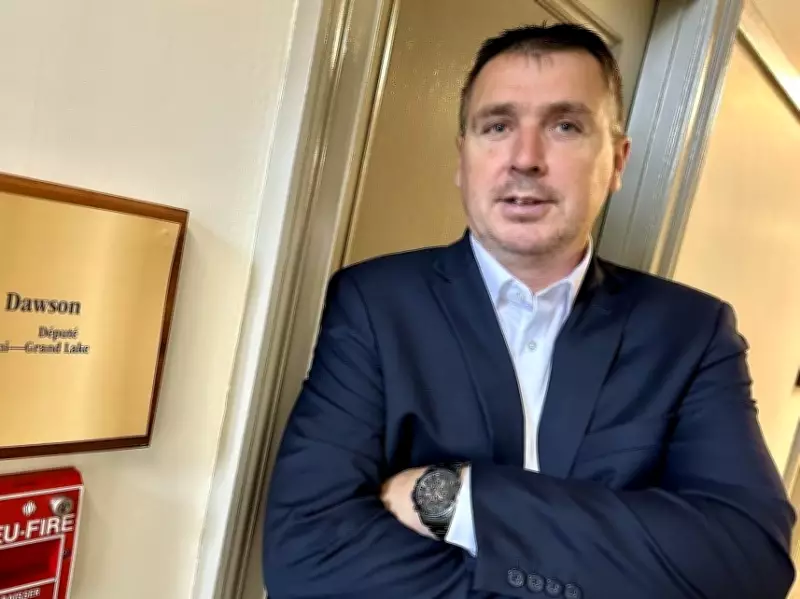
A recent poll commissioned by the Canadian Taxpayers Federation has revealed strong public support for Conservative MP Mike Dawson's decision to reject a legislated pay raise, highlighting widespread discontent with automatic salary increases for federal politicians.
MP Takes Stand Against Pay Increase
Miramichi—Grand Lake, New Brunswick MP Mike Dawson made headlines earlier this month when he publicly refused his mandated April 1 salary increase. In a letter to the clerk of the House of Commons, Dawson explained that he could not accept the $8,800 raise that would boost his annual salary from $209,800 to $218,611.
"In these challenging times, when affordability and the rising cost of living are front of mind for all my constituents — and because it was never addressed on your doorstep when I sought your vote — an increase in my pay from your tax dollars is not something I can accept at this time," Dawson wrote in his February 10 Facebook post.

Overwhelming Public Support
The Leger poll, conducted between February 13 and 15, 2026, surveyed 1,509 Canadian adults and found that 78% of respondents support Dawson's decision to reject the raise. The breakdown shows:
- 57% expressed strong support for Dawson's move
- 21% indicated they somewhat support the decision
- Only 15% opposed the move, with 8% somewhat against and 7% strongly opposed
- 7% of those polled remained unsure
Broad Opposition to Automatic Raises
The poll revealed even stronger opposition to the concept of automatic pay raises for Members of Parliament. A significant 80% of Canadians oppose the legislated salary increases, while just 13% support them.
"Here's something Dawson needs to remember: He may be alone on this issue in the House of Commons for now, but regular taxpayers across Canada are standing with him," said CTF Federal Director Franco Terrazzano. "All MPs need to look at this poll, listen to their constituents and forcefully push the government to cancel the politician pay raise."
How MP Salaries Are Determined
Legislation dictates that all MPs receive annual raises on April 1, with this year's increase estimated at approximately 4.3%. These adjustments are overseen by the House of Commons' Board of Internal Economy and are based on average increases granted by large public sector companies.
It's worth noting that previous governments have intervened to halt automatic raises. Former Prime Minister Stephen Harper froze MP salaries between 2010 and 2013 in response to the global financial crisis of 2008-09.
Additional Compensation for Leadership Roles
The base MP salary represents just part of the compensation package for those in leadership positions:
- Cabinet ministers receive an additional $99,900 annually
- The Speaker of the House earns the same $99,900 bonus
- The prime minister typically earns double the base MP salary, currently amounting to $419,600
The poll methodology involved Leger's online panel, and while margins of error cannot be directly applied to online panels, an equivalent probability sample would yield a margin of no greater than ±2.5%, 19 times out of 20.
Dawson's principled stand against the pay increase has clearly resonated with Canadians who are grappling with affordability concerns and rising living costs, creating pressure on other parliamentarians to reconsider their own positions on automatic salary adjustments.