Kinsella: Canadian Conservatives Face Defining Choice on Trump's Second Term
Columnist Warren Kinsella presents a stark challenge to Canadian conservatives in his latest opinion piece, asking them to confront a fundamental question about their relationship with former U.S. President Donald Trump. The central inquiry revolves around whether conservatives will finally acknowledge that what some call "Trump Derangement Syndrome" might actually describe Trump himself rather than his critics.
A Personal Perspective from Alberta
Kinsella begins with a personal reflection, noting his upbringing as a card-carrying Liberal in conservative-leaning Alberta. This experience taught him that no political ideology holds exclusive claim to common sense. He observes that every political tribe—whether Liberal, Conservative, or New Democrat—contains its share of extremists and questionable characters.
"When you are a progressive-type surrounded by conservative types," Kinsella writes, "you learn pretty quickly that no ideology has a monopoly on common sense."

The Greenland Declaration: A New Level of Concern
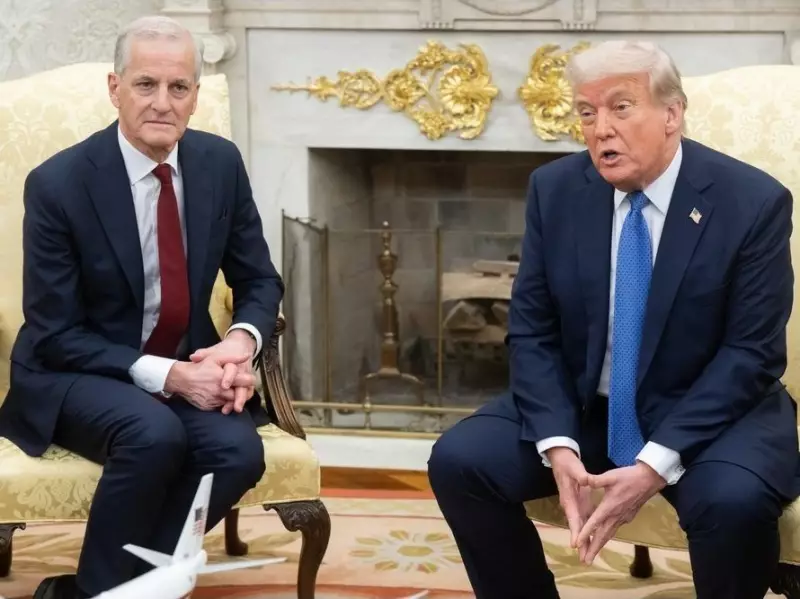
The columnist points to recent developments that he believes place Trump in a category of his own. Specifically, he highlights a text message Trump reportedly sent to Norway's Prime Minister Jonas Gahr Store in April 2025, which has been confirmed as authentic by Norwegian officials and PBS.
In this message, Trump reportedly wrote: "Considering your Country decided not to give me the Nobel Peace Prize for having stopped 8 Wars PLUS, I no longer feel an obligation to think purely of Peace, although it will always be predominant, but can now think about what is good and proper for the United States of America."
Trump further claimed to have done more for NATO than any person in history before adding: "The World is not secure unless we have Complete and Total Control of Greenland."
Kinsella emphasizes the significance of this statement, noting that Greenland is actually an autonomous territory of Denmark, not Norway. More importantly, he argues that a sitting U.S. president declaring he no longer needs to "think purely of Peace" because he didn't receive a Nobel Prize represents a dangerous escalation in rhetoric.
Escalating Actions in Trump's Second Term
The columnist details what he describes as increasing instability during Trump's second term in office, which began in January 2025. He lists several concerning developments that have occurred over the past year:
- Discussions about making Canada the 51st state
- Prosecutions of political critics and journalists
- Militarization of U.S. cities
- Assaults on the independence of the Federal Reserve
- The controversial killing of journalist Renee Good
- Crippling tariffs levied against allies while exempting Russia
Kinsella notes that Trump has even made physical changes to the White House, "partly tearing it down and gilding it like a hooker's drawing room." He observes that while Trump's first term contained significant controversies—including the January 6th insurrection, abuses of power, election obstruction, and two impeachments—the current term has escalated to new levels.
The Changing Political Landscape
A key distinction Kinsella makes between Trump's first and second terms concerns the people surrounding the president. During the initial administration, Trump was "surrounded by comparatively sane people," according to the columnist. Now, he suggests, "the inmates are running the asylum."
This environment, combined with Trump's recent statements about NATO and peace, leads Kinsella to a sobering conclusion: "I am more convinced than ever before that he will not complete his term in office."
The Choice for Canadian Conservatives
Kinsella's central argument challenges Canadian conservatives to make a choice. Will they continue to support or excuse Trump's behavior, or will they recognize what the columnist sees as a unique and dangerous departure from political norms?

The piece serves as both a critique of Trump's second term and a direct appeal to Canadian conservatives to reconsider their relationship with the former president. Kinsella suggests that the events of the past year represent more than typical political disagreement—they indicate a fundamental shift in how power is exercised and international relationships are managed.
As Trump signals willingness to undermine NATO and abandon peace-focused thinking over personal grievances, Kinsella argues that Canadian conservatives face a defining moment in determining how they respond to this evolving political reality.