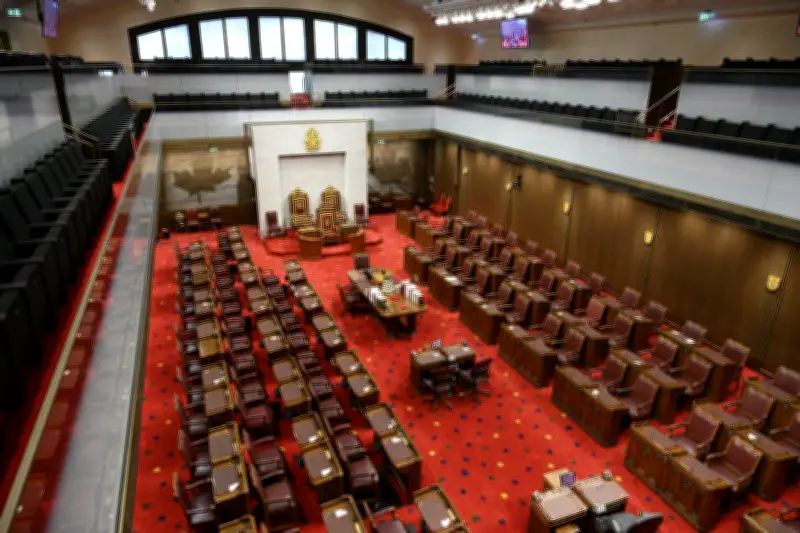
The Senate of Canada is the upper house of Parliament, playing a crucial role in the legislative process by reviewing and amending bills passed by the House of Commons. Unlike the House of Commons, whose members are elected, senators are appointed by the Governor General on the advice of the Prime Minister.
Composition and Appointment
The Senate consists of 105 senators from across Canada's provinces and territories. Appointments are based on a formula that allocates seats by region: 24 from Ontario, 24 from Quebec, 24 from the Maritime provinces (10 from Nova Scotia, 10 from New Brunswick, 4 from Prince Edward Island), 24 from the Western provinces (6 each from Manitoba, Saskatchewan, Alberta, and British Columbia), and 6 from Newfoundland and Labrador. Additionally, one senator represents each of the three territories: Nunavut, Northwest Territories, and Yukon.
Senators serve until age 75, a change implemented in 1965 from the previous lifetime appointment. The prime minister selects senators, often from their own party, leading to criticism of patronage. However, recent reforms under Prime Minister Justin Trudeau introduced a merit-based advisory board to recommend independent candidates.

Powers and Functions
The Senate's primary role is to provide "sober second thought" on legislation. It reviews bills from the House of Commons, proposes amendments, and can delay or reject legislation. However, it rarely defeats government bills outright. The Senate also introduces its own bills, except for money bills (taxation and spending), which must originate in the Commons.
Key powers include the ability to veto constitutional amendments and to investigate national issues through committee studies. The Senate also represents regional and minority interests, ensuring that smaller provinces have a voice in Parliament.
Criticism and Reform
The Senate has faced criticism as an undemocratic institution because senators are not elected. Critics argue it is a patronage dumping ground, while defenders say it provides valuable expertise and regional balance. Reform efforts have included proposals for an elected Senate, but constitutional amendments require broad provincial consent, which has proven difficult. The 2014 Supreme Court ruling on Senate reform stated that major changes require a constitutional amendment with support from seven provinces representing at least 50% of the population.
Despite calls for abolition, the Senate remains an integral part of Canada's bicameral system, balancing the power of the elected House of Commons and ensuring thorough legislative scrutiny.