Australia came together in a solemn national day of remembrance on Sunday, exactly one week after a deadly terrorist attack struck a Hanukkah celebration at Sydney's Bondi Beach. The country observed a moment of silence at 6:47 p.m., the precise time the shooting began on December 14, honouring the 15 lives lost in the antisemitic assault.
Nationwide Vigils and Solemn Tributes
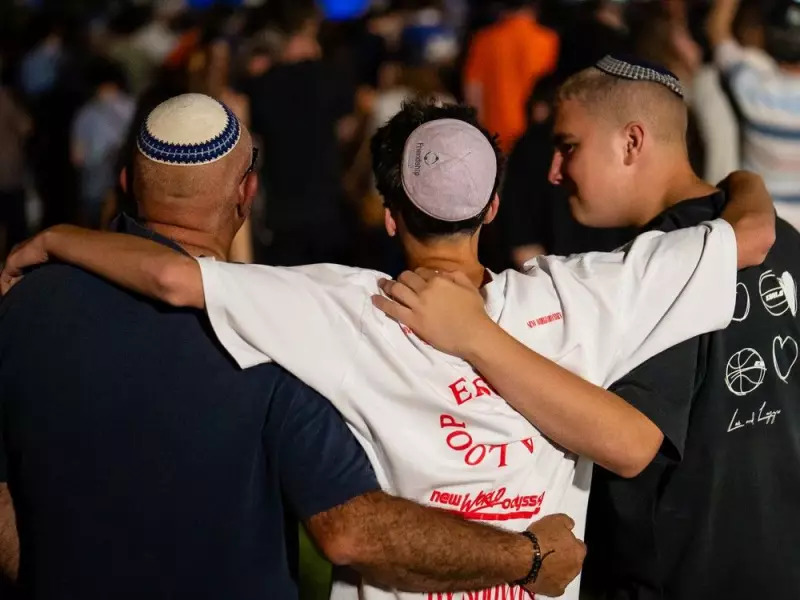
Thousands of Australians gathered in Sydney's eastern suburbs, the site of the tragedy, to participate in the minute of silence. The main event, a candlelight vigil at Bondi Pavilion, saw the local Jewish community, dignitaries, and religious leaders unite under heightened security. Across the nation, similar commemorations took place, with people encouraged to light a candle in their window as a symbol of remembrance and solidarity against hatred.
Prime Minister Anthony Albanese, who declared the Day of Reflection, stated it was "a moment for Australia to stand with our Jewish community." In a message on social media, he urged citizens to participate, adding, "Standing together to show that hatred and violence will never define who we are." He emphasized that the spirit of Hanukkah—the triumph of light over darkness—was the guiding principle for the national response.

Victims, Perpetrators, and Mounting Political Pressure
The attack, which targeted a festival at Archer Park, claimed the lives of 15 individuals. Among the victims was Rabbi Eli Schlanger, 41, who had led the Chabad mission in Bondi for 18 years. Also killed was Adam Smyth, 50, a non-Jewish passerby and father of four. The youngest victim was 10-year-old Matilda.
Police neutralized one gunman at the scene and arrested a second. The arrested individual now faces 59 charges, including 15 counts of murder and committing a terrorist act. Early investigations suggest the attackers, a father and son, were inspired by the Islamic State terrorist group.
The Albanese government has faced significant criticism in the attack's aftermath. Israeli Prime Minister Benjamin Netanyahu and others have accused it of not doing enough to combat rising antisemitism prior to the attack. The government has also been accused of deflecting focus onto gun control rather than directly confronting the jihadist ideology behind the violence.
Security Review and National Resolve
In response to the tragedy and the ensuing public discourse, Prime Minister Albanese announced a government review of national security agencies on Sunday. Mike Burgess, Director-General of the Australian Security Intelligence Organisation (ASIO), pledged full cooperation. Burgess stated the review would address "false statements" circulating since the attack and help restore public confidence.
He confirmed that ASIO had already begun an internal review of its decision-making processes related to the incident. While welcoming scrutiny, Burgess firmly rejected claims that ASIO had failed to pass on critical intelligence or had deprioritized counter-terrorism efforts before the Bondi Beach massacre.
The national day served as a powerful, unified gesture of mourning and resilience, even as difficult questions about security, intolerance, and national cohesion continue to be debated across Australia.