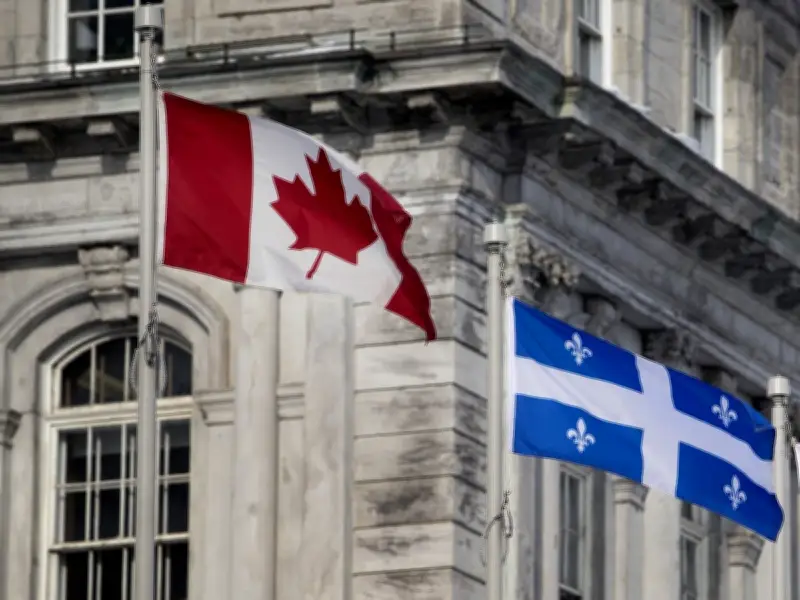
For years, Alberta has been told its frustrations are exaggerated or rooted in partisanship. But the truth is far simpler and far more structural — Canada is not an equal federation, and Alberta is the province most affected by that reality.
Canada operates under what political scientists call asymmetry, meaning one province has different powers, rights or exceptions that others do not. This isn’t a criticism of Quebec or a denial of its unique culture. It is simply how the federation was designed.
Quebec holds powers no other province has — control over immigration selection, unique authority over language and cultural policy, the ability to opt out of federal programs with compensation, its own pension plan and police force. These powers were created to protect Quebec’s identity — a goal many Canadians respect — but they also mean Quebec operates under a different set of rules.

Alberta’s position is straightforward — if Quebec has these powers, every province should have the same options. Alberta is not asking to take anything away from Quebec. It is asking for equality.
This is where the structural conflict becomes unavoidable. Quebec’s political identity is built on being distinct, not equal. Alberta’s political identity is built on fairness, not special treatment. These two visions cannot coexist within the same constitutional framework.
Alberta’s grievances flow directly from this imbalance. Equalization remains unreformable because Quebec treats it as untouchable. National energy corridors cannot be built when another province can veto them. Federal overreach lands more heavily in the West. And constitutional reform is impossible because Quebec will not support changes that dilute its special status.
These are not emotional complaints. They are structural realities.
Yet, across the country, there is a reluctance to acknowledge this. Canadians dislike conflict, and reopening constitutional questions feels risky. Ontario benefits from the status quo and fears instability more than inequality. Atlantic Canada depends on federal transfers and avoids debates that might threaten it.
And in recent months, both B.C. and Manitoba have taken public shots at Alberta — not because it is the source of the problem, but because criticizing Alberta is politically safe.
Confronting Quebec’s special status is not. It is easier to frame Alberta as unco-operative than to address the deeper imbalance at the heart of the federation.
Meanwhile, the national media often frames Alberta’s concerns as regional irritability rather than legitimate structural issues. This reinforces the perception that frustrations are emotional rather than grounded in the design of the federation itself.
But ignoring a problem does not make it disappear. Alberta’s frustration is not rooted in anger; it is rooted in the simple fact that Canada cannot function as a fair federation when one province operates under a different set of rules and the rest of the country is unwilling to discuss it.
If Canada is truly at a crossroads, then honesty must come first. Alberta is not asking for special treatment. Alberta is asking for equality — and for a national conversation that has been avoided for far too long.
Dave Musfelt is a Calgary resident and retired sales professional. He writes about fairness, federalism, and the structural challenges facing Western Canada.