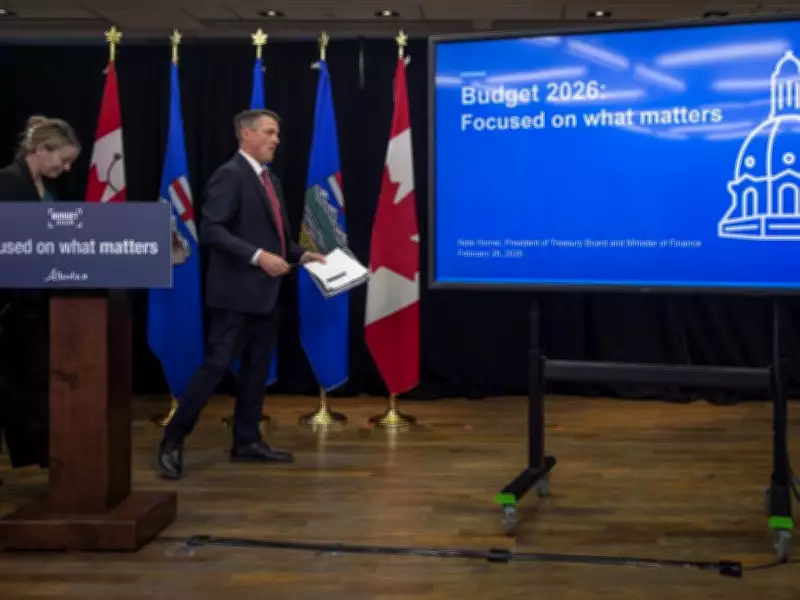
Alberta's Budget Deficit Sparks Heated Debate Over Immigration and Spending
As Alberta grapples with its 2026 budget deficit, a contentious debate has emerged regarding the primary drivers behind the province's financial challenges. Critics of the budget have been urged to examine the broader national landscape, where every province, territory, and municipality—including the federal government—is projected to face budget deficits this year.
National Context of Fiscal Challenges
The scale of these deficits is substantial across Canada. British Columbia anticipates a budget deficit of $11.6 billion for the current year, while Ontario reported a deficit of $13.5 billion in 2025. These figures highlight a widespread fiscal strain that extends far beyond Alberta's borders.
According to analysis presented in recent discussions, the fundamental issue stems from a significant expansion in spending for essential social programs, education, and healthcare systems. This increased expenditure has not been matched by corresponding revenue growth, creating substantial budgetary pressures.

Immigration's Impact on Public Resources
Statistics Canada data reveals a dramatic surge in international migration to Canada, with over one million people arriving annually in both 2022 and 2023. The third quarter of 2024 saw an astonishing 92-percent increase in migration numbers. This rapid population growth has placed unprecedented strain on public resources that cannot be adequately planned for, constructed, staffed, or financed within short timeframes.
Government revenue streams nationwide are experiencing declines due to multiple factors including immigration-related pressures, tariff impacts, reduced resource revenues, and escalating public service costs across all sectors.
The Inevitability of Tax Increases
Governments across Canada appear unable to generate sufficient revenue to meet citizen expectations without resorting to tax increases. Albertans will eventually confront difficult choices between higher income taxes or the implementation of a provincial sales tax—a decision that transcends political party lines and will remain necessary regardless of whether the United Conservative Party or New Democratic Party holds power.
Bruce Wilson of Edmonton emphasized this reality in recent correspondence, noting that fiscal responsibility requires acknowledging these hard truths about revenue generation.
Alternative Perspectives on Migration Pressures
Not all observers attribute Alberta's cost-of-living challenges solely to international immigration. Danielle Carter of Edmonton argues that Premier Danielle Smith's focus on immigrants overlooks significant internal migration patterns. Carter notes substantial numbers of Canadians relocating to Alberta from British Columbia, Ontario, and Saskatchewan for employment opportunities, as evidenced by the prevalence of out-of-province license plates throughout Alberta.
"If she wants to control the high cost of living, she will have to stop everyone from other provinces from moving to Alberta," Carter stated. "Please stop blaming immigration for the high cost of living in Alberta."
Political Transparency Concerns
Additional correspondence reveals growing frustration with political responsiveness. Linda Podlubny of St. Albert reported sending daily emails throughout February to Premier Danielle Smith and local MLA Dale Nally, asking a straightforward question about their positions on Alberta separating from Canada. Despite the United Conservative Party's frequent claims of transparency, Podlubny received no response from her MLA and only repetitive form letters from the premier's office that avoided answering the question directly.
Challenges in Candidate Evaluation
Another correspondent, reflecting on democratic principles at age 88, acknowledged the ideal of voting for candidates rather than political parties but expressed difficulty in identifying incompetent, dishonest, morally deficient, or opportunistic candidates during election campaigns. This underscores the broader challenges citizens face in making informed voting decisions within complex political landscapes.

The debate surrounding Alberta's budget deficit continues to evolve, touching on fundamental questions about immigration policy, fiscal management, political accountability, and democratic participation in contemporary governance.