Air Canada CEO's Language Snub Ignites Francophone Fury After Fatal Crash
The tragic deaths of two Air Canada Jazz pilots at New York's LaGuardia Airport last week have exposed deep linguistic divisions within Canada, with francophone communities expressing justified outrage over CEO Michael Rousseau's handling of the aftermath.
A Final Act of Heroism
Captain Antoine Forest, 30, and First Officer Mackenzie Gunther, 24, spent their final moments heroically attempting to decelerate their aircraft as it barreled toward a firetruck on the runway. Passengers reported feeling the brakes engage forcefully just before impact, with one traveler striking his head against the seat in front. This decisive action likely saved every passenger's life while ensuring the pilots absorbed the unsurvivable collision force.
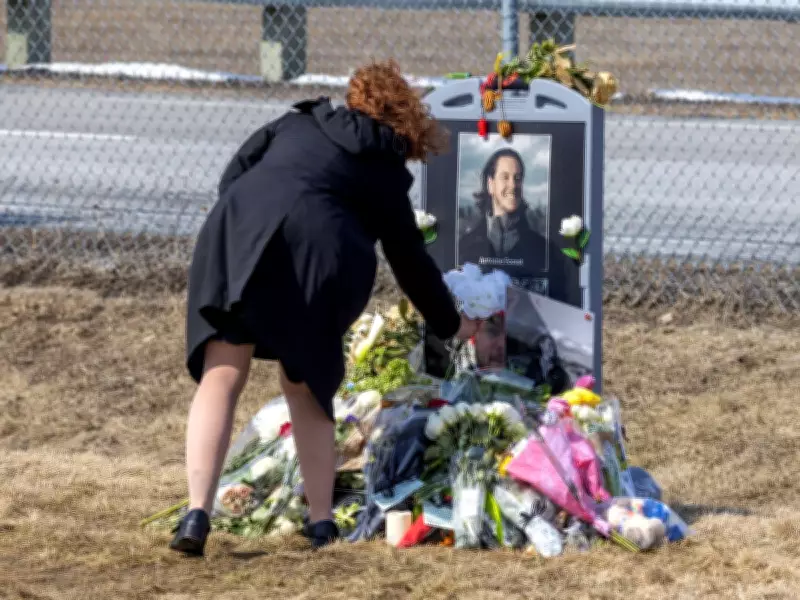
A memorial has since emerged at the Jacques-de-Lesseps Observation area near Trudeau Airport in Dorval, west of Montreal, where mourners have placed flowers to honor the fallen aviators.

Language Divide in Condolences
Despite both pilots making identical sacrifices, only Gunther's English-speaking family received condolences in their native language from Air Canada leadership. In a four-minute video statement, CEO Michael Rousseau addressed the tragedy exclusively in English, offering francophone Captain Forest's loved ones nothing beyond basic greetings of "bonjour" and "merci."
This linguistic slight proved so significant that Rousseau announced his retirement on Monday, March 30, 2026, though the company has not explicitly linked this decision to the controversy.
Historical Context of Bilingual Tensions
Francophone anger finds justification within Canada's complex language politics. While official bilingualism originally guaranteed French speakers access to federal services and political participation in their language, recent developments have intensified tensions.
The Trudeau administration implemented more stringent requirements, including mandating French proficiency for Supreme Court appointments—a policy critics argue has diminished nominee quality—and requiring English federal civil servants to learn French for management advancement. These measures have even raised questions about Governor General Mary Simon's legitimacy, as she speaks only English and Inuktitut.
Corporate Language Obligations
As a federally regulated corporation, Air Canada operates under the Official Languages Act, a condition established during its privatization. The airline consistently faces language-related complaints, with Rousseau's limited French skills previously drawing criticism.
Language requirements increasingly function as career barriers for English-speaking Canadians seeking elite positions, despite the challenges adult learners face in acquiring second languages through traditional methods. Meanwhile, artificial intelligence has made real-time translation technology increasingly accessible.
Timing and Sensitivity Concerns
While debates about bilingualism's practical implementation merit discussion, the immediate aftermath of a fatal crash represents an inappropriate moment for such arguments. The focus should remain on honoring two young pilots who made the ultimate sacrifice when faced with unavoidable catastrophe.
Their deaths resulted from a cascade of external errors, making the language controversy surrounding their memorialization particularly painful for grieving communities. The tragedy underscores how linguistic politics can overshadow human loss during moments requiring unity and respect.