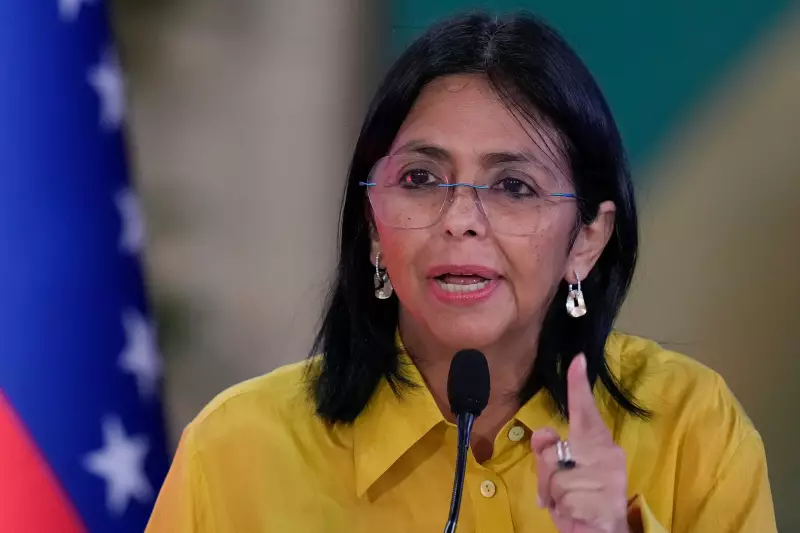
Venezuela has entered a period of profound political transition following the dramatic capture of its former leader, Nicolás Maduro. In a swift move, former foreign affairs minister Delcy Rodríguez has been appointed as the country's interim president, stepping into the power vacuum created by Maduro's ouster.
A New Leader Amidst International Upheaval
The appointment comes directly after Maduro was taken into custody by United States authorities. He has since faced his initial court appearance on serious drug trafficking charges in a U.S. courtroom. This unprecedented event has thrown the future of the South American nation into uncertainty, raising immediate and pressing questions about its governance and the path toward legitimate elections.
Rodríguez, a long-time ally of Maduro and a powerful figure within the ruling political sphere, now faces the monumental task of stabilizing a country grappling with the fallout of its former president's international legal troubles. Her assumption of power is seen as an effort to maintain continuity within the existing political structure during a crisis of unprecedented scale.

Canadian Reactions and Diplomatic Scrutiny
The seismic shift in Venezuela has resonated strongly within Canada, prompting a spectrum of responses from officials and citizens alike. Reports indicate that a former Canadian foreign affairs minister has openly questioned the federal government's response to the arrest and the ensuing political chaos, suggesting a need for a clearer diplomatic stance.
Meanwhile, public sentiment has been visibly active. CTV National News reported that Canadians have rallied in support of Venezuela in various cities across the country, demonstrating the diaspora's engagement and the issue's significance to the Canadian public. The reaction within Canadian communities, such as Winnipeg, has been described as mixed, reflecting the complex and often polarized views on Maduro's legacy and the future of Venezuelan democracy.
Global Ripples and Unanswered Questions
The implications of Maduro's capture and Rodríguez's ascension extend far beyond Venezuela's borders, influencing global markets and foreign policy. Analysts are closely watching how allies and adversaries will reposition themselves. The United States is reportedly urging major oil companies to consider significant investments in Venezuela if they hope to recover longstanding debts, indicating a potential shift in economic strategy.
Financially, the event caused immediate ripples. Defence and mining stocks saw lifts in markets like the U.K.'s FTSE 100, while the U.S. dollar gained strength as traders assessed the situation. The core question dominating international discourse remains: What happens next for Venezuela's electoral process? The interim government under Rodríguez must now navigate intense domestic and international pressure to chart a credible and democratic way forward for a nation weary of crisis.
As the world watches, the stability of Venezuela hangs in the balance, with its new interim leader at the centre of a geopolitical storm that continues to draw reactions and scrutiny from Canada and the global community.