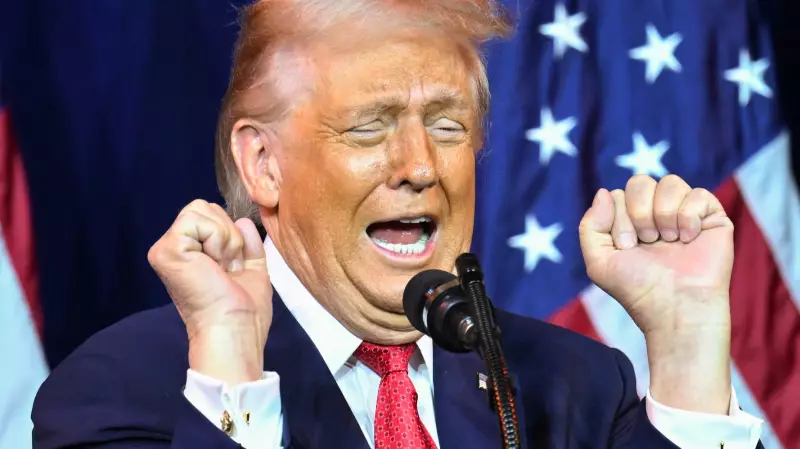
On the fifth anniversary of the violent assault on the U.S. Capitol, former President Donald Trump once again attempted to rewrite history, falsely claiming he bore no responsibility for the insurrection that left 140 police officers injured and five dead.
Denials and Distortions Mark Solemn Anniversary
Speaking to House Republicans at the Kennedy Center in Washington, D.C., on Tuesday, January 6, Trump repeated the debunked claim that he had urged his supporters to act "peacefully and patriotically" and that this instruction was ignored by media and investigators. "In my speech — 'peacefully and patriotically to the Capitol, peacefully and patriotically,'" he stated, questioning why the House select committee on January 6 and news outlets did not highlight those words.
This assertion omits the crucial context of his speech that day. While he did read those specific words from a teleprompter, he also told the crowd they needed to "fight like hell" to overturn the election results. "And if you don't fight like hell, you're not going to have a country anymore," he declared, directly inciting the mob that later stormed the Capitol building.

Shifting Blame and Repeating Election Lies
In a familiar deflection, Trump shifted blame for the security failure to then-House Speaker Nancy Pelosi, a Democrat from California. He claimed Pelosi refused an offer of 10,000 National Guard troops that he says he wanted deployed. This claim has been repeatedly contradicted by official testimony and documentation regarding security preparations.
Central to his remarks was the continued propagation of the "rigged election" falsehood, the very lie that fueled the anger of his supporters on January 6, 2021. Trump lost the 2020 election to Joe Biden by approximately 7 million votes, a result confirmed by numerous audits, recounts, and court rulings.
The Lasting Political Consequences
The immediate political fallout from the insurrection was significant. One week after the attack, the House of Representatives impeached Trump for incitement of insurrection, with ten Republicans joining every Democrat in the vote.
A pivotal moment came a month later when Senate Majority Leader Mitch McConnell, a Republican from Kentucky, led his caucus in acquitting Trump. McConnell argued that convicting a former president was unconstitutional, a decision that allowed Trump to remain eligible to hold federal office and paved the way for his current campaign to return to the White House.
Had Trump been convicted by the Senate, a subsequent vote would almost certainly have barred him from ever holding federal office again. The anniversary remarks underscore how the events of January 6 and the false narratives surrounding them continue to define and drive American politics.