Poilievre's Sudden Tough Stance on Trump May Be Too Little, Too Late
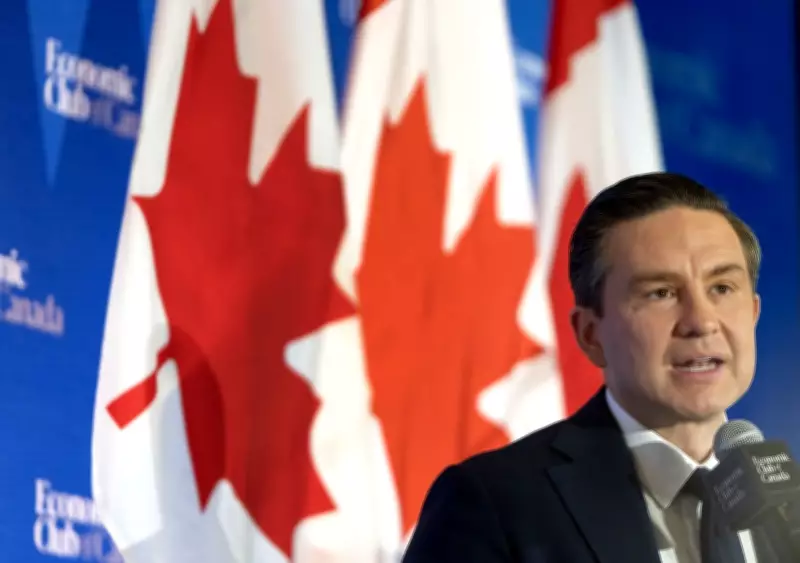
Conservative Party leader Pierre Poilievre delivered a significant speech this past week to the Economic Club of Canada in Toronto, outlining a strategy for dealing with what he described as the erratic and anti-Canadian U.S. President Donald Trump. The speech marked a notable shift in Poilievre's public approach toward the American leader.
A Year of Silence Broken
For approximately a year since Trump's return to office, Poilievre maintained public silence regarding the U.S. president, allowing Liberal politicians to define the narrative. This silence created an impression that the Conservative leader might be soft on Trump or unwilling to confront the president's tariffs and aggressive tactics.
"Canada cannot control the decisions of foreign presidents," Poilievre declared during his Toronto address. "But we can control the strength of our own country. We can control whether our economy is solid or fragile."

The opposition role toward Trump had been primarily filled by Liberal Prime Minister Mark Carney and Ontario Premier Doug Ford during Poilievre's quiet period. While the effectiveness of Carney's "elbows up" approach and Ford's patriotic posturing remains uncertain, both leaders have been visibly and vocally clear about their positions regarding Trump and Canadian sovereignty.
Timing Questions and Political Calculations
Observers are questioning why Poilievre waited so long to take this public stance. The Conservative leader didn't even reference Trump during his major address to the party convention in Calgary in late January, and he allowed Conservative MP Jamil Jivani to visit Washington recently and return with comments dismissing Canadian concerns about Trump as a "hissy fit."
Now, after maintaining silence for nearly a year, Poilievre has delivered the type of speech many expected much earlier, particularly during last spring's election campaign. While the content of his Toronto address was substantive, the timing creates an impression that Poilievre may have developed political courage primarily out of desperation to save both his party and his leadership position.
Economic Independence and Energy Policy
Poilievre used his speech to highlight Canada's economic vulnerabilities, pointing to a recent shipment of liquified natural gas that arrived in New Brunswick from Australia after traveling 26,000 kilometers. The same company had made shipments to Turkey and Chile in the previous month.
He contrasted this with Canada's inability to develop similar energy infrastructure, blaming former Prime Minister Justin Trudeau's assertion that there was "no business case" for an LNG pipeline or terminal in the Maritimes. Poilievre suggested current Liberal Prime Minister Mark Carney seems likely to reinforce Trudeau's environmental policies rather than risk political support in Quebec by pushing through an unpopular pipeline project.
Political Differentiation and Leadership Questions
The central questions emerging from Poilievre's speech are whether his Toronto address sufficiently distinguishes him from Carney's Davos speech in Switzerland this past January, and whether this new-found toughness arrives too late to reshape public perception.
For nearly a year, it has been difficult to ascertain Poilievre's position on Trump, creating uncertainty about how a Conservative government would handle relations with the unpredictable American administration. The sudden shift in rhetoric, while substantive in content, may appear politically calculated rather than principled, potentially undermining its effectiveness with Canadian voters who have watched other political leaders take clearer stances much earlier in Trump's current term.
The Conservative leader's delayed response raises fundamental questions about political timing, leadership consistency, and strategic communication in an era of unpredictable international relations and domestic political pressures.