

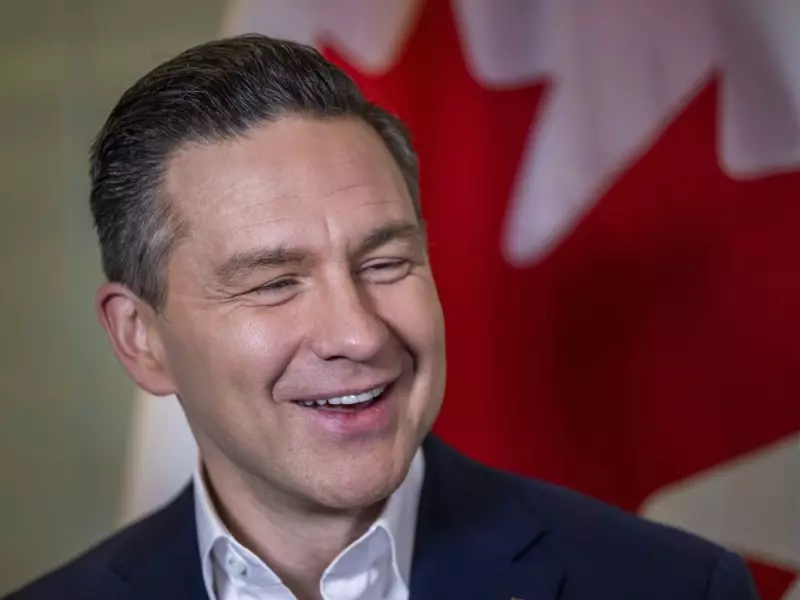
A year ago, the political landscape in Canada looked dramatically different. Justin Trudeau was clinging to power, publicly insisting he could win the next federal election despite overwhelming evidence to the contrary. Had he persisted, analysts suggest he would have faced a devastating defeat, potentially reducing the Liberal Party to historic lows reminiscent of the post-Mulroney era. In that alternate reality, Conservative Leader Pierre Poilievre would likely be celebrating a commanding majority and enjoying strong support from his caucus.
A Shifted Political Battlefield
Trudeau, however, did not hold on. His departure has fundamentally altered the dynamics of Canadian politics. Now, it is Poilievre who finds himself in a position of determined perseverance, convinced he can lead his party to victory in the next election. While his odds are arguably better than those Trudeau faced, they are far from a sure bet, making any prediction a risky proposition.
Justin Trudeau's political career was marked by both inherited advantage and considerable luck, but it was ultimately defined by staying too long. Voters began to tire of him by the end of his first term, when he lost both the popular vote and his parliamentary majority. His decision to call an election during the pandemic, seen by many as unnecessary, resulted in an even weaker mandate. A key flaw, as identified by commentators, was a growing inability within the Liberal party to distinguish between its own ideological beliefs and the genuine national interest. This fostered a perception that Liberal priorities were inherently Canada's priorities.

The Carney Conundrum and a Leadership Gap
The current political challenge for Pierre Poilievre is uniquely complex. Polls consistently show the Conservative and Liberal parties in a statistical dead heat. However, a significant gap exists at the leadership level. Poilievre trails his Liberal counterpart, Mark Carney, as the preferred choice for Prime Minister by a margin of 20 points or more in virtually all major surveys.
This presents Poilievre with a paradoxical problem: his opponent has been effectively promoting and selling policy ideas that traditionally align with Conservative values. Voters have sent a clear message. They were prepared to elect a Conservative government under Poilievre when he represented the only alternative to another Trudeau term. That calculus changed abruptly when new leadership emerged for the Liberals.
Critics suggest Poilievre shares a trait with his former rival: a potential reluctance to accept that his personal convictions may not perfectly mirror the broader views of the Canadian electorate. There is a question of whether he should consider adapting his approach to better connect with voters, rather than insisting they align entirely with his outlook.
Looking Ahead: The Path to Victory
The data indicates that, for now, the Conservative Party as an institution is held in higher regard by the public than its leader. This creates a critical strategic imperative for Poilievre. To secure victory, he must not only maintain party unity and policy strength but also personally bridge the substantial popularity gap with Mark Carney.
The core question becomes whether Pierre Poilievre can successfully reclaim ownership of the policy agenda that once seemed securely within his grasp. He must confront the reality that his opponent is currently executing a more compelling sales pitch for fiscal responsibility and economic management—traditional Tory strongholds. The task ahead involves refining his message, broadening his appeal, and demonstrating a leadership quality that resonates with the swing voters who will decide the next election. The clock is ticking, and the political stakes have never been higher for the Conservative leader.






