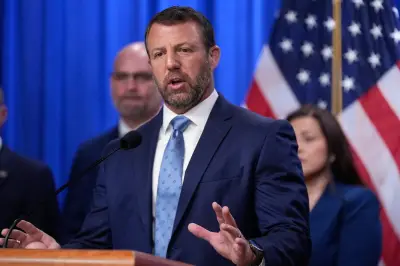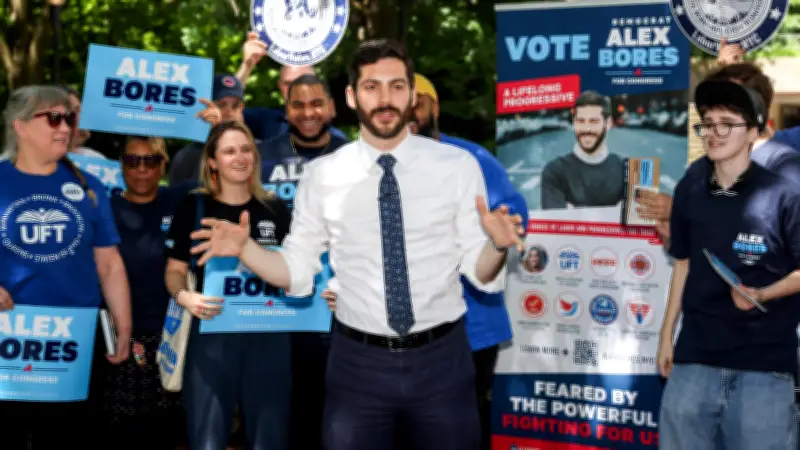
State Assemblyman Alex Bores, a Democrat from New York and U.S. House candidate, is at the center of a pivotal primary election in New York’s 12th congressional district on Tuesday. The district, the smallest in the U.S. by geographic area, covers upper and midtown Manhattan and is heavily Democratic, having voted for Vice President Kamala Harris by more than 30 percentage points. Of the four major candidates, all are mainstream liberals, but national Democrats are closely watching the race for one specific reason: how Bores fares could reverberate into this year’s general election and even into the 2028 presidential race, dictating how much freedom party leaders feel they have to discuss what could become the most consequential issue in American politics.
AI Industry Rivalries Drive Record Spending
Bores is at the center of wars between rival groups of artificial intelligence leaders – one trying to fend off regulation, the other obsessed with the technology’s long-term risks. Each side has poured millions into the race, which has become one of the most expensive congressional primaries in U.S. history. If Bores wins, many party operatives believe Democrats will be able to hold a full-fledged debate on regulating AI, giving the party a leg up with voters who are increasingly skeptical of the technology.
“This is going to be one of the biggest issues in the 2028 election, and voters right now do not know which party they trust,” said a senior Democratic operative working for a likely 2028 presidential candidate, who requested anonymity to protect his clients from attacks by well-funded groups fighting AI regulation. “We’re not going to be able to win that trust if everyone in the party is terrified of a super PAC ending their career.”

Progressives and Unions Back Bores
The fear is warranted. While many progressives, led by Sen. Bernie Sanders (I-Vt.), have started criticizing the industry, joining protests against data centers and proposing regulations and taxes, Democratic leadership in Congress has been eager to have members and candidates in tight races largely stay away from the topic, even as top operatives believe the party could seize a major political advantage on the issue. For his part, Bores played up the stakes of the primary.
“The stakes of this race are not just about what one member of Congress can do, it’s about whether every member of Congress is going to have the freedom to stand with the American people,” said Bores, a computer scientist who raised the industry’s hackles by authoring a state law regulating the most powerful AI models. “The battle lines of this race are about whether we should be able to regulate AI at all.”
Close Race Against Lasher
Bores is in a close race with Micah Lasher, a fellow assemblyman who also worked as a top aide to former New York City Mayor Michael Bloomberg (R) and retiring Rep. Jerry Nadler (D). Jack Schlossberg and George Conway are also running, but are considered long shots despite their relative celebrity. Polling has been scattershot, with the most recent public surveys taking place more than a month ago. Political observers in the district say Lasher, who has benefited from $10 million from a Bloomberg-backed super PAC and also has the endorsement of Nadler and Gov. Kathy Hochul (D), is a slight favorite heading into Tuesday.
Lasher’s backing from high-ranking officials makes Bores’ support from local unions and progressive groups, despite not being particularly progressive on issues like the Israel-Palestine conflict, all the more remarkable. The state AFL-CIO, the United Federation of Teachers and the state’s building trades unions have all backed Bores, as has Our Revolution, a left-wing group founded by Sanders. All specifically cited his stances on AI regulation as reasons to support him.
Symbolism of a Landmark Battle
Bores was able to consolidate the support in large part because of the symbolism of his race as a landmark battle against AI. “This campaign is building the big tent coalition that Democrats always talk about,” Bores told HuffPost in an interview. “You have to name the enemies – the people who want total control of our kids’ brains, our jobs – the AI oligarchs.”

Joseph Geevarghese, the executive director of Our Revolution, acknowledged Bores was far more moderate than the candidates the group usually endorses, but said his fight against the industry was important to the group’s members and thus justified their involvement. (Bores’ overall position on AI is also more centrist than progressives like Sanders. He does not share their desire for a moratorium on data centers, for instance.) “If Bores loses, I think that’ll send a message to mainstream Democrats: Keep your head down, otherwise the industry is going to target you,” Geevarghese told HuffPost. “If he gets elected, it will give them a jolt of courage.”
Industry Groups Spend Millions
The main group that has targeted Bores is Leading The Future, which is funded in large part by executives from the venture capital firm Andreessen Horowitz and OpenAI. The group, which closely aligns itself with the White House’s laissez-faire approach to AI regulation, has spent more than $8 million on ads attacking him. It claims not to be wholly against regulation, but simply wants it passed at the national level.
“Leading The Future supports passing a national regulatory framework for AI that creates jobs for American workers, helps America win the race against China, and includes strong guardrails that protect the safety of kids, users, and communities. Any claim that we oppose regulation is flat wrong,” said Josh Vlasto, a strategist for the group.
Vlasto also noted that Bores has received ample backing from another wing of the AI industry, more closely associated with Anthropic and other thinkers who believe stricter regulation of the technology is necessary. Those groups have spent $17 million on the race – substantially more than Leading The Future. “The public record clearly shows that support for Alex Bores from Anthropic and its allies began well before Leading The Future entered the race,” Vlasto said. “Leading The Future is proud to stand against that unprecedented effort and for a transparent, national AI framework that serves workers, families, and the country.”
First Significant Skirmish
While the clash over Bores’ political future does appear to be a landmark, Geevarghese is also confident this won’t be the Democratic Party’s final battle with the industry. “This is the first significant skirmish,” he said. “I don’t think it will be the last word.”