

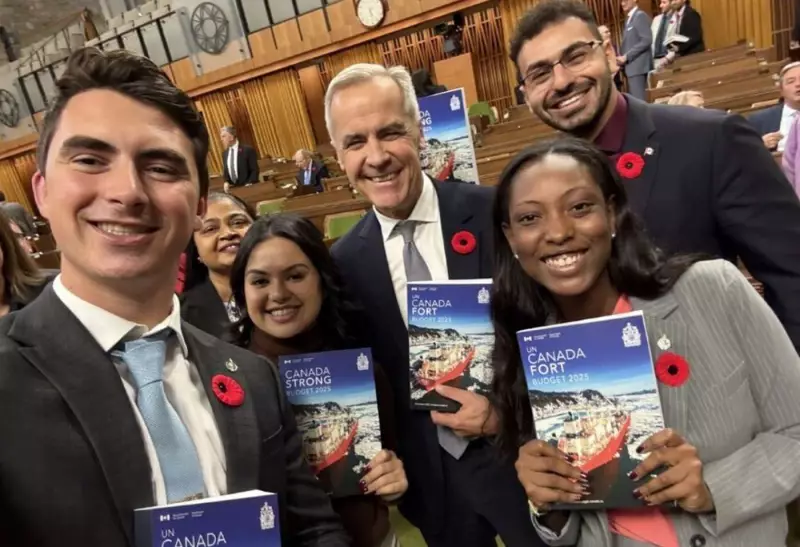
A new political generation is making its voice heard on Parliament Hill. Four Liberal Members of Parliament, all born in the 2000s, are stepping forward with a shared mission: to serve as a dedicated voice for Canada's youth in the federal legislature.
A New Wave in the House of Commons
The group includes MPs Jake Sawatzky, Amandeep Sodhi, Tatiana Auguste, and Fares Al Soud. In a recent undated handout photo shared on social media, they were pictured with Prime Minister Mark Carney in the House of Commons in Ottawa. Their presence marks a significant demographic shift, bringing the perspectives of a generation that came of age in the 21st century directly into the halls of power.
These young politicians represent diverse ridings and backgrounds, but are united by their age cohort and a commitment to addressing issues that disproportionately affect younger Canadians. Their entry into federal politics signals a potential change in how generational concerns are prioritized in national policy debates.

Championing Youth-Centric Policies
The MPs have indicated they intend to focus on a range of critical issues facing young people today. While specific policy platforms were not detailed in the initial announcement, priorities for this demographic typically include affordable housing, climate action, student debt, mental health services, and the future of work in a digital economy.
Their direct experience with these challenges, from navigating a competitive job market to confronting the long-term implications of climate change, provides them with firsthand insight that differs from older parliamentary colleagues. They aim to translate this lived experience into legislative action and advocacy within the Liberal caucus and across party lines.
The Path Forward for Young Representation
The commitment of these four MPs comes at a time when political engagement among younger voters is a focal point for all parties. By positioning themselves as dedicated advocates, they hope to bridge the gap between youth concerns and the federal policy-making process.
Their collaboration suggests a coordinated effort to amplify youth issues, potentially forming a caucus or working group within Parliament. Success will depend on their ability to navigate established parliamentary traditions while pushing for innovative solutions to modern problems. As the political landscape evolves, the performance and influence of these millennial MPs will be closely watched as a barometer for the future of intergenerational representation in Canadian democracy.






