Corporate PAC Money Fuels Democratic Primary Clashes in Pivotal Senate Races
The Democratic Party is currently engulfed in intense internal debates spanning from healthcare to immigration enforcement and the War in Gaza. However, one issue is poised to trigger more primary contests than any other, centering not just on policy stances but also on how candidates finance their campaigns. Divisions over the acceptance of corporate Political Action Committee (PAC) money are erupting in at least four major Democratic Senate primaries this year—in Michigan, Minnesota, Texas, and Illinois—alongside numerous fights for U.S. House nominations.
Progressive Candidates Reject Corporate PAC Funds
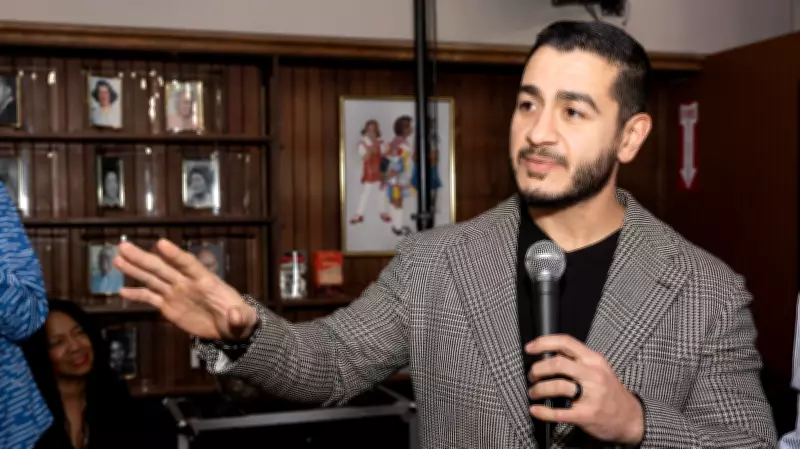
Candidates who decline corporate PAC donations, typically but not exclusively progressives, contend that their opponents' capacity to resist President Donald Trump and combat special interests is fundamentally compromised by accepting such contributions. Abdul El-Sayed, a progressive contender for Michigan's open Senate seat who refuses corporate PAC money, emphasized, "If you take money from certain people, it’s not like that money doesn’t come with strings. I don’t have any strings attached to any corporations who stand to gain based on what I say or what I do."
In contrast, candidates who accept these funds are attempting to blur the lines by highlighting other ways their rivals have benefited from corporate money, portraying them as hypocritical. This dynamic has transformed what was once a unifying issue for Democrats—where both progressives and moderates rejected corporate PAC money during the 2018 midterm blue wave—into a fresh intra-party pressure point. Progressives are keen to underscore this, arguing its heightened importance amid tech and other powerful industries aggressively seeking Trump's favor.

Senator Warren Advocates for Integrity in Campaign Finance
Senator Elizabeth Warren (D-Mass.) articulated the progressive stance, stating, "People are fed up with a system that’s rigged in favor of price-gouging corporations and understand the corrupting influence of money in politics is a key factor why politicians have failed to lower costs like health care and housing. Rejecting corporate PAC money is a powerfully important signal to voters that you’re a Democrat with backbone who will actually fight back against special interests."
Warren and fellow progressives have elevated the rejection of corporate PAC money as a critical litmus test. Senator Chris Murphy (D-Conn.), part of the liberal "Fight Club," cited this as a reason for endorsing Lt. Gov. Peggy Flanagan's Senate bid in Minnesota and progressive Maine Senate candidate Graham Platner. While direct corporate donations to candidates are illegal under federal law, corporations can contribute to super PACs and nonprofits engaged in political activity. Corporate PACs, often managed by company or trade association employees, typically gather donations from executives and shareholders before distributing funds to favored candidates.
Michigan Primary Highlights Sharp Divisions
Michigan exemplifies where these divides are most pronounced, as evidenced at a United Auto Workers candidate forum. When asked about corporate PAC money, both Abdul El-Sayed and state Senator Mallory McMorrow confirmed they do not accept it. Representative Haley Stevens, the most moderate candidate and favored by Democratic leaders in Washington, defended her acceptance, focusing instead on her goal to overturn the Supreme Court's Citizens United decision. "I’m not a millionaire, and I don’t own stock," Stevens said. "I’m running my campaign in a grassroots way."
McMorrow, who previously accepted corporate PAC money but now rejects it, subtly criticized Stevens for evading the question: "We need to know who our next senator is working for." El-Sayed highlighted his consistency, asserting, "I’m the only person on this stage who has never taken a dime of corporate PAC money and never will." In an interview, El-Sayed pointed out that both opponents have accepted donations from PACs linked to Michigan utility companies, which could benefit from increased electricity usage, with state and federal records showing $19,500 to McMorrow and $58,500 to Stevens.

Minnesota and Illinois Primaries Echo Similar Tensions
In Minnesota, the primary between Peggy Flanagan and Representative Angie Craig has become a binary battle between progressives and moderates. Flanagan criticizes Craig for receiving support from the cryptocurrency and oil industries, stating, "You can’t shake your finger and say, ‘I’m going to hold [the cryptocurrency industry] accountable,’ and simultaneously have your other hand outstretched and ask for a contribution to your campaign." Craig countered by noting that Flanagan, as chair of the Democratic Lieutenant Governors' Association, raised millions from corporate interests, including pharma, tobacco, and oil and gas industries.
In Illinois, Lieutenant Governor Juliana Stratton emphasizes her refusal to take corporate PAC money, contrasting with Representative Raja Krishnamoorthi, a moderate front-runner. Krishnamoorthi has criticized Stratton for benefiting from donations via the DLGA and Governor J.B. Pritzker, a billionaire endorser. "Lt. Gov. Stratton says she has a people-powered campaign," Krishnamoorthi remarked. "It’s powered by like two people, and that’s wrong."
Texas and Broader Implications for Democratic Strategy
In Texas, state Representative James Talarico promotes his rejection of corporate PAC donations in ads but has not attacked Representative Jasmine Crockett, who accepts such funds. While primary squabbles over corporate PAC money are not new—Representative Alexandria Ocasio-Cortez highlighted this in her 2018 upset—it has shifted from a uniting issue to a divisive one. Many Democrats, encouraged by groups like End Citizens United, rejected corporate PAC money starting in 2018 to leverage an anti-corruption message.
Today, 32 candidates in seats targeted by the Democratic Congressional Campaign Committee, along with those in key pickup opportunities like Colorado's 8th, Nebraska's 2nd, and Arizona's 1st districts, rely on this message for general elections. Tiffany Muller, president of End Citizens United, predicted, "We expect the 2026 midterms to look a lot like the 2018 midterms. It’s a change election—anti-incumbent, anti-establishment, anti-status quo—and rejecting corporate PAC money is one of the clearest and most credible ways for candidates to differentiate themselves."
However, two anonymous Democratic operatives noted that DCCC Chair Susan DelBene, a former Microsoft executive, is less enthusiastic about candidates rejecting corporate money than her predecessors. Progressives challenging incumbents in safe seats also use this issue to argue that long-term officeholders are out of touch, with all Justice Democrats-backed candidates pledging to refuse corporate PAC funds. Usamah Andrabi, the group's communications director, stated, "The discontent with the corporate part of the Democratic Party is getting broader. Voters are realizing a politician bought and sold by corporate PAC is less likely to stand up to the Trump administration."