

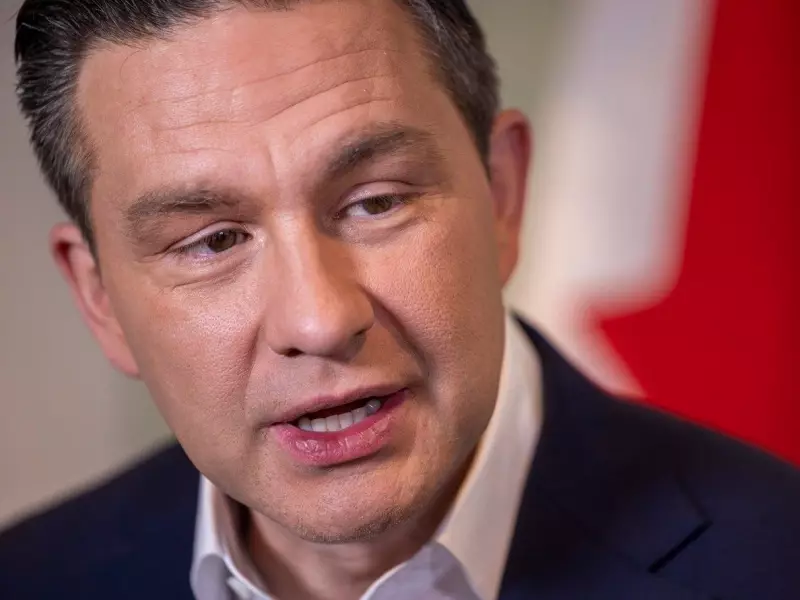
Conservative Leader Pierre Poilievre has described 2025 as a "hell of a year," a stark admission that underscores the mounting internal pressures within his party. Sitting for a year-end interview in Toronto, the political landscape Poilievre navigates today is markedly different from the confident predictions of a year ago.
Caucus in Flux and Leadership Review Looms
The unity of the Conservative caucus is under strain. Two Members of Parliament have crossed the floor to other parties, while another has announced a resignation. There are persistent rumours that more defections could be imminent, a scenario that, in a worst-case situation for Poilievre, could even hand Liberal Prime Minister Mark Carney a majority government.
Despite these challenges, Poilievre dismisses any notion that he should step down. He frames the question of leadership as a fundamental issue of party democracy. "Who runs the party? Backroom deal makers or the welders and waitresses and plumbers and police officers... who are actually going to be delegates at the convention?" Poilievre stated, arguing that the party's grassroots members alone should decide his fate.

The Irony of Past Precedents and Present Challenges
This stance carries a notable irony. Poilievre himself became leader after the caucus ousted his predecessor, Erin O'Toole, in February 2022—a move orchestrated by key figures who later became organizers for Poilievre's own leadership campaign.
The immediate test for Poilievre is managing his caucus ahead of a critical party convention in Calgary at the end of January 2026, which will feature a leadership review vote. The House of Commons resumes sitting on January 26, just days before that convention. Poilievre's message to the delegates is expected to focus on the party's record vote count in the last election and its leadership on issues like carbon taxes, inflation, and housing.
The Real Test: Managing a Team, Not a One-Man Show
However, analysts suggest Poilievre faces a second, more constant review: from his own MPs and Senators, empowered by the party's adoption of the Reform Act. The dynamic within caucus has shifted. "The team is not as united and motivated as they once were; they aren’t willing to sit and watch the Pierre Show play out," the analysis notes.
Successful political leaders like former Prime Minister Brian Mulroney and Ontario Premier Doug Ford are cited for their hands-on caucus management, constantly engaging with their teams. Poilievre, who once told caucus members they could have their say but not necessarily their sway, may need to adopt a more inclusive approach. The goal for the next election must be to present a government-in-waiting, rather than a one-man show.
While another election in the coming year seems uncertain, the past twelve months have proven that in Canadian politics, predictability is a luxury. For Pierre Poilievre, the task ahead is clear: heal internal divisions and rebuild a cohesive team, or risk having his "hell of a year" extend well into the future.






