Democratic Senators Unveil Bold Tax Proposal Ahead of 2028 Presidential Race
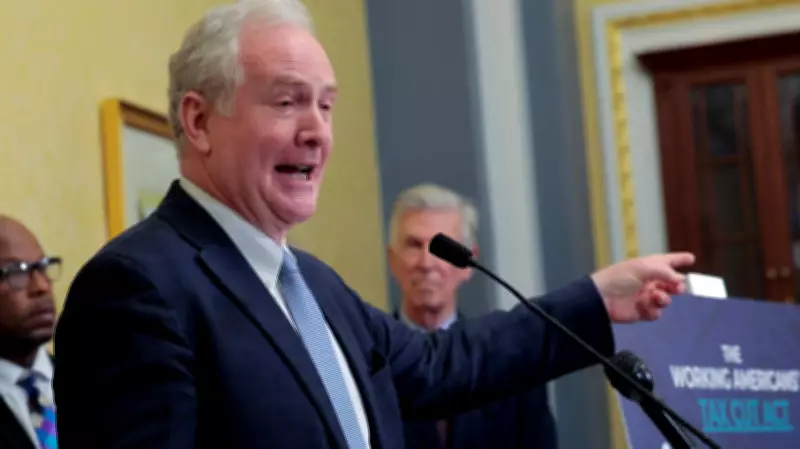
Two Democratic senators with potential presidential ambitions have introduced a sweeping new tax plan that would dramatically reshape the federal income tax system. The proposal, unveiled by Senator Chris Van Hollen of Maryland and Senator Mark Kelly of Arizona, would eliminate income taxes entirely for households earning less than $80,500 annually while increasing tax rates for individuals making more than $1 million per year.
Positioning Against Trump-Era Tax Policies
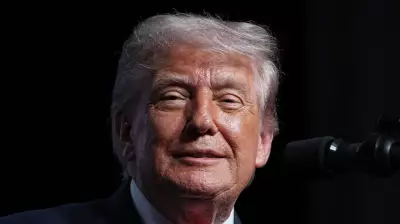
Van Hollen explicitly framed the proposal as a direct counter to former President Donald Trump's tax policies. "It's hard to say that we're embracing Donald Trump's anti-tax message when we're actually increasing taxes on people who make more than a million dollars every year," Van Hollen stated during a press conference on Thursday. He emphasized that this approach represents "the opposite of the Trump plan" and addresses what he sees as fundamental inequities in the current tax system.
The timing of this proposal is significant as Democrats work to redefine their party's identity following their 2024 presidential election loss to a candidate who campaigned on populist tax promises including "no tax on tips." While the legislation has little chance of becoming law in the current political climate, it represents an important effort to establish Democratic priorities for when the party eventually returns to power.

Internal Democratic Debate Over Tax Strategy
The proposal has sparked considerable debate within Democratic circles, with some prominent progressives expressing reservations about embracing tax-cut messaging traditionally associated with Republicans. Senator Elizabeth Warren of Massachusetts told reporters, "No. 1 on my agenda is getting billionaires to pay their fair share in taxes. We live in a world where Jeff Bezos pays taxes at a lower rate than a Boston public school teacher, and that's the problem we need to solve right now."
Independent Senator Bernie Sanders of Vermont similarly emphasized his preference for more targeted billionaire taxes, which he described as "extremely popular" among voters. Several Democratic colleagues have questioned whether tax cuts should represent the party's top priority, suggesting that other economic justice issues might deserve greater attention.
Policy Experts Raise Concerns About Implementation
Tax policy experts have offered mixed assessments of the proposal. Chuck Marr, a tax specialist at the liberal Center on Budget and Policy Priorities, described the plan as well-intentioned but potentially problematic in its execution. He noted that structuring the tax relief as an exemption rather than a credit means higher-income households would receive greater benefits due to their higher marginal tax rates.
"It's just not very well targeted, and it's expensive," Marr explained, adding that even if the tax cuts are fully offset by increased taxes on millionaires, the revenue represents a missed opportunity to fund other social programs. Other progressive policy experts, including those at the Center for American Progress, have echoed similar concerns about the proposal's structure and priorities.
Defending the Approach
Senator Kelly, a potential presidential candidate himself and the lead co-sponsor of the legislation, defended the proposal by contrasting it with Trump-era policies. "There are folks that are having a really hard time affording rent and groceries and now health care, because Trump felt the need to give a big tax cut to rich people and he's partially paying it by kicking people off of Medicaid," Kelly stated.
Senator Ruben Gallego of Arizona noted that Democrats have increasingly embraced tax-cut messaging in recent years, pointing to the expanded child tax credit that Democrats framed as a tax cut rather than a direct benefit. "I think now it's just a lot more direct, and because it is in the political environment that it is now, every time we do anything, it just kind of has a bigger impact," Gallego observed.

Broader Democratic Strategy
Van Hollen acknowledged that Democrats are currently in an "ideas" phase as they work to develop policies that will resonate with voters ahead of the 2028 presidential election. "I support and continue to support programs that provide a safety net, from food nutrition programs to health care programs, to other programs," he said. "I don't see this as an exclusive Democratic proposal, but I do see it as a critical part of our overall effort."
The proposal represents one of several tax-related initiatives circulating among Democratic lawmakers, including an even larger tax cut suggested by Senator Cory Booker of New Jersey. As the party continues to refine its economic message, these competing proposals highlight the ongoing debate about how best to address economic inequality while appealing to a broad coalition of voters.