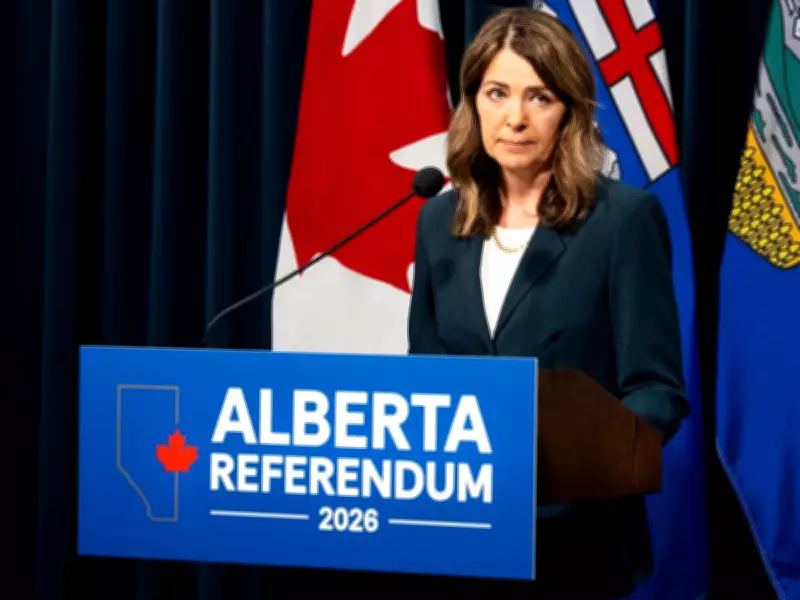
When politicians debate Alberta separation, they focus on pipelines, equalization, and constitutional authority. While these are important discussions, most Albertans have more immediate financial concerns. What happens to my Canada Pension Plan (CPP)? Is my savings account still insured? Do my Tax-Free Savings Account (TFSA) contributions carry over? These questions remain largely unanswered.
The Pension Question
The CPP is jointly governed by the federal government and the provinces. Every Albertan who has contributed to it, and every retiree drawing from it, relies on an arrangement that depends on Alberta being part of Canada. The Alberta government commissioned a report in 2023 projecting Alberta's share of CPP assets at roughly $334 billion, a figure the federal chief actuary disputes. What is not disputed is that any transition would be negotiated between governments that may not agree on much else. For those within a decade of retirement, this timeline is not abstract.
Deposit Insurance Uncertainty
The Canada Deposit Insurance Corporation (CDIC) insures eligible deposits up to $100,000 per category at member banks. It is a federal entity. An independent Alberta would need to build its own equivalent from scratch or negotiate continued membership. While deposits are likely protected during a transition, the long-term replacement for CDIC remains an open question.

Mortgage Market Implications
Two federal programs shape every Alberta mortgage. The Canada Mortgage and Housing Corporation (CMHC) provides default insurance for high-ratio buyers, and the Office of the Superintendent of Financial Institutions (OSFI) stress test sets qualification rules for federally regulated lenders. Both are in play under separation. Alberta would need its own mortgage insurance program or leave high-ratio buyers without coverage. If the new regulatory regime skips a stress test equivalent, qualification rules could change in ways that sound appealing until interest rates move.
Registered Accounts at Risk
TFSA contribution room, Registered Retirement Savings Plan (RRSP) limits, and First Home Savings Account (FHSA) accounts are all created by federal legislation and administered by the Canada Revenue Agency (CRA). The contribution room built up over the years exists because Canada does. An independent Alberta would need to create its own equivalents or negotiate a continuation arrangement. What happens to existing contribution history, who administers it, and whether limits carry over are all unsettled.
Tax Changes
Alberta has provincial income tax but no provincial sales tax. Separation would end the federal layer, meaning no federal income tax, no Goods and Services Tax (GST), no Employment Insurance (EI) premiums, and no CPP contributions. That sounds like a windfall, but it is not straightforward. Those payments were funding health transfers, infrastructure, and employment insurance. Alberta would need to replace that revenue. How and at what rates are choices no one has discussed publicly.
The Part No One Is Talking About
None of this is an argument for or against separation. These are financial questions that need real answers before a vote is cast, and currently, they do not have them. Albertans are being asked to form an opinion on something that would touch every financial decision they make. A vote is coming, and the financial picture is not ready. Those two things should not coexist.
Jeff Adamson is co-founder of Neo Financial, a Calgary-based financial services company serving over one million Canadians.