U.S. Navy Conducts Friendship Visit to Cambodian Base Enhanced by China
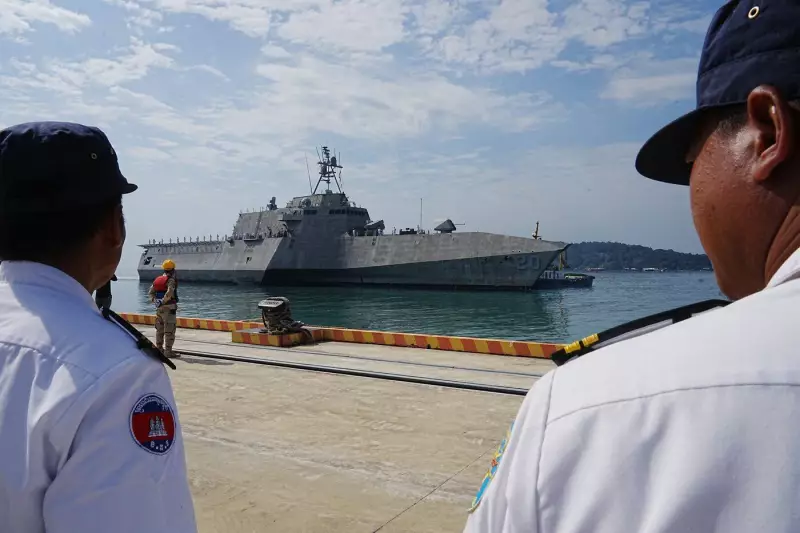
In a notable diplomatic and military gesture, a United States warship has arrived at a Cambodian naval base that underwent significant upgrades with support from China. The USS Cincinnati docked at the Ream Naval Base in Sihanoukville, Cambodia, on Saturday, January 24, 2026, for what is described as a friendship visit. This event underscores the intricate and often competing strategic interests at play in Southeast Asia, where both American and Chinese influences are prominently felt.
Strategic Significance of the Ream Naval Base
The Ream Naval Base has been a focal point of regional attention due to its recent modernization efforts, largely funded and assisted by China. These enhancements have included the construction of new piers, facilities, and infrastructure, raising concerns among some Western analysts about potential long-term Chinese military access in the region. Cambodia, however, has consistently denied that the base will host foreign military forces permanently, framing the upgrades as part of broader national development and sovereignty.
The arrival of the USS Cincinnati, a littoral combat ship, represents a deliberate U.S. effort to maintain engagement and demonstrate presence in a strategically vital area. Such port calls are routine elements of naval diplomacy, aimed at fostering military-to-military relationships and ensuring freedom of navigation. Nevertheless, the context of China's involvement in the base's refurbishment adds a layer of complexity to this visit, highlighting the delicate balance Cambodia maintains between its historical ties with China and its evolving relations with the United States.

Broader Geopolitical Implications
This visit occurs against a backdrop of heightened geopolitical competition in the Indo-Pacific region. The United States has been actively strengthening alliances and partnerships to counter what it perceives as China's expanding military and economic influence. Concurrently, China has deepened its investments and infrastructure projects across Southeast Asia, including in Cambodia, as part of its Belt and Road Initiative.
The simultaneous presence of a U.S. warship at a Chinese-upgraded facility illustrates Cambodia's nuanced foreign policy approach. By welcoming both nations, Cambodia may be seeking to leverage its position for economic and strategic benefits without overtly aligning with either power. This balancing act is critical for smaller nations in the region, which often navigate between the interests of major global players to secure their own national priorities.
Regional Reactions and Future Outlook
Regional observers are closely monitoring such interactions for signals about shifting alliances and security dynamics. The visit could be interpreted as a U.S. attempt to reassure partners of its commitment to regional stability, even as China's footprint grows. It also serves as a reminder of the ongoing diplomatic maneuvers that characterize international relations in Southeast Asia, where economic partnerships and security concerns are deeply intertwined.
Looking ahead, the frequency and nature of future U.S. naval visits to Cambodian ports, as well as the extent of Chinese involvement in Cambodian military infrastructure, will be key indicators to watch. These developments will likely influence not only bilateral relations between Cambodia, the U.S., and China but also the broader strategic landscape of the Indo-Pacific, affecting trade routes, security cooperation, and regional governance.
In summary, the docking of the USS Cincinnati at the Ream Naval Base is more than a routine port call; it is a symbolic event that encapsulates the multifaceted geopolitical rivalries shaping contemporary Southeast Asia. As global powers vie for influence, Cambodia's strategic choices will continue to resonate across the region, making such visits significant markers in the ongoing narrative of international diplomacy and security.