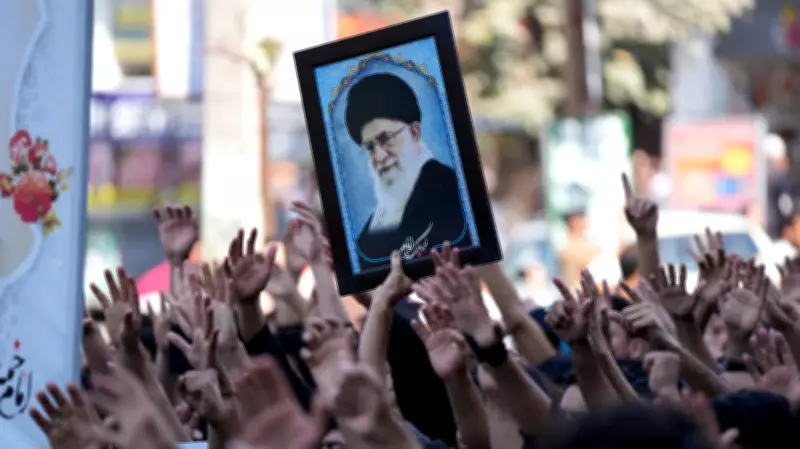
U.S. Officials Express Skepticism Over Iran Regime Change Following Khamenei Killing
In the aftermath of the killing of Iran's Supreme Leader Ayatollah Ali Khamenei on Saturday, many senior U.S. officials are casting doubt on the likelihood that the ongoing U.S. and Israeli military operations will result in a regime change in the Islamic Republic in the near future. This skepticism persists despite earlier statements from U.S. leaders, including President Donald Trump, who had outlined toppling Iran's repressive governing system as a key objective alongside crippling its ballistic missile and nuclear programs.
Trump's Call for Freedom and Intelligence Realities
On Sunday, President Trump urged Iranian patriots to seize the moment and reclaim their country in a video posted on Truth Social, saying, "I call upon all Iranian patriots who yearn for freedom to seize this moment ... and take back your country." However, three U.S. officials familiar with intelligence assessments revealed that there is serious skepticism about the ability of Iran's battered opposition to overthrow the theocratic, authoritarian system that has been entrenched since 1979.
While no officials completely ruled out the possibility of the government's fall, given its current vulnerabilities from ongoing air strikes and deep unpopularity following violent repression in January, they emphasized that such an outcome is far from likely or even probable in the short term. The regime is currently buffeted by key personnel losses but remains resilient.

CIA Assessments and Internal Deliberations
Reuters reported that Central Intelligence Agency assessments presented to the White House prior to the attack concluded that if Khamenei were killed, he could be replaced by hard-line figures from the Islamic Revolutionary Guard Corps (IRGC) or equally hard-line clerics. One U.S. official noted that IRGC officials are unlikely to voluntarily capitulate, as they benefit from a vast patronage network designed to maintain internal loyalty.
The CIA assessments followed reports from other intelligence agencies, which highlighted that there had been no IRGC defections during the massive anti-government protests in January, a factor that three additional sources identified as a likely precondition for any successful revolution. All sources requested anonymity to discuss sensitive intelligence matters.
Debate Over Nuclear Negotiations and Opposition Support
The intelligence discussions have extended beyond government leadership changes. Two U.S. officials said that since January, there has been significant debate—but no consensus—among various agencies about whether Khamenei's killing would lead to a shift in Iran's approach to nuclear negotiations with the U.S. Officials have also debated the extent to which his death might deter Iran from rebuilding its missile or nuclear capabilities.
Following the January protests, Steve Witkoff, Trump's special envoy, engaged with Iranian opposition figure Reza Pahlavi, raising questions about potential U.S. support for his installment if the government fell. However, senior U.S. officials have grown increasingly pessimistic about any Washington-backed opposition figure's ability to control the country realistically.
Iran's Response and Leadership Transition
On Sunday, Iranian President Masoud Pezeshkian announced that a leadership council, including himself, the judiciary head, and a member of the Guardian Council, had temporarily assumed the duties of Supreme Leader. Security chief Ali Larijani accused the U.S. and Israel of attempting to plunder and disintegrate Iran, warning secessionist groups of a harsh response if they took action, according to state television reports that Reuters could not independently confirm.
Trump indicated plans to reopen communications with Iran, suggesting that Washington does not anticipate the government's immediate collapse. The White House did not immediately respond to requests for comment, while the CIA declined to comment.

Expert Analysis on Regime Stability
Jonathan Panikoff, a former high-ranking U.S. intelligence official now at the Atlantic Council, provided insight into the situation: "At the end of the day, once U.S. and Israeli strikes stop, if the Iranian people come out, their success in promoting the end of the regime will depend on the rank and file standing aside or aligning with them. Otherwise, the remnants of the regime, those with the weapons, are likely to use them to keep power." This underscores the challenges facing any potential uprising in Iran.