The Final Chapter in a Half-Century of Nuclear Arms Control
The last remaining nuclear arms control pact between the United States and Russia is poised to expire, marking a significant conclusion to a fifty-year era of strategic stability agreements between the two global powers. This development represents a pivotal moment in international security, as the framework that has governed the world's largest nuclear arsenals for decades comes to an end.
A Legacy of Strategic Stability
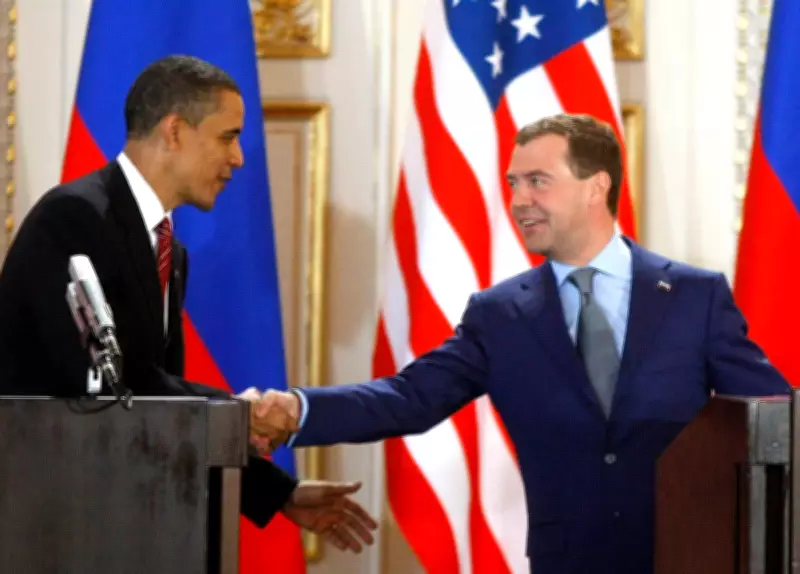
The New START treaty, formally known as the Strategic Arms Reduction Treaty, was signed in 2010 by then-U.S. President Barack Obama and Russian President Dmitry Medvedev. This agreement established verifiable limits on deployed strategic nuclear warheads and delivery systems for both nations. The treaty's expiration signals the conclusion of a continuous chain of arms control agreements that began during the Cold War era, fundamentally shaping global security architecture for generations.
The Prague Handshake That Defined an Era
The historic signing ceremony took place at Prague Castle in the Czech Republic on April 8, 2010, where both leaders publicly affirmed their commitment to nuclear reduction. The treaty represented a mutual understanding between Washington and Moscow regarding the importance of transparency and predictability in nuclear arsenals. For over a decade, this agreement has provided crucial verification mechanisms and regular data exchanges between the two nuclear superpowers.

Implications for Global Security Architecture
The expiration of this final nuclear pact raises significant questions about the future of strategic stability between the United States and Russia. Without the treaty's verification provisions and numerical limits, both nations will operate without formal constraints on their nuclear arsenals for the first time in half a century. This development occurs amidst already strained bilateral relations and evolving global security challenges that extend beyond traditional nuclear deterrence frameworks.
A Changing Strategic Landscape
The conclusion of this arms control era reflects broader shifts in international relations and military technology. While the treaty focused primarily on traditional strategic nuclear weapons, contemporary security concerns now encompass advanced technologies including hypersonic weapons, cyber capabilities, and space-based systems. The expiration of New START leaves a regulatory vacuum at precisely the moment when new technological developments are transforming the nature of strategic competition.
As the international community observes this milestone, attention turns to whether new frameworks for strategic stability might emerge in the coming years, or if this expiration represents a permanent shift away from formal nuclear arms control between the world's leading nuclear powers.