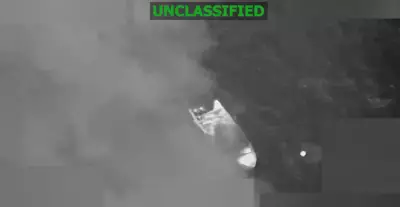
In a direct response to a deadly ambush that claimed the lives of three U.S. citizens, the United States has initiated a significant military operation in Syria. Defense Secretary Pete Hegseth announced the commencement of OPERATION HAWKEYE STRIKE on Friday, December 19, 2025, with the stated goal of eliminating ISIS fighters, infrastructure, and weapons sites.
A Declaration of Vengeance, Not War
Secretary Hegseth framed the operation as a decisive act of retribution. "This is not the beginning of a war — it is a declaration of vengeance," he stated on social media. "The United States of America, under President Trump’s leadership, will never hesitate and never relent to defend our people." The operation comes almost a week after the December 13th attack near the historic city of Palmyra.
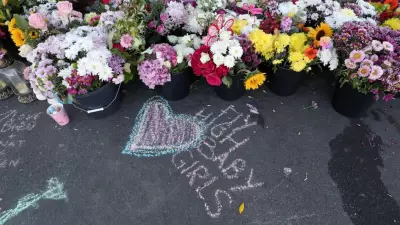
President Donald Trump had previously pledged "very serious retaliation" following the shooting in the Syrian desert. The attack resulted in the deaths of two Iowa National Guard members—Sergeant Edgar Brian Torres-Tovar, 25, of Des Moines, and Sergeant William Nathaniel Howard, 29, of Marshalltown—and Ayad Mansoor Sakat, a U.S. civilian interpreter from Macomb, Michigan. Three other U.S. troops and members of Syria's security forces were wounded.

Scale and Scope of the Military Strikes
U.S. officials described the retaliatory action as a large-scale strike targeting multiple locations across central Syria. The operation concentrated on areas known to harbour Islamic State group infrastructure and weapons caches. According to reports, the assault utilized a formidable array of air power and artillery:
- F-15 Eagle jets
- A-10 Thunderbolt ground attack aircraft
- AH-64 Apache helicopters
- F-16 fighter jets from Jordan
- HIMARS rocket artillery systems
One official, speaking anonymously due to the sensitivity of the operations, indicated that more strikes should be expected. Syrian state television reported that strikes hit targets in rural areas of Deir ez-Zor and Raqqa provinces, as well as the Jabal al-Amour area near Palmyra, targeting weapons storage and ISIS headquarters.
Testing Warming U.S.-Syria Relations
The ambush and subsequent retaliation present a major test for the warming ties between the United States and Syria. Relations have improved since the ouster of autocratic leader Bashar Assad a year ago. President Trump has noted that Syria is fighting alongside U.S. troops against ISIS and stated that Syrian President Ahmad al-Sharaa was "extremely angry and disturbed by this attack."
The assailant in the December 13th attack was a member of Syria's internal security forces who had joined as a base security guard two months prior. Interior Ministry spokesperson Nour al-Din al-Baba said the gunman had been reassigned recently due to suspicions of ISIS affiliation. He stormed a meeting where U.S. and Syrian security officials were having lunch together, opening fire after clashing with Syrian guards. The gunman was killed during the incident.
White House deputy press secretary Anna Kelly affirmed the administration's resolve, stating, "President Trump told the world that the United States would retaliate for the killing of our heroes by ISIS in Syria, and he is delivering on that promise." Earlier in the week, President Trump met privately with the families of the slain Americans at Dover Air Force Base in Delaware for the dignified transfer of their remains.