The dramatic capture of Venezuelan President Nicolás Maduro by United States forces has sent shockwaves through the international community, with analysts now scrutinizing the move for its broader strategic implications. Experts suggest the bold action is not merely about Venezuela but serves as a calculated message to other global powers, most notably the People's Republic of China.
A Direct Challenge to Authoritarian Allies
The operation, authorized at the highest levels of the U.S. government, represents a significant escalation in Washington's approach to regimes it deems adversarial. By directly apprehending a sitting head of state who has long enjoyed diplomatic and economic support from Beijing and Moscow, the United States is demonstrating a new willingness to enforce its foreign policy objectives with military precision. This action underscores a hardline shift under the current administration, moving beyond sanctions and rhetoric to direct intervention.
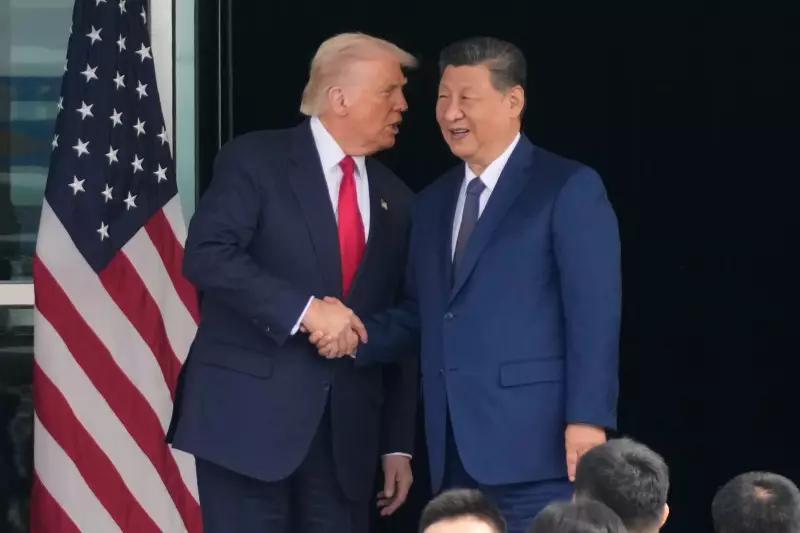
For China, which has invested billions in Venezuela's oil sector and viewed the South American nation as a key partner in expanding its influence in the Western Hemisphere, the message is stark. It signals that U.S. opposition to Chinese-backed authoritarian governments can now extend to physical enforcement. The timing is particularly sensitive, coming just months after a high-stakes meeting between U.S. President Donald Trump and Chinese President Xi Jinping in Busan, South Korea, in October 2025.

Interpreting the Geopolitical Calculus
Security analysts are debating the intended and unintended consequences of this unprecedented move. On one hand, it projects immense U.S. power and resolve, potentially deterring other nations from deepening alliances with U.S. adversaries. On the other, it risks provoking a more aggressive and confrontational response from China, which may see its own strategic interests and its network of global partners under direct threat.
The capture of Maduro could be interpreted as a warning to Beijing regarding its own policies, including its stance on Taiwan and its activities in the South China Sea. It demonstrates a U.S. capability and willingness to take extreme measures in what it considers its sphere of influence, a principle China fiercely guards in its own region. This creates a potentially volatile parallel in great-power competition.
Potential Ramifications for Global Order
The long-term fallout from this event remains uncertain. Immediate consequences include a likely hardening of China's position in international forums and a possible acceleration of its efforts to build a security architecture independent of U.S. influence. The event may also compel other nations, including Canada and European allies, to carefully recalibrate their diplomatic positions to navigate the heightened tensions between the two superpowers.
Furthermore, the precedent set by the capture of a foreign leader could redefine norms of sovereignty and intervention. It marks a departure from decades of post-Cold War foreign policy and introduces a new, unpredictable variable into an already tense global landscape. The world will be watching closely to see how China chooses to respond, both in its rhetoric and in its subsequent strategic actions.