Massive Coordinated Strikes Target Iranian Leadership and Military Infrastructure
The United States and Israel have executed a massive, coordinated missile assault on Iran that resulted in the death of Supreme Leader Ayatollah Ali Khamenei. These unprecedented strikes specifically targeted Iran's military capabilities with the explicit objective of preventing the nation from advancing its nuclear weapons program.
Leadership Crisis and Immediate Aftermath
Former President Donald Trump confirmed Khamenei's death through a social media post, describing the Iranian leader as "one of the most evil people in History" and urging the Iranian population to overthrow their government. Initially, Iranian state media refuted these claims, but official television later confirmed the supreme leader's death occurred within his office compound, prompting authorities to declare forty days of national mourning.
The elimination of Khamenei creates immediate uncertainty regarding Iran's future leadership, as he had not publicly designated a successor. The Assembly of Experts, the clerical body responsible for selecting supreme leaders, must now determine succession. In the interim, a temporary leadership council comprising the president, head of the judiciary, and a jurist from the Guardian Council will assume governance duties, with a meeting scheduled for Sunday.

Military Targets and Casualty Reports
U.S. Central Command detailed that the military operations targeted critical Iranian infrastructure including Islamic Revolutionary Guard Corps command and control facilities, air defense systems, missile and drone launch sites, and military airfields. Notably, this marked the first combat deployment of low-cost one-way attack drones by American forces.
Iranian state television reported significant casualties from the strikes, citing 201 fatalities and 747 injuries according to Red Crescent figures. Particularly devastating was a missile strike on a primary girls' school in Hormozgan province that killed 85 people. Among the high-ranking officials killed were Islamic Revolutionary Guard Corps Commander Mohammad Pakpour and Defence Minister Aziz Nasirzadeh.
Regional Retaliation and Escalating Conflict
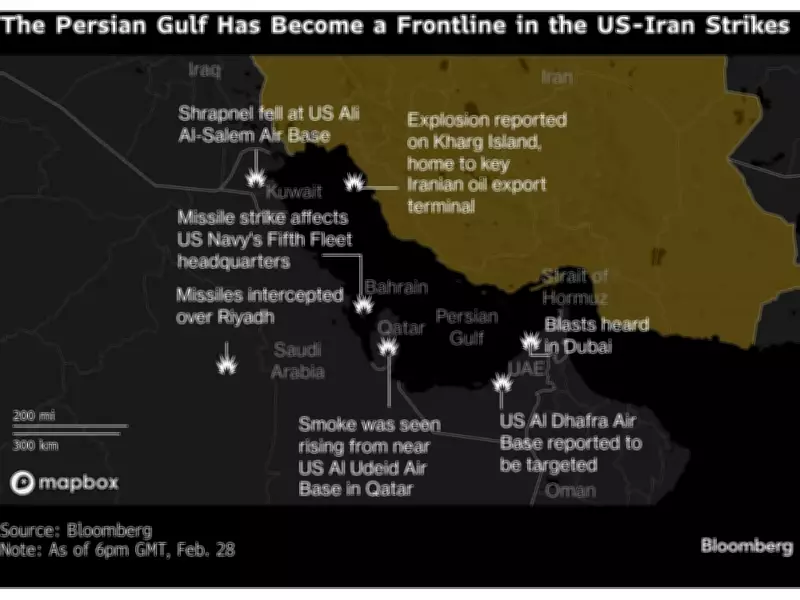
Iran responded with widespread missile and drone attacks targeting U.S. bases and allied nations throughout the Middle East, including the United Arab Emirates, Qatar, Kuwait, and Saudi Arabia. Defense systems engaged incoming threats near Dubai's skyscrapers and wealthy enclaves, with residents reporting audible explosions. CENTCOM confirmed "minimal" damage to American installations, while Israel also came under attack.
Ali Larijani, chief of Iran's Supreme National Security Council, vowed that Sunday's retaliatory strikes would be more powerful than previous attacks, with even previously unaffected Oman coming under fire. Trump announced that bombing operations against Iran would continue throughout the week, though U.S. military officials reported no American casualties or combat-related injuries.
Market Reactions and Global Implications
The market impacts of this escalating conflict remain uncertain, particularly regarding oil prices, though some digital assets have rallied amid the geopolitical turmoil. The situation represents a significant escalation in Middle East tensions with potential global ramifications for energy markets, regional stability, and international security frameworks.