U.S. Intelligence Assessment Reveals Limited Success Against Iran's Missile Arsenal
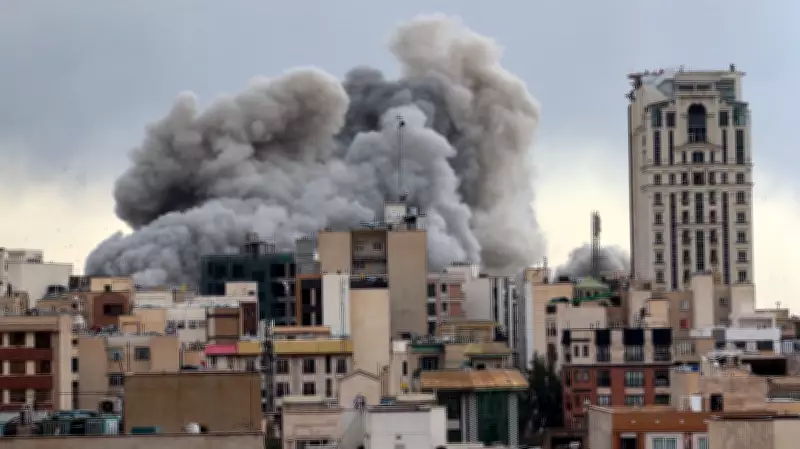
WASHINGTON, March 27 - According to five individuals with direct knowledge of U.S. intelligence assessments, the United States can only confirm with certainty that approximately one-third of Iran's extensive missile arsenal has been destroyed as the joint U.S.-Israeli military campaign approaches its one-month anniversary. The sources, who requested anonymity due to the sensitive nature of the information, provided this critical insight into the ongoing conflict's progress.
Uncertain Status of Additional Missile Stockpiles
Four of these intelligence sources further indicated that the status of another third of Iran's missile inventory remains ambiguous. While these weapons have likely been damaged, destroyed, or buried within Iran's extensive network of underground tunnels and fortified bunkers through sustained bombing campaigns, definitive confirmation remains elusive. One source noted that similar intelligence assessments apply to Iran's drone capabilities, with only about one-third confirmed as destroyed.
This previously unreported assessment reveals a complex battlefield reality: while the majority of Iran's missiles are either confirmed destroyed or rendered inaccessible through burial, Tehran maintains a significant remaining inventory. Military analysts suggest Iran may potentially recover some of the buried or damaged missiles once hostilities cease, presenting ongoing security concerns.

Contrast With Presidential Statements
The intelligence findings stand in stark contrast to public remarks made by President Donald Trump during a televised Cabinet meeting on Thursday. The President claimed Iran had "very few rockets left" while simultaneously acknowledging the persistent threat posed by remaining Iranian missiles and drones to future U.S. operations aimed at securing the economically vital Strait of Hormuz.
"The problem with the straits is this: let's say we do a great job. We say we got 99% (of their missiles). 1% is unacceptable, because 1% is a missile going into the hull of a ship that cost a billion dollars," Trump stated, highlighting the disproportionate impact even limited remaining capabilities could have on naval operations.
Democratic Representative Seth Moulton, a Marine Corps veteran with extensive combat experience in Iraq, declined to comment specifically on the intelligence findings but challenged the President's characterization of the conflict's impact. "If Iran is smart they've retained some of their capability - they're not using everything that they have. And they're laying in wait," Moulton cautioned.
Operation Epic Fury and Targeting Priorities
The Trump administration has publicly stated its strategic objectives include weakening Iran's military through naval destruction, elimination of missile and drone capabilities, and preventing the Islamic Republic from obtaining nuclear weapons. The U.S. military's Central Command reports that Operation "Epic Fury," launched on February 28, remains on schedule or ahead of initial projections.
As of Wednesday, U.S. strikes have targeted over 10,000 Iranian military installations and reportedly sunk 92 percent of Iran's large naval vessels. The military has released imagery demonstrating attacks on weapons manufacturing facilities, emphasizing a strategy targeting not just existing stockpiles but the industrial capacity to produce them.
Despite these efforts, Central Command has refrained from providing precise figures regarding the percentage of Iran's missile or drone capabilities that have been eliminated. One intelligence source identified a fundamental challenge: determining how many missiles Iran had prepositioned in underground bunkers prior to the conflict's initiation. The United States has not disclosed its estimate of Iran's pre-war missile stockpile, with external estimates ranging from 2,500 (according to Israeli military assessments) to approximately 6,000 (based on some analyst projections).

Iran's Continued Military Demonstrations
Despite the intense tempo of U.S. strikes, Iran has demonstrated it retains operational capabilities. On Thursday alone, according to the United Arab Emirates Defense Ministry, Iran launched 15 ballistic missiles and 11 drones targeting UAE territory. Additionally, Iranian forces recently displayed new capabilities by firing long-range missiles for the first time, targeting the U.S.-UK military base at Diego Garcia in the Indian Ocean.
Nicole Grajewski, an expert on Iran's missile forces and the Islamic Revolutionary Guard Corps at Paris' Sciences Po university, suggested the Trump administration may have overstated the degradation of Iranian capabilities. She pointed to Iran's continued ability to conduct strikes from the heavily bombed Bid Kaneh military facility as evidence.
"The fact that they've managed to sustain this, I think, indicates the U.S. was overstating the success of its operation," Grajewski stated, estimating that Iran likely retains approximately 30 percent of its missile capabilities. She noted Iran possesses more than a dozen large underground facilities where launchers and missiles could be protected, raising the critical question: "have these facilities collapsed?"
The Challenge of Underground Warfare
A senior U.S. official expressed skepticism about the ability to accurately assess Iran's missile capabilities, particularly due to uncertainties surrounding how many weapons remain accessible underground. "I don't know if we'll ever have an accurate number," the official conceded.
Defense Secretary Pete Hegseth acknowledged the unique challenges posed by Iran's tunneling infrastructure in remarks on March 19, drawing parallels to other conflicts: "Iran is a vast country. And just like Hamas and their tunnels (in Gaza), they've poured any aid, any economic development, humanitarian aid, into tunnels and rockets."
He added, "But we are hunting them down methodically, ruthlessly and overwhelmingly, like no other military in the world can do, and the results speak for themselves," though he provided no specific percentages regarding destroyed missiles or drones.
The ongoing assessment underscores the complexities of modern warfare against a nation with extensive underground military infrastructure and the difficulties in achieving definitive battlefield intelligence.