U.S. Confirms First Fatalities in Expanding Middle East Conflict with Iran
The United States has announced the first American casualties in a rapidly escalating war with Iran that has now spread to several countries across the Middle East, threatening to destabilize global energy markets and regional security.
American Military Losses and Regional Escalation
U.S. Central Command confirmed on Sunday that three American service members were killed and five others were seriously wounded during military operations against the Islamic Republic. This announcement marks a significant escalation in the conflict, which began with coordinated U.S. and Israeli attacks on Iran that prompted immediate and widespread retaliation.
President Donald Trump stated in a social media post that Iran's Supreme Leader, Ayatollah Ali Khamenei, had been killed in the conflict. Iranian authorities confirmed the death hours later, announcing that the nation would observe 40 days of national mourning for the 86-year-old ruler who was killed in his office compound. President Trump emphasized that heavy and precise bombing campaigns would continue uninterrupted throughout the week or as long as necessary.

Widespread Damage and Casualties Across the Region
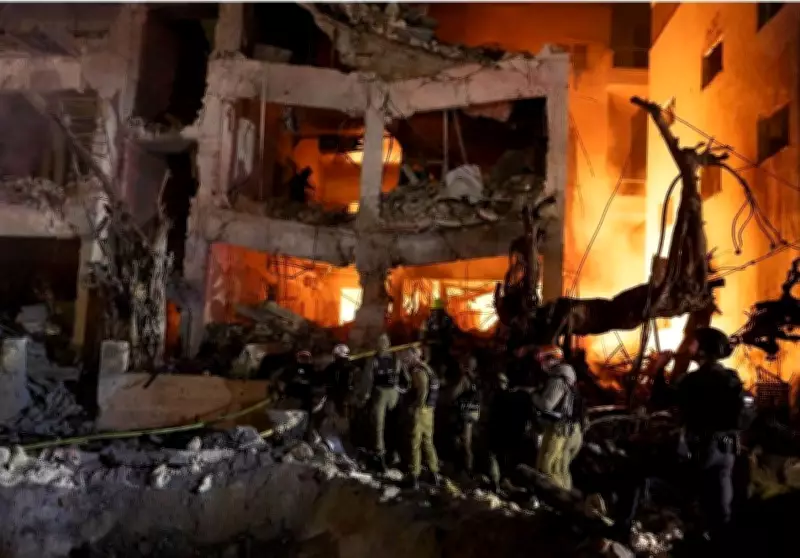
The conflict has expanded dramatically across the Middle East, with Iranian missiles striking buildings in Tel Aviv while defense systems in Saudi Arabia, Qatar, Bahrain, and Kuwait intercepted incoming projectiles. Both Israel and the United Arab Emirates have reported fatalities from the waves of attacks originating from Iran.
Iranian television reported on Saturday that more than 200 people have been killed in strikes on the Islamic Republic. Israeli military officials estimate that their strikes destroyed hundreds of Iranian ballistic missiles and disabled approximately half of the nation's launchers for these weapons.
Critical Infrastructure Damage and Transportation Disruption
Dubai's main airport, recognized as the world's busiest aviation hub, was directly hit during the conflict, leading to the closure of nearly all civilian air traffic across the Gulf region. Significant landmarks in Dubai, including the luxury Palm Jumeirah island and the iconic Burj Al Arab hotel, sustained damage, as did numerous skyscrapers in Abu Dhabi.
The strategic Strait of Hormuz, a critical transit route for oil and gas linking the Persian Gulf to open seas, has been described by Iran's Tasnim news agency as practically shut down, with tankers increasingly avoiding the waterway. Reports indicate that two ships were struck around the coast of Oman during the conflict.
Global Energy Market Impact and Political Fallout
The expanding conflict has sent shockwaves through global energy markets, where oil prices had already gained nearly 20 percent this year primarily due to escalating U.S.-Iran tensions. In response to anticipated further crude price increases, OPEC+ agreed on Sunday to resume production increases next month.
The assassination of Supreme Leader Khamenei, who dominated the Islamic Republic for more than three decades, represents a dramatic escalation in the U.S.-Israeli campaign to counter Iran's regional influence. Iranian President Masoud Pezeshkian vowed revenge and retribution for the killing, calling it a legitimate right, while other officials promised to intensify military responses.
With Khamenei not having publicly designated a successor, the Assembly of Experts—the clerical body responsible for selecting Iran's supreme leader—must appoint a new leader. In the interim, a council comprising the president, the head of the judiciary, and a jurist from the Guardian Council will assume the leader's duties, with the council scheduled to meet later on Sunday according to Iran's national security chief Ali Larijani.